Ranch Dressing Macros: Complete Nutritional Guide & Tracking Tips
Reviewed by Jessica Williams, CPT, CSCS
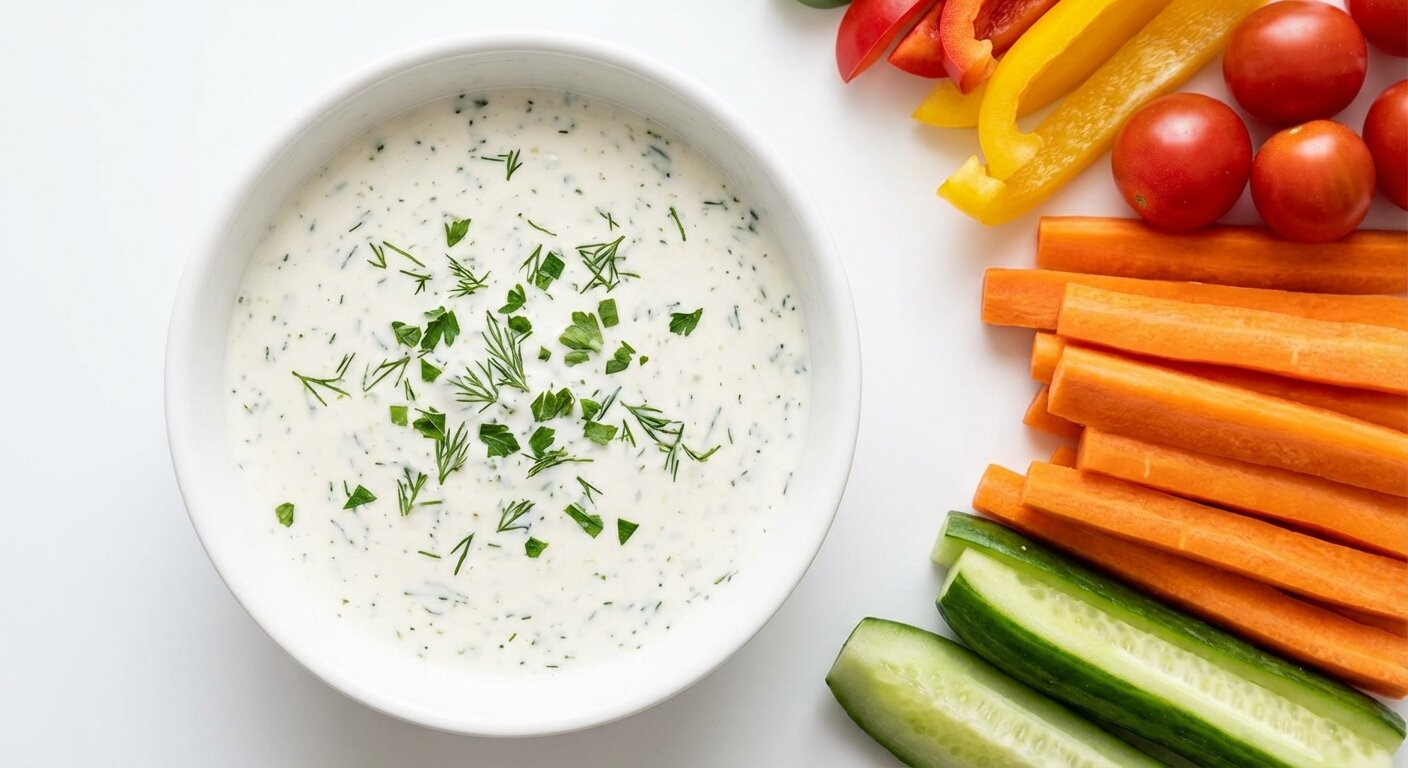
Ranch dressing is America’s most popular salad dressing and condiment, loved for its creamy texture and tangy flavor. But if you’re tracking macros, those innocent-looking dollops of ranch can significantly impact your daily totals. A standard 2-tablespoon serving contains 140-150 calories, almost entirely from fat, with minimal protein or carbs.
Whether you’re following a ketogenic diet, counting calories for weight loss, or simply trying to make informed nutrition choices, understanding ranch dressing macros helps you enjoy this condiment without derailing your goals. This guide breaks down the complete nutritional profile of ranch dressing, compares popular brands, explores light and homemade alternatives, and provides practical tracking strategies.
Ready to calculate exactly how ranch fits into your daily nutrition plan? Use our macro calculator to determine your personalized macronutrient targets based on your goals.
Ranch Dressing Macros Breakdown
Ranch dressing’s macro profile is heavily fat-dominant, with minimal contributions from protein and carbohydrates. Here’s the complete nutritional breakdown for a standard 2-tablespoon (30ml) serving of regular ranch dressing:
Standard Ranch Dressing (2 tablespoons):
- Calories: 140-150
- Total Fat: 14-16g (90-95% of calories)
- Saturated Fat: 2-3g
- Polyunsaturated Fat: 7-9g
- Monounsaturated Fat: 3-4g
- Carbohydrates: 2-3g (5-8% of calories)
- Fiber: 0g
- Sugars: 1-2g
- Protein: <1g (1-3% of calories)
- Sodium: 230-310mg
Key Macro Insights:
The overwhelming majority of calories in ranch dressing come from fat, specifically the vegetable oils (usually soybean oil) that form the emulsion base. This high fat content makes ranch extremely calorie-dense—a single tablespoon delivers 70-75 calories despite its small volume.
The minimal protein content (less than 1g per serving) comes primarily from buttermilk and small amounts of egg yolk used as emulsifiers. The 2-3g of carbohydrates include natural milk sugars from buttermilk plus added sugars in most commercial formulations.
Sodium levels can be substantial, with some brands exceeding 300mg per serving—about 13% of the recommended daily limit of 2,300mg.
How Ranch Dressing Fits Different Macro Goals
Ranch dressing’s high fat, low carb profile makes it naturally suitable for some dietary approaches while requiring careful management in others.
Ranch for Ketogenic and Low-Carb Diets
Ranch dressing is keto-friendly and works well for low-carb eating:
- High fat content (14-16g per serving) helps meet daily fat targets on keto
- Minimal carbs (2-3g) fit easily within the typical 20-50g daily carb limit
- Zero fiber means net carbs equal total carbs
- Watch for added sugars in some brands that can increase carb counts to 4-5g
For comparison, similar condiments have different carb profiles—check out mayo macros for another keto-friendly option, or Italian dressing macros for a slightly higher-carb alternative.
Ranch for Weight Loss and Cutting
When cutting calories for fat loss, ranch dressing requires careful portion control:
- Calorie-dense: 2 tablespoons = 140-150 calories (7-10% of a 1,500-2,000 calorie diet)
- Easy to over-pour: Most people use 3-4 tablespoons without measuring (210-300 calories)
- Limited satiety: The liquid form provides little fullness despite high calories
- Better alternatives: Light ranch (50-80 calories) or Greek yogurt-based ranch (40-50 calories)
Practical tip: Pre-measure ranch into small containers for meal prep, or use a tablespoon to serve rather than pouring directly from the bottle. This simple step prevents the common mistake of using 2-3x the intended serving size.
For more strategies on managing high-calorie condiments during a cut, see our guide on best macros for weight loss.
Ranch for Muscle Building and Bulking
While ranch won’t contribute to your protein goals, it can help meet increased calorie needs during a bulk:
- Calorie boost: Easy way to add 140-300 calories to meals without extra volume
- Fat for hormone production: Dietary fat supports testosterone production
- Not a protein source: Provides <1g protein—prioritize chicken breast, eggs, and Greek yogurt for protein
- Pair strategically: Add to protein-rich salads with chicken, hard-boiled eggs, and cheese
During a bulk, ranch can make high-volume vegetable consumption more palatable while adding necessary calories. However, don’t let ranch displace actual protein sources. Learn more about optimizing nutrition for muscle gain in our macros for muscle gain guide.
Popular Ranch Dressing Brands Compared
Macro profiles vary slightly across brands due to different oil ratios, buttermilk content, and added ingredients. Here’s how major brands stack up per 2-tablespoon serving:
Hidden Valley Original Ranch
- Calories: 140
- Fat: 14g (saturated 2g)
- Carbs: 2g (sugars 1g)
- Protein: 0g
- Sodium: 260mg
- Notes: The original ranch recipe, gold standard flavor
Kraft Classic Ranch
- Calories: 140
- Fat: 14g (saturated 2.5g)
- Carbs: 2g (sugars 1g)
- Protein: 0g
- Sodium: 230mg
- Notes: Very similar to Hidden Valley, slightly lower sodium
Ken’s Steak House Ranch
- Calories: 150
- Fat: 16g (saturated 2.5g)
- Carbs: 2g (sugars 1g)
- Protein: <1g
- Sodium: 280mg
- Notes: Slightly higher fat and calories, thicker texture
Newman’s Own Ranch
- Calories: 150
- Fat: 16g (saturated 2.5g)
- Carbs: 1g (sugars 1g)
- Protein: 0g
- Sodium: 310mg
- Notes: Higher sodium, no high-fructose corn syrup
Trader Joe’s Organic Ranch
- Calories: 130
- Fat: 13g (saturated 2g)
- Carbs: 2g (sugars 1g)
- Protein: 0g
- Sodium: 240mg
- Notes: Slightly lower calorie, organic ingredients
Primal Kitchen Ranch (Avocado Oil-Based)
- Calories: 110
- Fat: 11g (saturated 1.5g)
- Carbs: 2g (sugars 1g)
- Protein: 0g
- Sodium: 230mg
- Notes: Made with avocado oil, no dairy, lower calories
Brand Comparison Summary:
Most traditional ranch dressings are remarkably similar—140-150 calories with 14-16g fat per serving. The biggest differences appear in:
- Sodium content (ranges from 230-310mg)
- Fat sources (soybean oil vs canola vs avocado oil)
- Additives (some use high-fructose corn syrup, others use cane sugar)
- Texture (buttermilk percentage affects thickness)
Primal Kitchen and other “clean label” brands offer slightly better macro profiles (10-15% fewer calories) by using different oil bases and formulations, though they come at a premium price point.
Light Ranch vs Regular Ranch: Macro Comparison
Light ranch dressing reduces calories primarily by replacing fat with water and thickening agents. Here’s how light versions compare to regular:
Regular Ranch (2 tablespoons)
- Calories: 140-150
- Fat: 14-16g
- Carbs: 2-3g
- Protein: <1g
Light Ranch (2 tablespoons)
- Calories: 50-80
- Fat: 4-7g
- Carbs: 3-4g
- Protein: <1g
Light Ranch Benefits:
- 60-65% fewer calories (saves 70-100 calories per serving)
- 50-60% less fat (important for lower-fat diets)
- Still low-carb (3-4g carbs remain keto-compatible for most)
- Similar sodium (ranges from 240-350mg)
Light Ranch Trade-offs:
- Different texture: Often thinner and less creamy
- Altered taste: Some find it less satisfying
- More additives: Often contains more thickeners, stabilizers, and flavor enhancers
- Slightly higher carbs: The small increase (1-2g) rarely matters
Popular Light Ranch Options:
Hidden Valley Light Ranch:
- Calories: 80
- Fat: 7g
- Carbs: 3g
- A closer taste to regular than most light versions
Kraft Light Ranch:
- Calories: 50
- Fat: 4.5g
- Carbs: 4g
- Most aggressive calorie reduction
Ken’s Lite Ranch:
- Calories: 70
- Fat: 6g
- Carbs: 3g
- Good middle ground for taste and calories
Bolthouse Farms Classic Ranch Yogurt Dressing:
- Calories: 45
- Fat: 4g
- Carbs: 3g
- Protein: 1g
- Made with Greek yogurt base, slightly higher protein
When to Choose Light Ranch:
Light ranch makes sense when you’re:
- In a caloric deficit for fat loss
- Following a lower-fat dietary approach
- Want ranch flavor without significant calorie impact
- Willing to trade some taste for macro benefits
When to Stick with Regular Ranch:
Regular ranch is better when:
- Following a ketogenic or high-fat diet
- Have plenty of calories to spare
- Prioritize taste and satisfaction
- Use ranch sparingly (portion control eliminates the need for “light”)
For more on managing condiments during different dietary phases, see our guide on counting macros for beginners.
Homemade Ranch Dressing: Better Macros
Making ranch at home allows you to control ingredients, reduce calories, increase protein, and eliminate additives. Here are three homemade ranch variations with their macro profiles:
Classic Homemade Ranch (2 tablespoons)
Ingredients:
- ½ cup mayonnaise
- ½ cup sour cream
- ½ cup buttermilk
- 1 tsp dried dill
- 1 tsp dried parsley
- 1 tsp garlic powder
- 1 tsp onion powder
- ½ tsp black pepper
- ¼ tsp salt
Macros per 2 tablespoons:
- Calories: 110-120
- Fat: 11g
- Carbs: 2g
- Protein: 1g
Benefits: About 20-25% fewer calories than store-bought, more control over sodium, fresh herb flavor.
Greek Yogurt Ranch (2 tablespoons)
Ingredients:
- 1 cup plain Greek yogurt (non-fat or 2%)
- ¼ cup buttermilk
- 1 tbsp apple cider vinegar
- 1 tsp dried dill
- 1 tsp dried parsley
- 1 tsp garlic powder
- 1 tsp onion powder
- ½ tsp black pepper
- ¼ tsp salt
Macros per 2 tablespoons:
- Calories: 25-35
- Fat: 0-1g
- Carbs: 2-3g
- Protein: 2-3g
Benefits: 75-80% fewer calories than regular ranch, adds significant protein (2-3g), probiotic benefits from yogurt, creamy texture. This is the best option for cutting while maintaining ranch flavor.
Avocado Oil Ranch (2 tablespoons)
Ingredients:
- ½ cup avocado oil mayonnaise
- ½ cup sour cream
- ½ cup buttermilk
- 1 tsp dried dill
- 1 tsp dried parsley
- 1 tsp garlic powder
- 1 tsp onion powder
- ½ tsp black pepper
- ¼ tsp salt
Macros per 2 tablespoons:
- Calories: 100-110
- Fat: 10-11g (primarily monounsaturated)
- Carbs: 2g
- Protein: 1g
Benefits: Better fat profile (more monounsaturated fats from avocado oil), 25-30% fewer calories than store-bought, no soybean oil.
Homemade Ranch Storage and Shelf Life
Storage guidelines:
- Store in airtight container or mason jar
- Refrigerate immediately after making
- Shelf life: 7-10 days (shorter than store-bought due to lack of preservatives)
- Signs of spoilage: Separation, sour smell, mold, or off-taste
- Shake or stir before each use (natural separation occurs)
Meal prep tip: Make a weekly batch on Sunday, portion into small containers (2-tablespoon servings), and grab as needed. This prevents over-pouring and makes macro tracking effortless.
Ranch Dressing Serving Sizes and Portion Control
The biggest macro tracking challenge with ranch dressing isn’t the nutrition per serving—it’s accurately measuring what you actually consume. Most people drastically underestimate their ranch intake.
Standard Serving Sizes
Label serving size: 2 tablespoons (30ml)
- This is what all nutritional information is based on
- Provides 140-150 calories in regular ranch
Realistic portion challenges:
- Salad drizzle: Most people use 3-4 tablespoons (210-300 calories)
- Dipping sauce: Each “dip” can add 1-2 tablespoons (70-150 calories)
- Pizza/wing pairing: Often consume 4-6 tablespoons (280-450 calories)
The “free pour” problem:
Studies show that when people pour ranch directly from the bottle onto food, they use an average of 3.5 tablespoons—175% of the intended serving size. This adds an extra 100-150 calories that often go untracked.
Accurate Measuring Techniques
Best methods (in order of accuracy):
-
Digital food scale (most accurate)
- Place bowl on scale, zero out
- Add ranch until it reaches 30g (approximately 2 tablespoons)
- Perfect for meal prep and consistent tracking
-
Measuring spoon (very good)
- Use an actual measuring tablespoon, not a regular spoon
- Level off with a knife for accuracy
- Two level tablespoons = one serving
-
Pre-portioned containers (convenient)
- Portion ranch into small containers during meal prep
- Each container holds exactly 2 tablespoons
- Grab-and-go without measuring each time
-
Dressing cup with markings (acceptable)
- Small plastic cups with measurement lines
- Common at salad bars and restaurants
- Fill to the 2-tablespoon line
Avoid these inaccurate methods:
- ❌ Eyeballing or estimating
- ❌ Using regular eating spoons (they vary widely in size)
- ❌ Pouring directly from bottle onto food
- ❌ “A little drizzle” (typically 3-5 tablespoons)
Portion Control Strategies
For salads:
- Measure ranch into a small container before making your salad
- Dip your fork into ranch before picking up salad (uses 50-70% less dressing)
- Mix a measured amount throughout salad rather than pouring on top
- Try half ranch, half vinegar to extend volume with fewer calories
For dipping (vegetables, pizza, wings):
- Pre-measure 2 tablespoons into a small ramekin
- Once it’s gone, it’s gone—no refills
- Consider 1-tablespoon portions for dipping (70-75 calories each)
For meal prep:
- Portion individual servings into 2-ounce containers
- Write the macros on each container with a marker
- Pack with meals so you’re never tempted to free pour
Restaurant and takeout challenges:
When eating out, ranch is almost always served in excess:
- Restaurant side of ranch: typically 3-4 tablespoons (210-300 calories)
- Fast-food ranch packets: usually 1.5-2 tablespoons (105-150 calories)
- Salad bar ladles: often 3-4 tablespoons per scoop
Ask for dressing on the side and use only half of what they provide. Track as 2-3 tablespoons (140-225 calories) to be safe.
Tracking Ranch Dressing in MyFitnessPal and Other Apps
Accurate tracking starts with finding the correct database entry for your specific ranch dressing. Here’s how to track ranch effectively:
Finding Accurate Entries
MyFitnessPal:
- Search: “Hidden Valley Ranch Original” (or your specific brand)
- Look for entries with green checkmarks (verified)
- Verify serving size is “2 tablespoons” and calories match the bottle (140-150)
- Avoid entries that say:
- “Homemade” (unless you made it and created a custom recipe)
- “Generic” (macros vary too much by brand)
- “1 cup” or “1 serving” (unclear portions)
Create a custom food entry if needed:
- Go to More → Foods → Create Food
- Enter exact macros from your ranch bottle
- Set serving size to “1 tablespoon” (easier to track partial servings)
- Save and favorite for quick access
Cronometer:
- Search by barcode scanner for guaranteed accuracy
- Or search brand name + “ranch dressing”
- Verify nutritional info matches your bottle
- Create custom foods for homemade versions
Lose It! and Noom:
- Similar process: search brand name, verify macros, save favorites
- Use barcode scanner when available
Tracking Homemade Ranch
For homemade ranch, create a custom recipe:
MyFitnessPal recipe builder:
- More → Meals, Recipes & Foods → Create Recipe
- Enter all ingredients with exact amounts
- Set number of servings (e.g., if batch makes 24 tablespoons, set to 12 servings of 2 tablespoons each)
- App calculates macros per serving automatically
- Log as “1 serving” each time you use 2 tablespoons
Example: Greek Yogurt Ranch Recipe
Ingredients:
- 240g plain Greek yogurt (non-fat)
- 60ml buttermilk
- 15ml apple cider vinegar
- 5g dried dill
- 5g dried parsley
- 5g garlic powder
- 5g onion powder
- 3g black pepper
- 1g salt
Total batch: ~360ml (24 tablespoons) Set to 12 servings (2 tablespoons each) Per serving: ~30 calories, 0g fat, 3g carbs, 3g protein
Quick-Add Macros Method
If you’re not using a tracking app or want maximum simplicity:
Regular ranch: For every 2 tablespoons, quick-add:
- 145 calories
- 15g fat
- 2g carbs
- 0g protein
Light ranch: For every 2 tablespoons, quick-add:
- 65 calories
- 6g fat
- 3g carbs
- 0g protein
Greek yogurt ranch: For every 2 tablespoons, quick-add:
- 30 calories
- 0g fat
- 3g carbs
- 3g protein
This method sacrifices minor accuracy for convenience but keeps you accountable.
Ranch Dressing Nutrition Beyond Macros
While macronutrients tell most of the story for body composition goals, ranch dressing has other nutritional considerations:
Micronutrients and Vitamins
Ranch dressing provides minimal vitamins and minerals:
Vitamin K: 10-15% DV (from soybean oil) Vitamin A: 2-4% DV (from buttermilk and egg) Calcium: 2-3% DV (from buttermilk)
The vitamin K content is the only notable micronutrient contribution, though you’d get far more from the salad vegetables than the dressing.
Sodium Content
Ranch dressing can contribute significantly to daily sodium intake:
- Regular ranch: 230-310mg per 2 tablespoons (10-13% of 2,300mg daily limit)
- Four tablespoons (common in a salad): 460-620mg (20-27% daily limit)
- Eight tablespoons (common with wings): 920-1,240mg (40-54% daily limit)
For individuals on sodium-restricted diets (heart disease, hypertension), ranch can quickly become problematic. Consider:
- Homemade ranch with controlled salt
- Brands specifically marketed as “low sodium” (around 150mg per serving)
- Limiting portion sizes
- Balancing with low-sodium meals throughout the day
Fat Quality and Omega Ratios
Most commercial ranch dressings use soybean oil as the primary fat source. While not inherently harmful, soybean oil is high in omega-6 fatty acids and low in omega-3s.
Typical ranch fat composition:
- Polyunsaturated fat (mostly omega-6): 7-9g
- Monounsaturated fat: 3-4g
- Saturated fat: 2-3g
- Omega-3 fatty acids: <0.1g
Health consideration: The modern Western diet tends to be very high in omega-6 and low in omega-3, with ratios around 15:1 or 20:1 (optimal is closer to 4:1 or 5:1). Ranch dressing contributes to this imbalance.
Better fat profile options:
- Primal Kitchen Ranch: Made with avocado oil (more monounsaturated fats)
- Homemade with olive or avocado oil mayo: Better omega-6 to omega-3 ratio
- Balance throughout the day: If eating ranch, include omega-3 sources like salmon or chia seeds
Additives and Preservatives
Commercial ranch dressings contain various additives:
Common ingredients:
- Xanthan gum (thickener)
- Modified food starch (thickener)
- MSG or natural flavors (flavor enhancers)
- Calcium disodium EDTA (preservative)
- Phosphoric acid (preservative and flavor)
- Titanium dioxide (whitening agent, banned in EU, still used in some US brands)
Most of these are “Generally Recognized as Safe” (GRAS) by the FDA, but some people prefer to avoid them. Homemade ranch or “clean label” brands (Primal Kitchen, Tessemae’s, Sir Kensington’s) minimize or eliminate these additives.
Digestive Considerations
Lactose content: Ranch contains buttermilk and often sour cream, which include lactose. However, the amounts are small (2 tablespoons of ranch contains minimal lactose—typically well-tolerated even by lactose-sensitive individuals). Those with severe lactose intolerance may need dairy-free versions.
Dairy-free ranch options:
- Primal Kitchen Ranch (uses eggs but no dairy)
- Follow Your Heart Dairy-Free Ranch
- Homemade ranch with coconut cream or cashew cream base
FODMAPs: Ranch contains garlic and onion powder, which are high-FODMAP ingredients. Those following a low-FODMAP diet for IBS may react to ranch. FODMAP-friendly alternatives use garlic-infused oil (low-FODMAP) instead of garlic powder.
Ranch Dressing Alternatives for Better Macros
If you love creamy dressings but want better macro profiles, consider these alternatives:
Lower-Calorie Creamy Options
Bolthouse Farms Classic Ranch (Yogurt-Based)
- Calories: 45 per 2 tablespoons
- Fat: 4g | Carbs: 3g | Protein: 1g
- Made with Greek yogurt, similar taste to ranch
Litehouse Greek Yogurt Ranch
- Calories: 40 per 2 tablespoons
- Fat: 3g | Carbs: 2g | Protein: 2g
- Higher protein than regular ranch
Skinny Girl Ranch
- Calories: 25 per 2 tablespoons
- Fat: 1.5g | Carbs: 3g | Protein: 0g
- Very low-calorie but more additives
Homemade Buttermilk Herb Dressing
- Calories: 20-30 per 2 tablespoons
- Fat: 0.5-1g | Carbs: 3-4g | Protein: 2g
- Made with non-fat buttermilk and Greek yogurt
Higher-Protein Creamy Dressings
Most ranch dressings provide <1g protein, but you can make protein-forward versions:
Cottage Cheese Ranch Dressing
- Blend ½ cup cottage cheese, ¼ cup buttermilk, ranch seasonings
- Per 2 tablespoons: ~35 calories, 1g fat, 2g carbs, 4g protein
- Significantly higher protein than any commercial ranch
Protein Powder Ranch
- Mix unflavored or vanilla protein powder with Greek yogurt and ranch seasonings
- Per 2 tablespoons: ~40 calories, 0.5g fat, 2g carbs, 5g protein
- Best for bodybuilders prioritizing protein in every meal
Vinaigrette Alternatives
If you’re willing to move away from creamy textures, vinaigrettes offer dramatically different macro profiles:
Balsamic Vinaigrette (2 tablespoons)
- Calories: 45-90 (varies by oil ratio)
- Fat: 4-9g | Carbs: 3-5g | Protein: 0g
- 40-60% fewer calories than ranch
Lemon Herb Vinaigrette (2 tablespoons)
- Calories: 80-100
- Fat: 9-11g | Carbs: 1-2g | Protein: 0g
- Similar fat content but fewer calories overall
Apple Cider Vinaigrette (2 tablespoons)
- Calories: 50-70
- Fat: 5-7g | Carbs: 2-3g | Protein: 0g
- Lighter, brighter flavor profile
For more on comparing dressings, see our guide on Italian dressing macros.
Frequently Asked Questions
Is ranch dressing keto-friendly?
Yes, most ranch dressings are keto-compatible. With only 2-3g net carbs per 2-tablespoon serving and high fat content (14-16g), ranch fits easily into ketogenic macros. However, always check labels—some brands add extra sugar that can increase carb counts to 4-5g per serving, which may impact those following very strict keto (under 20g carbs per day). Homemade ranch gives you complete control over ingredients and carb content.
Can I eat ranch dressing every day?
You can include ranch dressing daily if it fits your macro targets and calorie budget. However, consider these factors: ranch provides almost no protein or essential nutrients, is high in omega-6 fatty acids, and contains 230-310mg sodium per serving. Daily consumption could contribute to sodium excess and poor omega-6 to omega-3 ratios. The key is moderation—using 2 tablespoons daily (140-150 calories) in the context of an otherwise nutrient-dense diet is unlikely to cause problems. Alternating with other dressings improves nutritional variety.
How much ranch dressing is too much?
This depends on your total calorie and fat targets. For someone eating 2,000 calories per day for weight maintenance, 2-3 tablespoons of ranch (140-225 calories, 7-11% of daily intake) is reasonable. However, 6-8 tablespoons (420-600 calories, 21-30% of daily calories) leaves less room for nutrient-dense foods and could hinder satiety. A good guideline: limit ranch to 10% or less of total daily calories, and prioritize foods that provide protein, fiber, vitamins, and minerals over pure fat sources like ranch.
Does ranch dressing go bad? How long does it last?
Unopened commercial ranch: Check the “best by” date on the bottle, typically 12-18 months from manufacturing when stored in a cool, dark place.
Opened commercial ranch: Lasts 6-9 months in the refrigerator due to preservatives and stabilizers. However, quality and taste may decline after 2-3 months.
Homemade ranch: Only lasts 7-10 days in the refrigerator because it lacks preservatives. Signs of spoilage include separation that doesn’t remix when shaken, sour or off smell, visible mold, or curdled appearance.
Always refrigerate ranch after opening or making, keep tightly sealed, and discard if you notice any spoilage signs.
What’s the best ranch dressing for weight loss?
For weight loss, choose options that minimize calories while maximizing satiety and nutrition:
Best commercial option: Bolthouse Farms Classic Ranch or other Greek yogurt-based ranches (40-50 calories per 2 tablespoons, with 1-2g protein).
Best homemade option: Greek yogurt ranch made with non-fat Greek yogurt (25-35 calories per 2 tablespoons, with 2-3g protein). This provides the best macro profile—75% fewer calories than regular ranch plus significant protein to improve satiety.
Best strategy: Use regular ranch but control portions meticulously. Two tablespoons of full-fat ranch (140 calories) that you measure and savor may be more satisfying than 4 tablespoons of light ranch (160-200 calories) that you pour freely.
Can I make ranch dressing without buttermilk?
Yes, you can substitute buttermilk in ranch recipes:
Buttermilk substitutes:
- Milk + acid: Mix 1 cup milk with 1 tablespoon lemon juice or white vinegar, let sit 5 minutes
- Greek yogurt thinned with milk: Mix ½ cup Greek yogurt with ½ cup milk
- Sour cream thinned with milk: Mix ½ cup sour cream with ½ cup milk
- Kefir: Use as a 1:1 replacement for buttermilk (similar tang and consistency)
The acid in buttermilk provides tang and helps emulsify the dressing, so substitutes should include either naturally sour ingredients (yogurt, kefir, sour cream) or acidified milk.
Is there a vegan ranch dressing option?
Yes, several brands make vegan ranch, and it’s easy to make at home:
Commercial vegan ranch:
- Follow Your Heart Vegan Ranch: 80 calories per 2 tablespoons, 8g fat, 2g carbs, 0g protein
- Primal Kitchen Vegan Ranch: 100 calories per 2 tablespoons, 10g fat, 1g carbs, 0g protein
- Daiya Dairy-Free Ranch: 70 calories per 2 tablespoons, 7g fat, 2g carbs, 0g protein
Homemade vegan ranch base options:
- Cashew cream (soak cashews, blend with water until creamy)
- Coconut cream (full-fat canned coconut milk, refrigerated to separate)
- Vegan mayo (made from aquafaba or soy protein)
Mix your chosen base with apple cider vinegar, garlic powder, onion powder, dill, parsley, salt, and pepper for homemade vegan ranch with similar macros to Greek yogurt ranch (40-60 calories per 2 tablespoons).
How does ranch dressing compare to mayo nutritionally?
Ranch and mayo are both fat-dominant condiments, but they differ in composition and use:
Mayonnaise (2 tablespoons):
- Calories: 180-200
- Fat: 20-22g (mostly from oil)
- Carbs: 0-1g
- Protein: 0g
- Higher in calories and fat than ranch
Ranch dressing (2 tablespoons):
- Calories: 140-150
- Fat: 14-16g (oil + buttermilk)
- Carbs: 2-3g
- Protein: <1g
- Lower in calories than mayo, slightly more carbs
Ranch is essentially a thinned, seasoned version of mayo (many ranch recipes start with mayo as a base ingredient). If calorie control is your goal, ranch is slightly better than mayo. However, both are primarily fat sources with minimal nutritional value beyond calories. For a detailed comparison, see our guide on mayo macros.
What makes ranch dressing white?
Ranch dressing gets its white color from several ingredients:
- Buttermilk: The primary dairy component, naturally white
- Sour cream or mayo: Both white/off-white in color
- Emulsified fats: The microscopic oil droplets suspended in the liquid reflect light, creating an opaque white appearance
- Titanium dioxide: Some brands add this whitening agent (banned in Europe but still used in some US products)
The emulsion process—suspending tiny oil droplets in the liquid base—is what makes ranch opaque rather than translucent like a vinaigrette. When ranch separates (oil and water separate), you can see it’s not naturally white but rather a mixture of clear liquid and yellowish oil.
Can diabetics eat ranch dressing?
Ranch dressing is generally suitable for diabetics due to its low carbohydrate content (2-3g per 2-tablespoon serving) and minimal impact on blood sugar. However, diabetics should consider:
Positives:
- Low glycemic impact (minimal carbs, mostly from lactose)
- High fat content slows digestion of any carbs consumed with the dressing
- Fits into low-carb diabetes management approaches
Considerations:
- Portion control matters: Using 6-8 tablespoons adds 12-24g carbs
- Sodium content: May be a concern for diabetics with hypertension (common comorbidity)
- Nutrient density: Ranch provides no fiber, vitamins, or minerals that benefit blood sugar control
- Check labels: Some sweetened varieties have 4-5g carbs per serving
Diabetics can include ranch dressing in moderation as part of balanced meals. Pair it with high-fiber salads containing spinach, broccoli, and bell peppers to improve overall meal glycemic response.
Conclusion: Making Ranch Dressing Work for Your Macros
Ranch dressing’s high-fat, low-carb macro profile makes it naturally compatible with ketogenic and low-carb diets, but requires careful portion control during calorie-restricted phases like cutting or weight loss. The key takeaways:
For macro tracking success with ranch:
- Measure obsessively: Use tablespoons or a food scale—never free pour
- Choose strategically: Light ranch (50-80 cal) or Greek yogurt ranch (25-35 cal) for cuts; regular ranch (140-150 cal) for maintenance or bulking
- Make it at home: Homemade versions offer better macro profiles and eliminate additives
- Track accurately: Log the exact brand and amount in your tracking app
- Plan ahead: Pre-portion for meal prep to eliminate decision fatigue and over-pouring
Remember: Ranch dressing is a fat source that adds flavor and calories but contributes almost no protein or micronutrients. It has a place in a flexible dieting approach, but shouldn’t displace more nutrient-dense foods. Two tablespoons of ranch (140 calories) could alternatively be a hard-boiled egg (70 cal, 6g protein), 23 almonds (160 cal, 6g protein, 6g fiber), or several servings of vegetables.
Use ranch mindfully as one component of an otherwise balanced, protein-rich, fiber-filled diet. When tracked accurately and consumed in appropriate portions, ranch dressing can absolutely coexist with your macro goals—whether you’re cutting, maintaining, or bulking.
Ready to see exactly how ranch fits into your personalized nutrition plan? Calculate your custom macro targets based on your goals, activity level, and preferences with our macro calculator. You can also explore more condiment options in our foods database to find alternatives that match your current dietary phase and preferences.
Related Articles
Dragonfruit Macros: Complete Nutrition Guide for Pitaya
Complete macro breakdown of dragonfruit (pitaya). Learn the calories, protein, carbs, and...
Read guide →
Bulgur Macros: Complete Nutritional Guide & Health Benefits
Discover bulgur's complete macro breakdown, nutritional benefits, and how to incorporate...
Read guide →
Radish Macros: Nutrition Facts and Health Benefits
Complete guide to radish macros and nutrition. Learn calories, protein, carbs, and health...
Read guide →Note: Nutrition values are approximate and may vary based on preparation method and source.