Rye Macros: Nutrition Facts, Benefits, and Macro Breakdown
Reviewed by Jessica Williams, CPT, CSCS
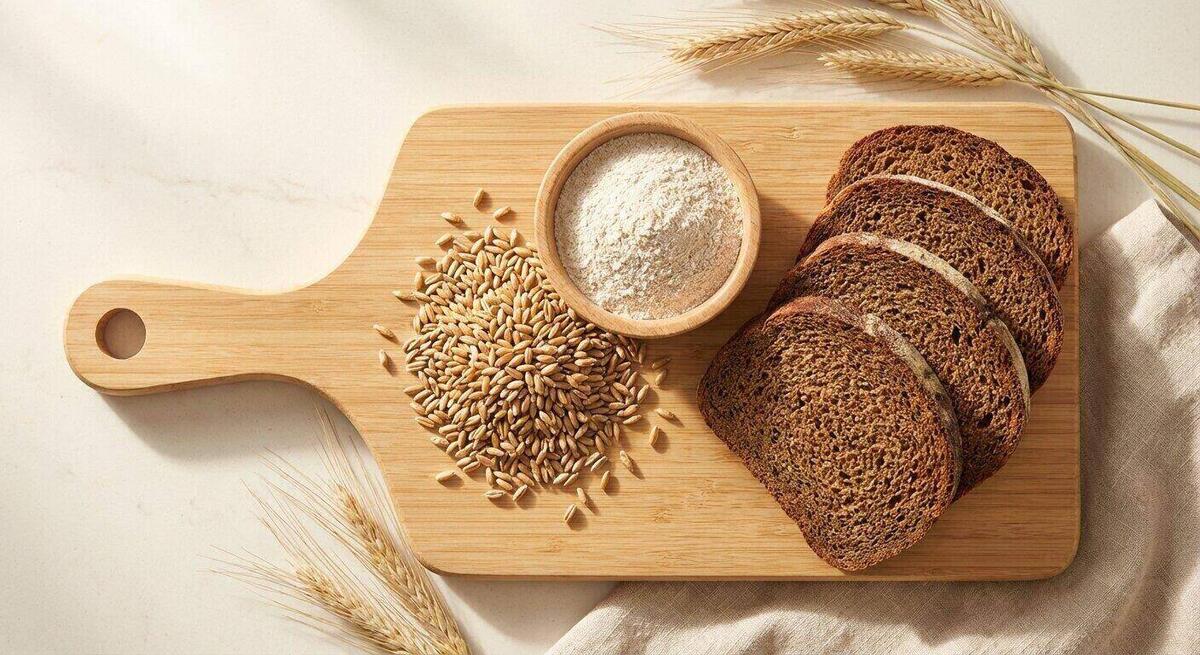
Rye is an ancient cereal grain that’s been a dietary staple in Northern and Eastern Europe for centuries. While wheat dominates the grain market in many Western countries, rye offers a distinctive nutritional profile that makes it worth considering for anyone tracking macros or optimizing their diet.
Whether you’re evaluating rye bread as a sandwich base, experimenting with rye flour in baking, or adding whole rye kernels to grain bowls, understanding the macronutrient breakdown helps you make informed choices. Rye stands out among grains for its exceptional fiber content, unique flavor profile, and beneficial effects on satiety and blood sugar management.
Ready to see how rye fits your macro targets? Use our free macro calculator to determine your personalized protein, carb, and fat goals based on your body composition and fitness objectives.
Related: Learn more about what macros are and how they impact your diet.
Rye Nutrition Facts: Macro Breakdown by Form
Rye comes in several forms, each with slightly different macronutrient profiles. Here’s a comprehensive breakdown:
Whole Rye Grain (Rye Berries)
Per 100g (dry weight):
- Calories: 338
- Protein: 14.8g
- Carbohydrates: 75.9g
- Fiber: 15.1g
- Net Carbs: 60.8g
- Fat: 1.6g
- Sugar: 0.9g
Whole rye grain, also called rye berries, represents the most nutritionally complete form. The substantial fiber content—15.1g per 100g—exceeds most other common grains including wheat (10.7g), oatmeal (10.6g), and quinoa (7g).
Rye Flour (Dark, Whole Grain)
Per 100g:
- Calories: 338
- Protein: 14.8g
- Carbohydrates: 75.9g
- Fiber: 15.1g
- Net Carbs: 60.8g
- Fat: 1.6g
Dark rye flour is milled from whole rye grains, preserving the bran, germ, and endosperm. Its macros mirror whole grain because nothing is removed during processing.
Rye Flour (Light)
Per 100g:
- Calories: 357
- Protein: 9.4g
- Carbohydrates: 78.2g
- Fiber: 5.0g
- Net Carbs: 73.2g
- Fat: 1.4g
Light rye flour is made primarily from the endosperm with bran and germ removed. This processing reduces fiber by 67% and protein by 36%, while increasing net carbs by 20%—a significant nutritional trade-off for a lighter color and milder flavor.
Rye Bread (100% Whole Grain)
Per 100g:
- Calories: 259
- Protein: 8.5g
- Carbohydrates: 48.3g
- Fiber: 8.5g
- Net Carbs: 39.8g
- Fat: 3.3g
Per slice (32g):
- Calories: 83
- Protein: 2.7g
- Carbohydrates: 15.5g
- Fiber: 2.7g
- Net Carbs: 12.8g
- Fat: 1.1g
Commercial rye bread typically contains a mixture of rye and wheat flours, water, yeast, and salt. The hydration from baking reduces calorie density compared to dry flour. Traditional dark rye breads like pumpernickel offer the highest fiber content.
Rye Crispbread/Crackers
Per 100g:
- Calories: 366
- Protein: 11.7g
- Carbohydrates: 73.5g
- Fiber: 16.2g
- Net Carbs: 57.3g
- Fat: 1.8g
Scandinavian-style rye crispbreads are baked until nearly all moisture is removed, concentrating nutrients. The fiber content can exceed 16g per 100g—among the highest of any commercially available grain product.
How Rye Compares to Other Grains
Understanding rye’s position in the grain hierarchy helps with meal planning and substitutions:
Rye vs Wheat
Rye advantages:
- 41% more fiber (15.1g vs 10.7g per 100g)
- Lower glycemic index (GI of 56 vs 70 for white wheat bread)
- Higher levels of resistant starch
- More bioavailable minerals (lower phytic acid)
Wheat advantages:
- Higher gluten content (better bread rise)
- More widely available
- Milder flavor preferred by some
- More complete amino acid profile
Both grains offer similar protein (14-15g per 100g) and total carbohydrates (75-76g per 100g), making the fiber difference the primary nutritional distinction.
Rye vs Oats
While oatmeal is celebrated for heart health benefits, rye offers comparable advantages with some unique properties:
Rye (100g): 338 cal | 14.8g protein | 75.9g carbs | 15.1g fiber Oats (100g): 389 cal | 16.9g protein | 66.3g carbs | 10.6g fiber
Rye provides 42% more fiber than oats and has a lower glycemic response, while oats offer slightly more protein and contain beta-glucan, a specific soluble fiber linked to cholesterol reduction.
Rye vs Rice
Compared to white or brown rice, rye offers dramatically more fiber and protein:
Rye (100g): 338 cal | 14.8g protein | 75.9g carbs | 15.1g fiber Brown Rice (100g): 370 cal | 7.9g protein | 77.2g carbs | 3.5g fiber
Rye provides 87% more protein and 331% more fiber than brown rice, making it substantially more filling and blood-sugar-friendly despite similar total carbohydrate content.
Rye vs Barley
Barley and rye are both ancient grains with excellent fiber content:
Rye (100g): 338 cal | 14.8g protein | 75.9g carbs | 15.1g fiber Barley (100g): 354 cal | 12.5g protein | 73.5g carbs | 17.3g fiber
Barley edges out rye in fiber content (17.3g vs 15.1g), while rye provides more protein (14.8g vs 12.5g). Both offer exceptional satiety and blood sugar benefits compared to refined grains.
Protein Quality in Rye
With 14.8g of protein per 100g, rye offers more protein than most grains, but protein quality matters as much as quantity.
Amino Acid Profile
Rye protein is about 85% complete, but it’s notably low in lysine—an essential amino acid your body cannot produce. The limiting amino acid means rye alone cannot meet all protein needs optimally.
Lysine content comparison (mg per 100g):
- Rye: 420mg
- Wheat: 340mg
- Oats: 701mg
- Quinoa: 766mg
While rye contains more lysine than wheat, it’s still significantly below optimal levels. This limitation is easily addressed through food pairing.
Complementary Protein Pairings
To optimize protein quality when consuming rye, combine it with lysine-rich foods:
Excellent combinations:
- Rye bread with cheese (dairy is high in lysine)
- Rye bread with eggs
- Rye bread with hummus or other legume spreads
- Rye porridge with milk or yogurt
- Rye crackers with tuna or salmon
These combinations create a complete amino acid profile that supports muscle protein synthesis and recovery—important for anyone training regularly or trying to maintain lean mass while cutting.
Protein Digestibility
Rye protein has a digestibility score of approximately 69%, meaning your body absorbs about 69% of the protein content. This is lower than animal proteins (90-95%) but comparable to other grains.
The high fiber content in rye can slightly reduce protein absorption, but this is offset by improved satiety and metabolic benefits. For muscle-building goals, simply account for lower digestibility by consuming slightly more total protein from plant sources.
Carbohydrates and Fiber: The Rye Advantage
Rye’s carbohydrate profile sets it apart from most grains, offering benefits for blood sugar management, gut health, and appetite control.
Fiber Breakdown
Of the 15.1g of fiber per 100g of whole rye:
- Soluble fiber: ~3-4g (20-25%)
- Insoluble fiber: ~11-12g (75-80%)
This fiber composition creates multiple health benefits:
Soluble fiber benefits:
- Slows glucose absorption, reducing blood sugar spikes
- Feeds beneficial gut bacteria
- May reduce LDL cholesterol
- Increases satiety hormones (GLP-1, PYY)
Insoluble fiber benefits:
- Promotes regular bowel movements
- Increases stool bulk
- Reduces digestive transit time
- May reduce colon cancer risk
Glycemic Index and Blood Sugar Impact
Despite containing 76g of carbohydrates per 100g, rye has a remarkably low glycemic index:
Glycemic Index values:
- Whole grain rye bread: 56
- Pumpernickel (dark rye): 46
- Rye crispbread: 64
- White wheat bread: 70
- Whole wheat bread: 69
The low GI means rye causes a slower, more controlled rise in blood sugar compared to wheat products with similar carb content. This is attributed to:
- High fiber content slowing digestion
- Resistant starch (starch that resists digestion in the small intestine)
- Dense structure of rye bread requiring more digestive work
- Bioactive compounds that may influence glucose metabolism
Net Carbs in Rye
For those counting net carbs (total carbs minus fiber):
Rye grain/flour: 75.9g total carbs - 15.1g fiber = 60.8g net carbs Rye bread (per 100g): 48.3g total carbs - 8.5g fiber = 39.8g net carbs Rye bread (per slice): 15.5g total carbs - 2.7g fiber = 12.8g net carbs
While rye isn’t suitable for very low-carb or ketogenic diets, the high fiber content means fewer digestible carbs than the total number suggests, and better satiety per gram of net carb consumed.
Fat Content in Rye
At just 1.6g of fat per 100g, rye is an extremely low-fat food. The minimal fat present is primarily:
- Polyunsaturated fat: ~0.8g (50%)
- Monounsaturated fat: ~0.2g (12.5%)
- Saturated fat: ~0.2g (12.5%)
The polyunsaturated fats include small amounts of omega-3 and omega-6 fatty acids, though not in quantities that significantly contribute to daily requirements.
This low fat content makes rye an excellent choice for those following low-fat dietary approaches or needing to allocate fat macros to other foods. However, it also means rye provides minimal satiety from fat—the satiety comes almost entirely from fiber and complex carbohydrates.
Rye for Different Diet Goals
How rye fits into your diet depends on your specific goals:
Rye for Weight Loss
Rye is exceptionally well-suited for fat loss diets:
Satiety research: Studies show rye bread produces 30% greater satiety than wheat bread with equal calories. One study found participants eating rye bread for breakfast consumed 11% fewer calories at lunch compared to wheat bread breakfast.
Mechanisms:
- High fiber slows gastric emptying
- Increases satiety hormones (GLP-1, peptide YY)
- Reduces hunger hormone ghrelin
- Provides volume without excessive calories
Practical application: Replace regular bread with 100% whole grain rye bread. The increased fullness may naturally reduce total calorie intake by 100-200 calories daily—enough to create a meaningful deficit over time.
Sample weight loss day (1800 calories):
- Breakfast: 2 slices rye bread (166 cal) with 2 eggs (140 cal) and vegetables (50 cal)
- Lunch: Large salad with protein (400 cal)
- Snack: Rye crispbread (50 cal) with cottage cheese (100 cal)
- Dinner: Protein and vegetables (750 cal)
- Snacks: Fruit (150 cal)
The rye products provide just 216 calories while contributing 5.4g of satiating fiber.
Rye for Muscle Building
Rye can support muscle building as part of a higher-calorie diet:
Advantages:
- 14.8g protein per 100g adds to daily protein totals
- Dense carbohydrate source for muscle glycogen replenishment
- Low glycemic response prevents insulin spikes that could promote fat gain
- Nutrient-dense calories from whole grains
Limitations:
- Incomplete protein requiring complementary sources
- High fiber may reduce appetite, making calorie surplus harder
- Not as calorie-dense as some mass-gaining foods
Practical application: Use rye as one of several carbohydrate sources in a balanced diet with 1.6-2.2g protein per kg body weight. Pair rye bread with higher-protein foods:
Post-workout muscle-building meal:
- 3 slices rye bread: 249 cal | 8g protein | 46g carbs
- 4 oz chicken breast: 187 cal | 35g protein | 0g carbs
- 1 tbsp almond butter: 98 cal | 3.4g protein | 3g carbs
- Total: 534 cal | 46g protein | 49g carbs
This provides a solid 2:1 carb-to-protein ratio for glycogen replenishment and muscle protein synthesis.
Rye for Blood Sugar Management
For those with diabetes, prediabetes, or insulin resistance, rye offers significant advantages:
Research findings:
- Rye bread produces 20-30% lower insulin response than wheat bread
- Improved postprandial (after-meal) glucose control
- Better insulin sensitivity with regular consumption
- Reduced glycated hemoglobin (HbA1c) in some studies
Mechanisms:
- Soluble fiber slows glucose absorption
- Lower glycemic index reduces blood sugar spikes
- Resistant starch improves insulin sensitivity
- Bioactive compounds may enhance glucose metabolism
Practical application: Replace higher-GI grain products with whole grain rye options. Monitor individual response, as carbohydrate tolerance varies.
Sample blood-sugar-friendly meal:
- 2 slices pumpernickel: 166 cal | 5g protein | 31g carbs | 5g fiber
- 2 oz smoked salmon: 66 cal | 13g protein | 0g carbs
- 1 oz cream cheese: 99 cal | 2g protein | 2g carbs
- Cucumber and tomato slices: 20 cal
- Total: 351 cal | 20g protein | 33g carbs | 5g fiber
The protein and fiber combination prevents blood sugar spikes despite moderate carbohydrate content.
Rye for Gut Health
Rye’s fiber profile makes it exceptional for digestive health:
Prebiotic effects: Rye contains arabinoxylans—complex carbohydrates that resist digestion in the small intestine and feed beneficial bacteria in the colon. This promotes:
- Increased production of short-chain fatty acids (SCFAs)
- Improved gut barrier function
- Enhanced immune function
- Reduced systemic inflammation
Research: Studies show rye consumption increases beneficial Bifidobacterium and Lactobacillus species while reducing potentially harmful bacteria.
Bowel regularity: The high insoluble fiber content (11-12g per 100g) promotes regular bowel movements and prevents constipation better than most grains.
Practical application: Gradually increase rye consumption to allow gut bacteria to adapt. Start with 1-2 slices of rye bread daily and increase over 2-3 weeks. Pair with adequate hydration (fiber needs water to work effectively).
Rye on Low-Carb or Keto Diets
Rye is generally incompatible with ketogenic diets due to high net carb content:
Net carbs per serving:
- 1 slice rye bread: 12.8g net carbs
- 2 slices: 25.6g net carbs (exceeds most keto daily limits of 20-25g)
However, very small portions might fit moderate low-carb approaches (50-100g carbs daily):
- 1 thin slice rye bread: ~10g net carbs
- 2-3 rye crispbreads: ~10g net carbs
Better low-carb grain alternatives:
- Coconut flour: 18g net carbs per 100g (vs 61g for rye)
- Almond flour: 10g net carbs per 100g
- Flaxseed meal: 2g net carbs per 100g
Micronutrients in Rye
Beyond macros, rye provides substantial vitamins and minerals:
Vitamins
Per 100g whole grain rye:
- Thiamin (B1): 0.29mg (24% DV)
- Riboflavin (B2): 0.25mg (19% DV)
- Niacin (B3): 4.3mg (27% DV)
- Vitamin B6: 0.29mg (17% DV)
- Folate: 38μg (10% DV)
- Vitamin E: 1.3mg (9% DV)
The B-vitamin profile supports energy metabolism, helping convert the carbohydrates in rye into usable energy.
Minerals
Per 100g whole grain rye:
- Manganese: 2.7mg (117% DV)
- Phosphorus: 374mg (30% DV)
- Magnesium: 110mg (26% DV)
- Iron: 2.6mg (14% DV)
- Zinc: 2.7mg (25% DV)
- Selenium: 13.9μg (25% DV)
Manganese is particularly abundant, providing more than the full daily requirement. This mineral supports bone health, wound healing, and carbohydrate metabolism.
Magnesium contributes to muscle function, nerve signaling, and hundreds of enzymatic reactions. Many people don’t consume adequate magnesium, making rye a valuable dietary source.
Bioavailability Considerations
Whole grains contain phytic acid, which can bind minerals and reduce absorption. However, rye has lower phytic acid levels than wheat, and traditional rye bread-making processes (long fermentation, sourdough) further reduce phytic acid by 30-50%, improving mineral bioavailability.
To maximize mineral absorption from rye:
- Choose sourdough rye bread (fermentation reduces phytic acid)
- Soak whole rye berries before cooking
- Pair with vitamin C sources (enhances iron absorption)
Cooking and Preparing Rye
Different forms of rye require different preparation methods:
Whole Rye Berries
Cooking method:
- Rinse 1 cup rye berries
- Combine with 3 cups water in a pot
- Bring to boil, reduce to simmer
- Cook covered for 45-60 minutes until tender
- Drain excess water
Yield: 1 cup dry rye berries = ~2.5 cups cooked
Cooked macros per 100g:
- Calories: 114
- Protein: 5g
- Carbohydrates: 26g
- Fiber: 5g
- Fat: 0.5g
Cooked rye berries work well in:
- Grain bowls
- Salads
- Soups and stews
- Porridge (cook longer with more water)
- Stuffings
Rye Flour
Baking tips:
- Rye flour contains less gluten than wheat, producing denser baked goods
- For lighter texture, combine 50/50 with wheat flour
- Rye benefits from longer fermentation (sourdough works excellently)
- Dark rye has stronger flavor than light rye
- Add vital wheat gluten if needed for structure
Common uses:
- Bread (traditional rye, pumpernickel, sourdough)
- Pancakes and waffles
- Crackers and flatbreads
- Muffins and quick breads
Rye Bread Selection
When buying rye bread, check labels carefully:
Look for:
- “100% whole grain rye” or “whole rye flour” as first ingredient
- Short ingredient lists (flour, water, yeast, salt)
- At least 3g fiber per slice
- No added sugars or oils (traditional rye doesn’t need them)
Avoid:
- “Rye bread” with wheat flour as primary ingredient
- Artificial colors (some use caramel color to fake dark rye appearance)
- High sugar content (>2g per slice)
- Long lists of preservatives and additives
Quality brands: Look for German, Scandinavian, or Eastern European bakeries that specialize in traditional rye breads. These typically offer more authentic, nutrient-dense options than mass-market American “rye” breads.
Storage
Rye berries/flour:
- Store in airtight container in cool, dark place
- Refrigerate or freeze for extended storage (up to 12 months)
- Rye flour can go rancid faster than wheat flour due to oil content
Rye bread:
- Room temperature for 2-3 days (cut side down)
- Refrigeration extends life but dries out bread
- Freeze for up to 3 months (slice first for easy toasting)
- Wrapped tightly to prevent moisture loss
Potential Concerns and Considerations
While rye offers many benefits, some people need to be aware of potential issues:
Gluten Content
Rye contains gluten—specifically secalin, a gluten protein similar to gliadin in wheat. This means:
Must avoid if you have:
- Celiac disease
- Non-celiac gluten sensitivity
- Wheat allergy (may cross-react with rye)
Symptoms in sensitive individuals:
- Digestive discomfort (bloating, gas, diarrhea)
- Headaches
- Fatigue
- Joint pain
- Skin reactions
If you experience these symptoms after consuming rye, consult a healthcare provider about gluten-related disorders.
FODMAPs and Digestive Sensitivity
Rye contains fructans—a type of FODMAP (fermentable oligosaccharides, disaccharides, monosaccharides, and polyols) that can cause digestive issues in sensitive individuals, particularly those with IBS.
High-FODMAP content in rye may cause:
- Bloating and gas
- Abdominal pain
- Diarrhea or constipation
- Cramping
Mitigation strategies:
- Choose sourdough rye bread (fermentation reduces FODMAPs by 50-70%)
- Start with small portions to assess tolerance
- Avoid eating large amounts in one sitting
- Consider working with a dietitian trained in low-FODMAP approaches
Antinutrients
Like all whole grains, rye contains antinutrients:
Phytic acid: Binds minerals (iron, zinc, calcium) and reduces absorption. However, rye has less phytic acid than wheat, and proper preparation (sourdough fermentation, soaking) reduces levels by 30-50%.
Enzyme inhibitors: May interfere with protein digestion. Again, fermentation and soaking neutralize most enzyme inhibitors.
These are not major concerns for most people, especially when consuming a varied diet with both plant and animal foods. The benefits of rye’s fiber and nutrients far outweigh the modest reduction in mineral absorption.
Medication Interactions
The high fiber content in rye can potentially:
- Reduce absorption of certain medications (take medications 1-2 hours apart from high-fiber meals)
- Lower blood sugar (beneficial, but may require medication adjustment for diabetics)
- Affect cholesterol medications (fiber can enhance cholesterol-lowering effects)
If you take medications regularly, discuss dietary changes with your healthcare provider.
Rye Recipes for Macro-Friendly Meals
High-Protein Rye Breakfast
Open-Faced Egg & Avocado on Rye
Ingredients:
- 2 slices whole grain rye bread (83 cal each, 166 total)
- 2 eggs, scrambled (140 cal)
- 1/4 avocado, sliced (60 cal)
- 2 oz smoked salmon (66 cal)
- Fresh dill, lemon
Total macros: 432 cal | 29g protein | 31g carbs | 21g fat | 5g fiber
Balanced Lunch Bowl
Mediterranean Rye Berry Bowl
Ingredients:
- 1 cup cooked rye berries (114 cal)
- 4 oz grilled chicken breast (187 cal)
- 1/2 cup cherry tomatoes (15 cal)
- 1/2 cup cucumber (8 cal)
- 2 tbsp feta cheese (50 cal)
- 1 tbsp olive oil (119 cal)
- Lemon juice, herbs
Total macros: 493 cal | 40g protein | 26g carbs | 24g fat | 5g fiber
Pre-Workout Snack
Rye Toast with Almond Butter & Banana
Ingredients:
- 1 slice rye bread (83 cal)
- 1 tbsp almond butter (98 cal)
- 1/2 small banana, sliced (45 cal)
- Cinnamon
Total macros: 226 cal | 6g protein | 25g carbs | 10g fat | 4g fiber
This provides easily digestible carbs with enough protein and fat to sustain energy during a workout.
Post-Workout Recovery
Rye Bread Protein Sandwich
Ingredients:
- 2 slices rye bread (166 cal)
- 4 oz turkey breast (120 cal)
- 1 slice Swiss cheese (106 cal)
- Lettuce, tomato, mustard (15 cal)
Total macros: 407 cal | 39g protein | 31g carbs | 12g fat | 5g fiber
Perfect 2:1 carb-to-protein ratio for muscle recovery.
Sample Meal Plans with Rye
Weight Loss Plan (1,600 calories)
Breakfast: 2 slices rye bread with 2 poached eggs and spinach (356 cal | 21g P | 31g C | 16g F)
Lunch: Large salad with 4 oz grilled chicken, vegetables, balsamic vinegar (350 cal | 35g P | 20g C | 12g F)
Snack: 3 rye crispbreads with 1/4 cup cottage cheese (150 cal | 12g P | 20g C | 2g F)
Dinner: 5 oz salmon with roasted vegetables and 1/2 cup cooked rye berries (544 cal | 42g P | 40g C | 22g F)
Snack: Apple with 1 tbsp almond butter (200 cal | 3g P | 22g C | 9g F)
Daily totals: 1,600 cal | 113g P | 133g C | 61g F | 28g fiber
Muscle Building Plan (2,800 calories)
Breakfast: 3 slices rye bread with 3 eggs, avocado, and cheese (650 cal | 35g P | 47g C | 36g F)
Snack: Protein shake with banana and oats (400 cal | 40g P | 45g C | 8g F)
Lunch: Rye bread sandwich with 6 oz turkey, cheese, and vegetables (600 cal | 52g P | 48g C | 18g F)
Pre-workout: 2 slices rye bread with honey and almond butter (350 cal | 8g P | 48g C | 14g F)
Post-workout: 6 oz chicken with 1 cup cooked rye berries and vegetables (550 cal | 50g P | 52g C | 10g F)
Dinner: 6 oz steak with sweet potato and salad (500 cal | 48g P | 35g C | 18g F)
Evening snack: Greek yogurt with berries and granola (350 cal | 25g P | 40g C | 10g F)
Daily totals: 2,800 cal | 258g P | 315g C | 114g F
Frequently Asked Questions
What are the macros in 100g of rye flour?
Per 100g, whole grain rye flour contains approximately 338 calories, 14.8g protein, 75.9g carbohydrates, and 1.6g fat. It also provides an impressive 15.1g of dietary fiber—making it one of the most fiber-dense grain flours available.
The fiber content is 41% higher than whole wheat flour, which translates to better satiety, improved blood sugar control, and enhanced digestive health. Dark rye flour maintains all the nutrients from the whole grain, while light rye flour (made from just the endosperm) contains significantly less fiber and protein.
When using rye flour in recipes, keep in mind that the high fiber content absorbs more liquid than wheat flour. You may need to increase hydration by 10-15% when substituting rye for wheat in baking recipes. The lower gluten content also produces denser baked goods, which is why many recipes combine rye with wheat flour for better texture.
Is rye bread better than wheat bread for macros?
Rye bread typically has similar calories to wheat bread (about 259 calories per 100g) but offers 30-40% more fiber (8.5g vs 6g per 100g in whole wheat bread). The macronutrient breakdown is comparable, with rye providing slightly more protein in some cases.
However, the real advantage isn’t in the macro numbers themselves—it’s in the metabolic response. Rye bread has a glycemic index of 56 compared to 69 for whole wheat bread, meaning it causes a slower, more controlled rise in blood sugar despite similar carbohydrate content. This lower GI response is attributed to rye’s higher fiber content, resistant starch, and dense bread structure.
Multiple studies demonstrate that rye bread produces greater satiety than wheat bread with equal calories. One study found that people eating rye bread for breakfast consumed 11% fewer calories at lunch compared to those who ate wheat bread. Over time, this spontaneous reduction in calorie intake could support weight management without conscious restriction.
For blood sugar management, appetite control, and sustained energy, rye bread offers metabolic advantages over wheat bread despite similar macros. However, wheat bread’s lighter texture and milder flavor make it preferable for some applications and personal preferences.
How much protein is in rye grain?
Whole rye grain contains approximately 14.8g of protein per 100g (dry weight), which is comparable to wheat (13-15g) and substantially higher than rice (7-8g), corn (9g), and most other common grains. This places rye among the higher-protein grain options.
However, quantity isn’t everything—protein quality matters too. Rye protein is incomplete, meaning it doesn’t provide all essential amino acids in optimal ratios. Specifically, rye is low in lysine, one of the nine essential amino acids your body cannot produce. With only 420mg of lysine per 100g, rye provides about 60% of the lysine found in animal proteins.
This limitation is easily addressed through food combinations. Pairing rye with lysine-rich foods creates a complete amino acid profile:
- Rye bread with cheese, eggs, or meat
- Rye porridge with milk or yogurt
- Rye crackers with hummus or other legume spreads
- Rye berries in a Buddha bowl with beans
The protein digestibility of rye is approximately 69%, meaning your body absorbs about two-thirds of the protein content. While lower than animal proteins (90-95% digestible), this is typical for plant proteins. For athletes or those prioritizing muscle building, simply consume slightly more total protein from plant sources to account for lower digestibility.
Bottom line: Rye provides a decent amount of protein for a grain, but it works best as part of a varied diet with complementary protein sources rather than as a primary protein staple.
Does rye have more carbs than other grains?
Rye contains approximately 76g of carbohydrates per 100g (dry weight), which is virtually identical to wheat (75g), oats (66g), and brown rice (77g). In terms of total carbohydrate content, rye is firmly middle-of-the-pack among common grains.
The meaningful difference lies in the type and quality of those carbohydrates, not the quantity:
Fiber content: Rye provides 15.1g of fiber per 100g—41% more than wheat (10.7g), 42% more than oats (10.6g), and 331% more than brown rice (3.5g). This exceptional fiber content means fewer net digestible carbs and dramatically better satiety per gram consumed.
Net carbs: When accounting for fiber, rye provides 60.8g net carbs per 100g—slightly lower than wheat (64.3g) and rice (73.5g).
Glycemic response: Despite similar total carbs, rye has a significantly lower glycemic index (56) compared to whole wheat bread (69) and white rice (73). This means rye causes a slower, more stable rise in blood sugar, reducing insulin spikes and promoting sustained energy.
Resistant starch: Rye contains higher levels of resistant starch—a type of carbohydrate that resists digestion in the small intestine and functions more like fiber. This further reduces the metabolic impact of rye’s carbohydrates.
So while rye doesn’t have fewer total carbs than other grains, the combination of high fiber, low GI, and resistant starch makes those carbohydrates metabolically friendlier for blood sugar management, satiety, and long-term health.
Can you eat rye on a low-carb or keto diet?
Rye is not suitable for strict ketogenic diets, which typically limit net carbs to 20-25g per day. A single slice of rye bread contains about 13g net carbs, and two slices (26g) would exceed most keto limits entirely.
Why rye doesn’t fit keto:
- 60.8g net carbs per 100g (dry grain)
- 12.8g net carbs per slice of bread
- Even small portions consume most of the daily carb allowance
- The carbohydrate content will prevent or interrupt ketosis for most people
However, rye can potentially fit into moderate low-carb approaches (50-100g net carbs daily):
Moderate low-carb usage:
- 1 thin slice of rye bread (10-12g net carbs) as part of breakfast
- 2-3 rye crispbreads (8-10g net carbs) with low-carb toppings
- Small portion (1/4 cup cooked) rye berries in a grain bowl
Better low-carb grain alternatives: If you’re following a low-carb diet and want grain-like foods, consider:
- Cauliflower rice: 3g net carbs per 100g
- Konjac/shirataki rice: 1g net carbs per 100g
- Almond flour: 10g net carbs per 100g (vs 61g for rye)
- Coconut flour: 18g net carbs per 100g
The verdict: Save rye for moderate-carb approaches (100-150g daily) where its exceptional fiber content and satiety benefits can shine. For keto or very low-carb diets, the carbohydrate content is simply too high to make rye a practical choice.
What’s the difference between light and dark rye flour macros?
The difference between light and dark rye flour comes down to milling and processing, which significantly impacts the nutritional profile:
Dark rye flour (whole grain):
- 338 calories per 100g
- 14.8g protein
- 75.9g carbohydrates
- 15.1g fiber
- Made from the entire rye kernel (bran, germ, endosperm)
Light rye flour:
- 357 calories per 100g
- 9.4g protein (36% less than dark)
- 78.2g carbohydrates (3% more than dark)
- 5.0g fiber (67% less than dark)
- Made primarily from the endosperm (bran and germ removed)
What the numbers mean:
Light rye flour is essentially “refined” rye—similar to how white wheat flour is refined wheat. By removing the bran and germ (the most nutrient-dense parts of the grain), you lose:
- Two-thirds of the fiber
- One-third of the protein
- Most of the B vitamins
- Most of the minerals (manganese, magnesium, iron, zinc)
- Beneficial bioactive compounds
In exchange, you get a lighter color, milder flavor, and finer texture that some bakers prefer for certain applications. The calorie difference is minimal—light rye actually has slightly more calories due to the higher proportion of starchy endosperm.
Which should you choose?
For nutrition and satiety, dark (whole grain) rye flour is dramatically superior. The fiber content alone—15.1g vs 5g—makes it three times more filling and blood-sugar-friendly than light rye.
However, light rye works better for:
- Very light-colored rye breads
- Delicate pastries and cakes
- Applications where wheat-like texture is desired
- Combining with whole grain flours for balanced nutrition and texture
Best compromise: Many traditional rye breads use a combination—perhaps 70% dark rye and 30% light rye—to balance nutrition with texture and flavor. This gives you most of the fiber and nutrients while improving bread structure and reducing the sometimes overpowering flavor of 100% whole rye.
Is rye good for weight loss?
Yes, rye can be exceptionally beneficial for weight loss when incorporated into a calorie-controlled diet. Several mechanisms make rye particularly effective for fat loss:
1. Superior satiety: Multiple studies demonstrate that rye bread produces significantly greater fullness than wheat bread with equal calories. Research shows:
- 30% greater satiety rating after rye bread consumption
- Reduced hunger hormones (ghrelin) for up to 8 hours
- Spontaneous reduction in calorie intake at subsequent meals
- One study found 11% fewer calories consumed at lunch after rye breakfast vs. wheat breakfast
2. High fiber content: With 15.1g of fiber per 100g (whole grain), rye provides exceptional volume with minimal calories. Fiber:
- Slows gastric emptying, keeping you full longer
- Reduces energy density (calories per gram)
- Requires more chewing, which increases satiety signals
- Feeds beneficial gut bacteria linked to healthier body weight
3. Blood sugar control: Rye’s low glycemic index (56) prevents the blood sugar spikes and crashes that trigger hunger and cravings. Stable blood sugar means:
- More consistent energy throughout the day
- Reduced cravings for high-calorie foods
- Better appetite regulation
- Improved insulin sensitivity over time
4. Thermic effect: Whole grains have a higher thermic effect of food (TEF) than refined grains—your body burns more calories digesting them. The high fiber in rye maximizes this effect.
Practical application for weight loss:
Replace refined grains with rye:
- Swap white bread for whole grain rye bread (saves ~20 cal/slice, adds 2-3g fiber)
- Use rye crispbreads instead of crackers (more filling per calorie)
- Add cooked rye berries to salads for volume and satisfaction
A typical replacement might be:
- Before: 2 slices white bread (140 cal, 1g fiber)
- After: 2 slices rye bread (166 cal, 5.4g fiber)
You consume 26 more calories but may spontaneously eat 100-200 fewer calories later in the day due to increased satiety—a net calorie reduction.
Important caveat: Rye helps weight loss by promoting satiety within a calorie deficit. It’s not magic—portion control still matters. If you eat rye in addition to your current diet without creating a calorie deficit, you won’t lose weight. But as a replacement for less-filling carbohydrates, rye can make a calorie deficit more sustainable and comfortable.
How many carbs are in a slice of rye bread?
One slice (32g) of typical whole grain rye bread contains:
- Total carbohydrates: 15-16g
- Fiber: 2-3g
- Net carbs: 13-14g
- Protein: 2-3g
- Fat: 1g
- Calories: 83
These numbers can vary based on the specific brand and recipe:
Light rye bread (mostly wheat with some rye):
- May have only 1-1.5g fiber per slice
- Higher net carbs (14-15g)
- Less nutritional benefit
Dark, dense rye bread (German/Scandinavian style):
- Often 3-4g fiber per slice
- Lower net carbs (11-12g)
- More nutrients and satiety
Pumpernickel (very dark rye bread):
- Typically 3-4g fiber per slice
- 12-13g net carbs
- Lowest glycemic index among rye breads
For macro tracking purposes:
If you’re tracking macros carefully, weigh your bread rather than relying on “per slice” estimates. Slice thickness varies dramatically:
- Thin commercial slice: 25-28g
- Standard slice: 32-35g
- Thick-cut artisan slice: 40-50g
A 40g slice would contain about 20g total carbs and 3-4g fiber—significantly more than the standard serving size.
Fitting rye bread into daily macros:
Two slices of rye bread provide approximately:
- 30-32g carbs
- 5-6g fiber
- 5-6g protein
- 166 calories
This fits comfortably into most macro plans:
- Low-carb (100g/day): Uses 30% of daily carb allowance
- Moderate carb (200g/day): Uses 15% of daily carb allowance
- Higher carb (300g/day): Uses 10% of daily carb allowance
The high fiber content means rye bread provides excellent satiety for the carbohydrate cost, making it a macro-efficient choice for those who enjoy bread as part of their diet.
Conclusion: Making Rye Work for Your Macros
Rye stands out among grains for its exceptional fiber content, low glycemic index, and superior satiety—qualities that make it valuable for weight management, blood sugar control, and overall health. While the macronutrient breakdown shows typical grain numbers (76g carbs, 15g protein, 2g fat per 100g), the high fiber content (15.1g) and unique bioactive compounds create metabolic benefits that transcend the basic macro numbers.
Key takeaways:
- Protein: 14.8g per 100g is respectable for a grain, but rye protein is incomplete and requires complementary sources (dairy, eggs, legumes, meat)
- Carbohydrates: 76g total carbs with 15g fiber means 61g net carbs—moderate for a grain, but with excellent blood sugar management
- Fat: Minimal at 1.6g per 100g—allocate fat macros elsewhere
- Fiber: The standout feature at 15g per 100g—among the highest of all common grains
- Satiety: Exceptional fullness per calorie, potentially reducing total calorie intake by 100-200 calories daily
Best uses for different goals:
- Weight loss: Excellent—high satiety reduces hunger and spontaneous calorie intake
- Muscle building: Good—provides quality carbs and some protein, but pair with complete proteins
- Blood sugar management: Excellent—low GI and high fiber prevent spikes
- Gut health: Excellent—prebiotic fibers feed beneficial bacteria
- Keto/very low-carb: Poor—too high in net carbs
Whether you choose whole rye berries for grain bowls, rye flour for baking, or traditional rye bread for sandwiches, this ancient grain offers modern nutritional benefits that make it worth including in a balanced, macro-conscious diet.
Calculate your personalized macro targets with our macro calculator and experiment with incorporating rye in portions that fit your specific goals. Your gut bacteria—and your satiety levels—will thank you.
Related Articles

Dragonfruit Macros: Complete Nutrition Guide for Pitaya
Complete macro breakdown of dragonfruit (pitaya). Learn the calories, protein, carbs, and...
Read guide →
Bulgur Macros: Complete Nutritional Guide & Health Benefits
Discover bulgur's complete macro breakdown, nutritional benefits, and how to incorporate...
Read guide →
Radish Macros: Nutrition Facts and Health Benefits
Complete guide to radish macros and nutrition. Learn calories, protein, carbs, and health...
Read guide →Note: Nutrition values are approximate and may vary based on preparation method and source.