Best Macro Split for Weight Loss: Complete Guide with Meal Plans
Reviewed by Sarah Chen, MS, RD
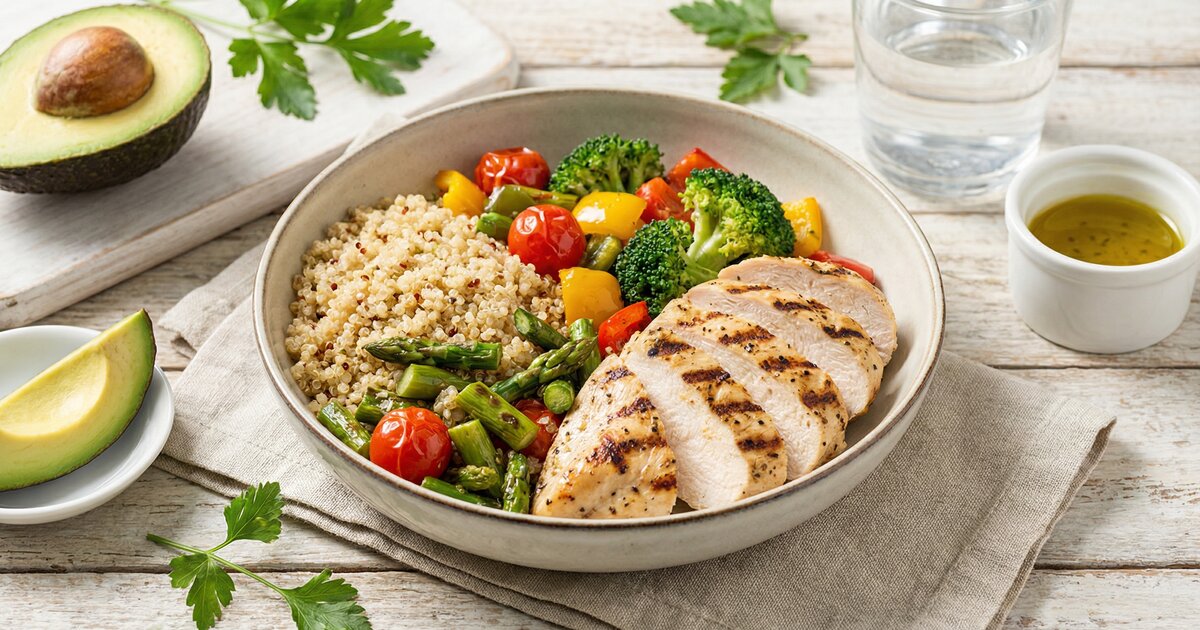
You’ve decided to lose weight. You know a calorie deficit is required. But what should you actually eat?
Should you go low-carb? Low-fat? Just eat less of everything? What about protein—does it matter if you hit 80 grams or 150 grams?
Here’s what most weight loss advice misses: Not all calorie deficits are created equal. Two people eating 1,700 calories with different macro splits will see dramatically different results—one loses fat and keeps muscle, the other loses weight but looks soft and feels miserable.
The right macro split for weight loss does three things:
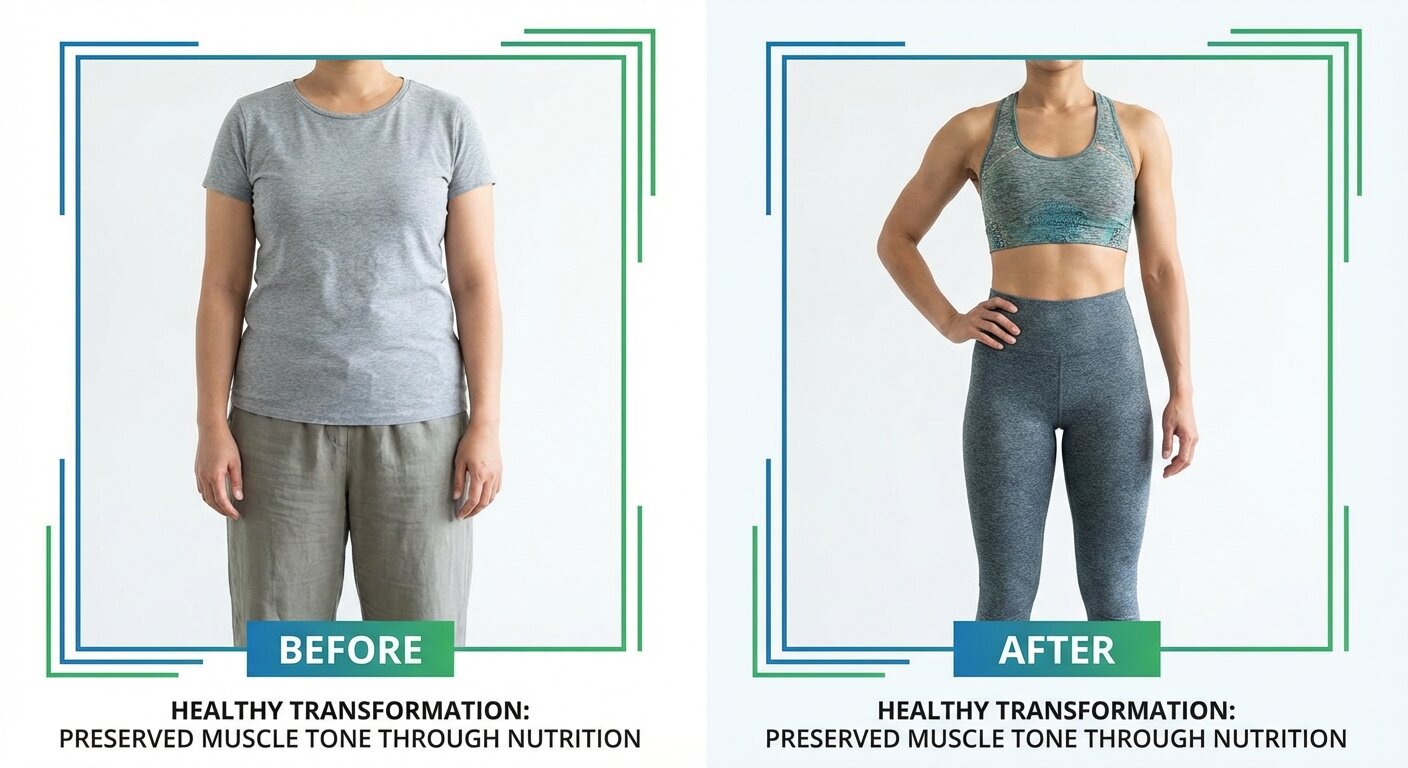
- Preserves muscle mass (so you look lean, not just smaller)
- Manages hunger (so you can actually stick to your deficit)
- Supports your training and daily energy (so you don’t feel like garbage)
This guide breaks down the optimal macro split for fat loss, explains why it works, and shows you how to calculate your personal targets. You’ll learn exactly how much protein, carbs, and fat to eat for sustainable fat loss without sacrificing muscle or sanity.
Ready to get your personalized targets? Our free macro calculator gives you exact numbers based on your stats and goals.
The Optimal Macro Split for Weight Loss
Let’s start with the bottom line, then explain why it works.
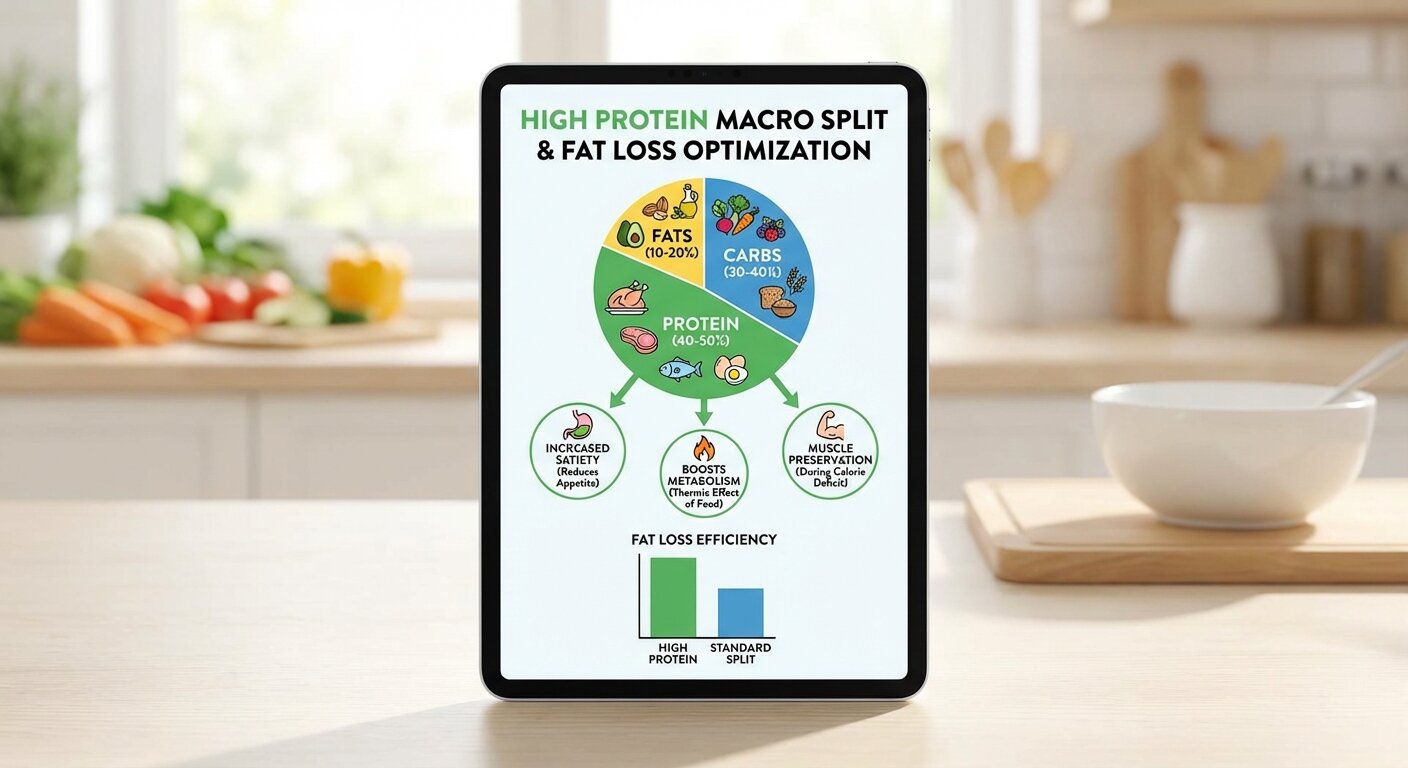
The Recommended Split: 40/35/25
40% protein | 35% carbs | 25% fat
This translates to:
- High protein: 0.8-1.0g per pound bodyweight
- Moderate carbs: Enough to fuel training and daily activity
- Moderate fat: Minimum for hormone health and satiety
Example for 1,800 calories:
- Protein: 180g (720 cal = 40%)
- Carbs: 158g (630 cal = 35%)
- Fat: 50g (450 cal = 25%)
This is the sweet spot for most people trying to lose fat while preserving muscle.
Alternative Splits That Also Work
More aggressive (if very hungry): 45/35/20
- Even higher protein for maximum satiety
- Slightly lower fat to accommodate more protein
For endurance athletes: 35/45/20
- More carbs to fuel training volume
- Still high protein for recovery
For very low-calorie diets (<1,500 cal): 40/40/20
- Maximize protein to preserve muscle
- Minimum fat for hormones
The key: protein stays high regardless of the split.
Why This Split Works
1. High protein preserves muscle
When you’re in a calorie deficit, your body can break down muscle for energy. High protein intake (0.8-1.0g per pound) signals your body to preserve muscle and prioritize fat burning instead.
Research shows protein intake is the #1 factor determining whether you lose muscle or fat during a diet.
2. Protein maximizes satiety
Protein is the most satiating macronutrient. Increasing protein from 15% to 30% of calories reduces hunger by 25-30% and decreases obsessive food thoughts by 60%.
Translation: High protein makes your deficit dramatically easier to stick to.
3. Protein has the highest thermic effect
Your body burns ~25-30% of protein calories just digesting it (vs ~5-10% for carbs, 0-3% for fat). This is called the thermic effect of food (TEF).
180g protein = 720 calories consumed, but only ~540 net calories after digestion. Free calorie burn.
4. Moderate carbs support training
Enough carbs to:
- Fuel your workouts (glycogen for energy)
- Prevent excessive fatigue
- Support daily activity
But not so many carbs that you can’t create a sufficient deficit.
5. Adequate fat for hormones
Fat is essential for:
- Hormone production (testosterone, estrogen)
- Vitamin absorption (A, D, E, K)
- Satiety and meal satisfaction
25% of calories (0.3-0.35g per pound) is enough without being excessive.
How to Calculate Your Personal Weight Loss Macros
Let’s walk through the calculation step-by-step.
Step 1: Calculate Your TDEE
TDEE (Total Daily Energy Expenditure) = maintenance calories
Use our macro calculator or manually calculate:
Quick method:
- Bodyweight (lbs) × activity multiplier
Activity multipliers:
- Sedentary (little exercise): 12-13
- Lightly active (1-3x/week): 13-14
- Moderately active (3-5x/week): 14-15
- Very active (6-7x/week): 15-17
Example: 160-pound woman, moderately active 160 × 14.5 = 2,320 calories (maintenance)
Step 2: Set Your Deficit
For sustainable fat loss: 300-500 calorie deficit
This creates 0.5-1 pound loss per week (healthy rate).
Example: 2,320 - 400 = 1,920 calories (target)
Step 3: Calculate Protein
Formula: Bodyweight × 0.8-1.0 = daily protein (grams)
Use higher end (1.0g) if:
- Very active/lifting weights
- In aggressive deficit (500+ calories)
- History of yo-yo dieting
Example: 160 × 0.9 = 144g protein
Convert to calories: 144 × 4 = 576 calories
Step 4: Calculate Fat
Formula: Bodyweight × 0.3-0.35 = daily fat (grams)
Women should aim toward higher end (0.35g) for hormone health.
Example: 160 × 0.33 = 53g fat
Convert to calories: 53 × 9 = 477 calories
Step 5: Calculate Carbs (Fill Remaining)
Formula: (Target calories - protein calories - fat calories) ÷ 4
Example: (1,920 - 576 - 477) ÷ 4 = 867 ÷ 4 = 217g carbs
Final Macros
1,920 calories | 144g protein | 217g carbs | 53g fat
Let’s verify: (144×4) + (217×4) + (53×9) = 576 + 868 + 477 = 1,921 ✓
These are her daily targets for fat loss.
For the complete calculation walkthrough, read how to calculate macros for fat loss.
Weight Loss Macros vs Maintenance Macros
Let’s compare what changes when cutting vs maintaining.
Same Person, Different Goals
160-pound woman, moderately active
Maintenance macros (2,320 cal):
- Protein: 144g (maintain muscle)
- Fat: 65g (comfortable amount)
- Carbs: 290g (fuel activity)
Fat loss macros (1,920 cal - 400 deficit):
- Protein: 144g (SAME - preserve muscle)
- Fat: 53g (reduced to minimum)
- Carbs: 217g (reduced for deficit)
What Changes
Protein stays the same → Your muscle preservation needs don’t change just because you’re dieting. If anything, you need more protein during cuts.
Fat reduces to minimum → Drop to 0.3-0.35g per pound (just enough for hormones)
Carbs absorb the deficit → Reduce carbs to create your calorie deficit while keeping protein high
This strategy preserves muscle and metabolic health during fat loss.
Common Weight Loss Macro Mistakes
Let’s address mistakes that sabotage fat loss.
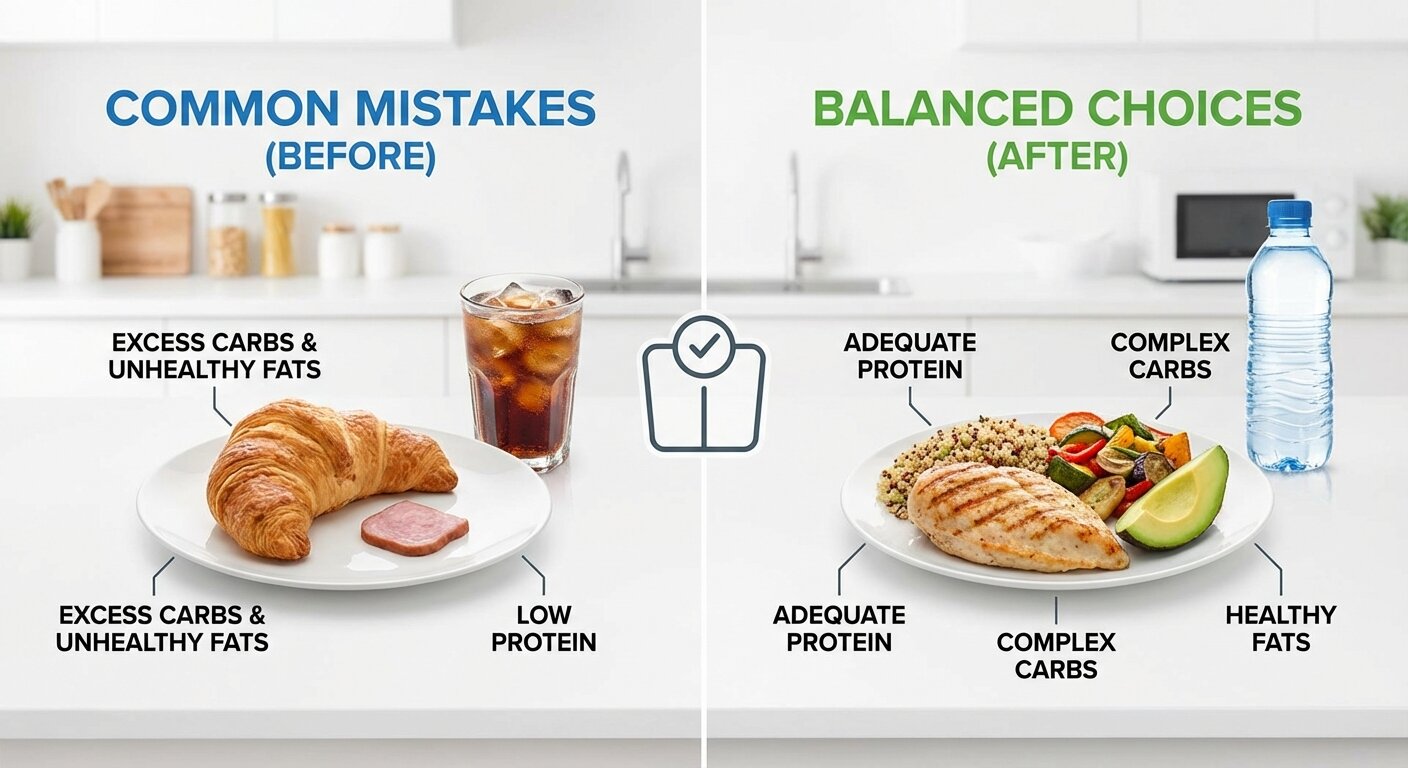
Mistake 1: Setting Protein Too Low
Wrong: “I’ll do 100g protein to save calories for other food.”
Why it fails:
- Muscle loss accelerates
- Hunger increases dramatically
- Metabolism slows more than necessary
- You lose weight but look “soft”
Fix: Protein is non-negotiable. Minimum 0.8g per pound, ideally 1.0g during aggressive cuts.
Mistake 2: Going Too Low on Calories
Wrong: “I’ll eat 1,200 calories to lose weight faster.”
Why it fails:
- Excessive muscle loss
- Metabolic adaptation (body lowers calorie burn)
- Extreme hunger leads to binges
- Unsustainable (burnout in 2-3 weeks)
Fix: Use a moderate 300-500 calorie deficit. Patience wins.
Mistake 3: Cutting Fat Too Low
Wrong: “I’ll do 20g fat to save calories.”
Why it fails:
- Hormone disruption (especially in women)
- Poor satiety (fat is filling)
- Vitamin malabsorption
- Low energy and mood issues
Fix: Keep fat at 0.3-0.35g per pound minimum (25-30% of calories).
Mistake 4: Eliminating Carbs Unnecessarily
Wrong: “I’ll do keto to lose weight faster.”
Why it’s not always optimal:
- Training performance suffers (if you lift weights)
- Water weight loss creates false impression of progress
- Difficult to adhere to long-term
- Not superior to moderate-carb diets for fat loss
Truth: Low-carb works for some people, but moderate carbs (35-40% of calories) work just as well if you’re active. Choose based on preference.
Mistake 5: Not Adjusting as Weight Drops
Wrong: “I calculated my macros 12 weeks ago and haven’t changed them.”
Why it fails: As you lose weight, your calorie needs decrease. What created a deficit at 180 pounds is maintenance at 165 pounds.
Fix: Recalculate every 10-15 pounds lost or when progress stalls for 2-3 weeks.
Sample Weight Loss Meal Plans
Let’s see these macros in real food.
1,800 Calories | 160P | 190C | 55F
Breakfast: Egg White Veggie Scramble (320 cal | 32P | 35C | 7F)
- 6 egg whites, 1 whole egg
- Bell peppers, spinach, mushrooms
- 1 cup oatmeal with cinnamon
- Black coffee
Mid-Morning Snack: Greek Yogurt Bowl (180 cal | 22P | 20C | 2F)
- 1 cup nonfat Greek yogurt
- 1/2 cup berries
- Stevia for sweetness
Lunch: Grilled Chicken Power Bowl (480 cal | 45P | 50C | 10F)
- 6 oz grilled chicken breast
- 1 cup brown rice
- Steamed broccoli and carrots
- 1 tsp olive oil for cooking
Afternoon Snack: Protein Shake (140 cal | 26P | 6C | 2F)
- 1 scoop whey protein
- Water or unsweetened almond milk
- Ice
Dinner: Salmon with Sweet Potato (580 cal | 48P | 52C | 20F)
- 7 oz baked salmon
- 1 medium sweet potato
- Asparagus with lemon
- Mixed greens salad
Evening Snack: Cottage Cheese (100 cal | 14P | 8C | 2F)
- 1/2 cup low-fat cottage cheese
- Cucumber slices
Daily Total: 1,800 cal | 187P | 171C | 43F (close to targets)
1,500 Calories | 140P | 140C | 47F (Smaller Frame)
Breakfast: Protein Oats (280 cal | 25P | 35C | 6F)
- 1/2 cup oats
- 1 scoop protein powder mixed in
- 1/2 banana
- Cinnamon
Snack: Hard-Boiled Eggs (140 cal | 12P | 2C | 10F)
- 2 hard-boiled eggs
- Baby carrots
Lunch: Turkey Lettuce Wraps (320 cal | 38P | 18C | 12F)
- 6 oz deli turkey
- Romaine lettuce wraps
- Hummus (2 tbsp)
- Tomatoes, cucumbers
- Apple slices
Snack: Protein Bar (190 cal | 20P | 22C | 7F)
- Quest bar or similar
Dinner: Lean Beef Stir-Fry (500 cal | 45P | 48C | 18F)
- 5 oz 93% lean ground beef
- Mixed vegetables (peppers, onions, snap peas)
- 3/4 cup white rice
- Low-sodium soy sauce
Snack: Casein Shake (90 cal | 20P | 4C | 1F)
- 1 scoop casein protein before bed
Daily Total: 1,520 cal | 160P | 129C | 54F
For more meal ideas, check out macro meal prep strategies.
How to Adjust Your Macros Based on Progress
Your initial macros are a starting point. Here’s when and how to adjust.
After 2-3 Weeks: Assess Progress
Measure:
- Weekly average weight (weigh daily, average weekly)
- Progress photos (same time, lighting, clothing)
- Measurements (waist, hips, chest)
- Gym performance
Expected progress: 0.5-1% of bodyweight lost per week
Examples:
- 150 lbs → 0.75-1.5 lbs per week
- 200 lbs → 1-2 lbs per week
If Losing Weight Too Slowly (< 0.5%/week)
Option 1: Reduce carbs by 25-50g (-100-200 calories) Option 2: Reduce fat by 10-15g (-90-135 calories) Option 3: Add 1-2 cardio sessions weekly
Keep protein unchanged to preserve muscle.
Give the adjustment 2-3 weeks before changing again.
If Losing Weight Too Fast (> 2%/week)
Problem: Rapid loss often includes muscle loss.
Solution: Increase carbs by 25-50g (+100-200 calories)
This slows fat loss to sustainable rate while preserving muscle.
If Constantly Hungry
Solution: Increase protein by 20-30g, reduce carbs to compensate
Protein is more satiating than carbs. This keeps calories the same but dramatically improves satiety.
If Low Energy in Workouts
Solution: Add 25-50g carbs around training, reduce fat slightly
Carbs fuel high-intensity training. Time them pre/post-workout for best performance.
When You Hit a Plateau (No change for 2-3 weeks)
Step 1: Verify you’re tracking accurately (weighing food, logging everything) Step 2: Reduce calories by 200 (from carbs or fat) Step 3: Consider a diet break (eat at maintenance for 1-2 weeks)
Plateaus are normal every 10-15 pounds lost.
Read our guide on why you’re not losing weight for detailed troubleshooting.

Weight Loss Macros for Special Situations
For Women Over 40
Considerations:
- Slower metabolism (use lower activity multiplier)
- Hormone fluctuations affect water retention
- Preserve muscle more aggressively (higher protein)
Recommended: 40/35/25 split with protein at 1.0g per pound
Read our specialized guide: macros for women over 40.
For Large Amounts to Lose (50+ pounds)
Considerations:
- Use goal weight or midpoint for calculations (not current weight)
- Start with moderate deficit (300-400 cal)
- Plan for multiple adjustment phases
Example: 250 lbs wanting to reach 180 lbs
- Use 215 lbs for calculations initially
- Recalculate every 15-20 pounds lost
For Very Short Individuals (<5’2”)
Challenge: TDEE may be only 1,400-1,600 calories
Solution:
- Deficit of 300 calories → 1,100-1,300 calorie target
- Prioritize protein (0.8-1.0g per pound)
- May need to increase activity to create larger deficit
Warning: Don’t go below 1,200 calories without medical supervision.
For Vegetarians/Vegans
Considerations:
- Plant proteins are less bioavailable
- May need slightly more total protein (0.9-1.0g per pound)
Solution:
- Focus on complete proteins (soy, quinoa)
- Use protein powder to hit targets
- Combine incomplete proteins
Check out our vegan macro guide for comprehensive plant-based nutrition.
FAQ: Weight Loss Macros
Do I eat the same macros on rest days vs workout days?
For beginners: Yes, keep it consistent. Advanced lifters can use carb cycling (more carbs on training days, fewer on rest days), but total weekly intake matters most.
Should I adjust macros if I’m not hungry?
Your deficit might be too small, or you’re naturally good at ignoring hunger. Track progress—if you’re losing 0.5-1% bodyweight weekly, stay the course.
Can I lose weight without hitting my macros exactly every day?
Yes. Being within 10-15g of targets is fine. Aim for weekly averages, not daily perfection. One off day won’t ruin progress.
What if I go over my macros one day?
Don’t compensate by eating dramatically less the next day. Get back on track and move forward. One day doesn’t matter in the 12-week picture.
How long should I stay in a deficit?
8-16 weeks depending on how much you need to lose. After 12-16 weeks in deficit, consider a 1-2 week diet break at maintenance calories before resuming.
Do I need to recalculate macros every week?
No. Recalculate every 10-15 pounds lost or when progress stalls for 2-3 weeks. Your calorie needs don’t change significantly week-to-week.
The Bottom Line
The best macro split for weight loss: 40% protein | 35% carbs | 25% fat
Or in gram-based terms (more accurate):
- Protein: 0.8-1.0g per pound bodyweight
- Fat: 0.3-0.35g per pound bodyweight
- Carbs: Fill remaining deficit calories
This split:
- Preserves muscle mass during calorie deficit
- Maximizes satiety (makes deficit easier)
- Supports training performance
- Optimizes fat loss over muscle loss
The process:
- Calculate TDEE (maintenance calories)
- Create 300-500 calorie deficit
- Set protein high (0.8-1.0g per pound)
- Set fat at minimum (0.3-0.35g per pound)
- Use remaining calories for carbs
- Track consistently for 2-3 weeks
- Adjust based on progress
Expected results: 0.5-1% of bodyweight lost per week (sustainable, preserves muscle)
Ready to get your personalized weight loss macros? Use our free macro calculator to get exact targets based on your stats.
Then read how to calculate macros for fat loss for the complete step-by-step process.
Track your macros consistently, prioritize protein, and watch your body transform—not just shrink—over the next 8-12 weeks.
Related Guide: This article is part of our complete Macros for Weight Loss guide.
Related Resources
- Macros for Weight Loss (Pillar Guide)
- Cutting Macros: Complete Guide — Aggressive fat loss with muscle preservation
- How to Count Macros
- Calculate Your Personal Macros
Related Articles
Travel Macros: How to Track Nutrition While Traveling
Complete guide to managing macros while traveling. Learn meal planning strategies,...
Read guide →
Macros for Shift Workers: Complete Guide to Nutrition on Rotating Schedules
Master macro tracking on night shifts and rotating schedules. Learn meal timing, sleep...
Read guide →
Macros During Ramadan: Complete Nutrition Guide for Fasting
Learn how to track macros during Ramadan fasting. Expert guide covering meal timing,...
Read guide →Disclaimer: This content is for informational purposes only. Consult a healthcare provider before making changes to your diet.