Carnivore Diet Macros: Complete Guide to Zero-Carb Eating
Reviewed by Sarah Chen, MS, RD
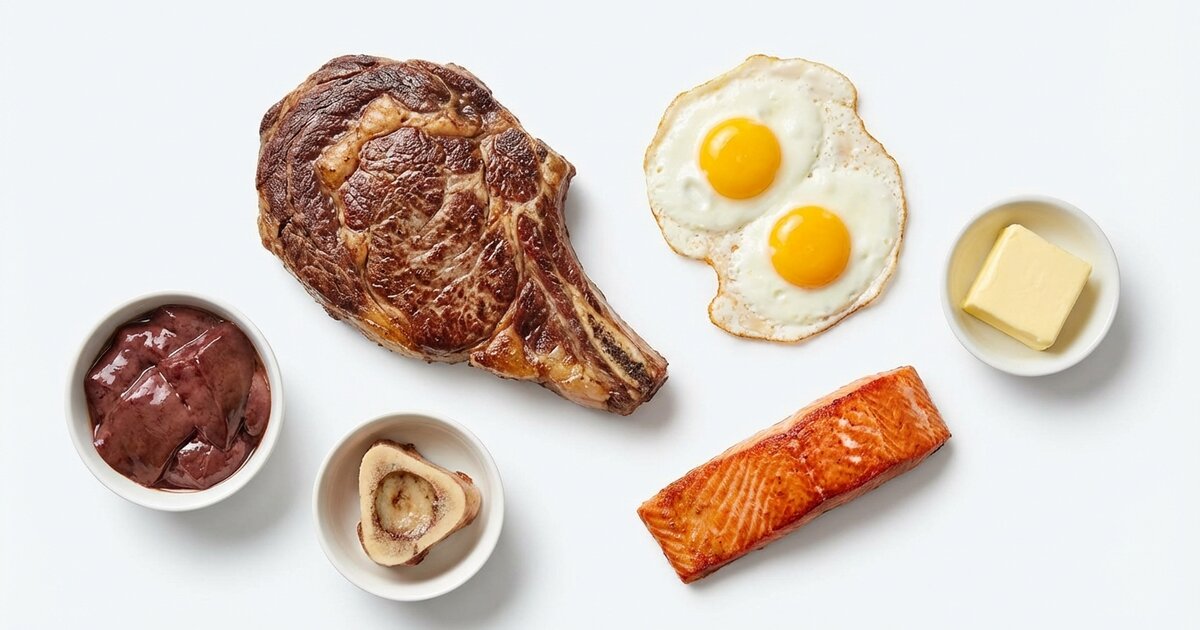
The carnivore diet—eating only animal products—has surged in popularity for its radical simplicity and reported benefits ranging from weight loss to reduced inflammation. But while the food choices are straightforward (meat, fish, eggs, minimal dairy), getting your macros right makes the difference between thriving and struggling.
Unlike standard diets, carnivore eliminates carbs entirely, shifting the focus to the protein-to-fat ratio. Too much protein and you might kick yourself out of ketosis; too little and you’ll lose muscle. Too much fat without enough protein and you’ll stall fat loss; too little fat and you’ll feel chronically hungry.
This guide breaks down optimal carnivore diet macros for every goal—weight loss, muscle gain, and maintenance—with meal examples, common mistakes, and how to adjust ratios based on your results.
Understanding Carnivore Diet Macros
On a carnivore diet, your macros look radically different from conventional eating:
- Carbs: 0-5g per day (trace amounts from eggs, dairy, or organ meats)
- Fat: 60-75% of total calories
- Protein: 25-40% of total calories
These ratios shift depending on your goal, but the zero-carb principle remains constant.
Why Fat Dominates Carnivore Macros
With carbs eliminated, fat becomes your primary energy source. Your body transitions into ketosis within 3-7 days, burning fat for fuel instead of glucose. Dietary fat also:
- Provides essential fatty acids for hormone production
- Increases satiety and reduces hunger
- Supplies fat-soluble vitamins (A, D, E, K)
- Supports brain function and cellular health
However, fat doesn’t build muscle—protein does. That’s why the protein-to-fat balance determines whether you lose fat, gain muscle, or maintain your physique.
The Role of Protein on Carnivore
Protein serves multiple critical functions:
- Muscle preservation and growth: Supplies amino acids for muscle protein synthesis
- Satiety: Higher protein meals reduce overall calorie intake
- Thermic effect: Protein burns more calories during digestion (20-30% vs. 5-10% for fat)
- Gluconeogenesis: Converts to glucose as needed for essential functions
Carnivore’s high meat consumption naturally provides ample protein, but hitting optimal amounts requires intention—especially for muscle gain or fat loss.
Carnivore Macro Targets by Goal
For Weight Loss
Target Macros:
- Protein: 35-40% (1-1.2g per lb body weight)
- Fat: 60-65%
- Carbs: 0-5g
Example for 180-lb person (1,800 calories for deficit):
- Protein: 180g (720 calories)
- Fat: 120g (1,080 calories)
- Carbs: 0g
Why this works: Higher protein increases satiety and thermogenesis while preserving muscle during fat loss. Moderate fat keeps you in ketosis and provides energy without excess calories.
Sample Day:
- Breakfast: 4 eggs (28g protein, 20g fat) + 4 oz ground beef 80/20 (22g protein, 18g fat)
- Lunch: 6 oz ribeye (42g protein, 36g fat)
- Dinner: 8 oz salmon (50g protein, 24g fat)
- Snack: 2 oz cheddar cheese (14g protein, 18g fat)
Total: 156g protein, 116g fat, ~1,760 calories
For Muscle Gain
Target Macros:
- Protein: 35-40% (1-1.2g per lb body weight)
- Fat: 60-65%
- Carbs: 0-5g
Example for 180-lb person (2,400 calories for surplus):
- Protein: 200g (800 calories)
- Fat: 178g (1,600 calories)
- Carbs: 0g
Why this works: You need the same high protein as fat loss (for muscle protein synthesis), but more total calories from fat to fuel training and growth. The surplus comes from fat, not carbs.
Sample Day:
- Breakfast: 6 eggs (42g protein, 30g fat) + 4 oz bacon (16g protein, 28g fat)
- Lunch: 8 oz ribeye (56g protein, 48g fat)
- Dinner: 10 oz ground beef 80/20 (55g protein, 45g fat)
- Snack: 3 oz cheddar cheese (21g protein, 27g fat)
Total: 190g protein, 178g fat, ~2,390 calories
For Maintenance
Target Macros:
- Protein: 30-35% (0.8-1g per lb body weight)
- Fat: 65-70%
- Carbs: 0-5g
Example for 180-lb person (2,100 calories):
- Protein: 165g (660 calories)
- Fat: 160g (1,440 calories)
- Carbs: 0g
Why this works: Moderate protein maintains muscle without excess, while higher fat provides stable energy and supports hormone production.
Sample Day:
- Breakfast: 4 eggs (28g protein, 20g fat) + 3 oz sausage (15g protein, 21g fat)
- Lunch: 8 oz ground beef 85/15 (46g protein, 30g fat)
- Dinner: 8 oz salmon (50g protein, 32g fat)
- Snack: 2 oz aged cheese (16g protein, 18g fat)
Total: 159g protein, 121g fat, ~1,798 calories (adjust serving sizes up for maintenance)
Best Carnivore Foods by Macro Profile
High-Protein, Moderate-Fat Options (for weight loss)
- Chicken breast: 31g protein, 3.6g fat per 4 oz
- Cod: 20g protein, 0.7g fat per 4 oz
- Shrimp: 24g protein, 0.3g fat per 4 oz
- Lean ground beef (90/10): 24g protein, 11g fat per 4 oz
- Egg whites: 7g protein, 0g fat per 2 whites
Balanced Protein-Fat Options (for maintenance)
- Ground beef (80/20): 22g protein, 18g fat per 4 oz
- Eggs (whole): 6g protein, 5g fat per egg
- Pork chops: 26g protein, 7g fat per 4 oz
- Salmon: 25g protein, 12g fat per 4 oz
- Ground lamb: 21g protein, 21g fat per 4 oz
High-Fat, Moderate-Protein Options (for calorie surplus or fat bombs)
- Ribeye steak: 21g protein, 18g fat per 4 oz
- Bacon: 4g protein, 7g fat per slice
- Pork belly: 9g protein, 53g fat per 4 oz
- Butter: 0g protein, 11g fat per tablespoon
- Heavy cream: 0.4g protein, 5.5g fat per tablespoon
- Aged cheese (cheddar, gouda): 7g protein, 9g fat per oz
Organ Meats (nutrient-dense additions)
- Beef liver: 29g protein, 6g fat per 4 oz
- Chicken liver: 26g protein, 6g fat per 4 oz
- Beef heart: 32g protein, 8g fat per 4 oz
- Bone marrow: 1g protein, 25g fat per oz
How to Calculate Your Carnivore Macros
Step 1: Determine Your Calorie Target
For Weight Loss: Maintenance calories - 300 to 500 calories
For Muscle Gain: Maintenance calories + 200 to 400 calories
For Maintenance: Use a TDEE calculator or track your intake at your current stable weight
Quick Estimation:
- Sedentary: Body weight x 14-15
- Moderately active: Body weight x 15-16
- Very active: Body weight x 16-18
Step 2: Set Your Protein Target
For All Goals: Start with 1g per pound of body weight, then adjust:
- Weight loss: Stay at 1-1.2g/lb
- Muscle gain: Stay at 1-1.2g/lb
- Maintenance: Can drop to 0.8-1g/lb
Convert to Calories: Protein grams x 4 = protein calories
Step 3: Calculate Fat Needs
Remaining Calories After Protein: Total daily calories - protein calories = calories from fat
Convert to Grams: Fat calories ÷ 9 = fat grams
Example for 180-lb person (2,000 calories, weight loss):
- Protein: 180g x 4 = 720 calories
- Remaining: 2,000 - 720 = 1,280 calories from fat
- Fat: 1,280 ÷ 9 = 142g
Final Macros: 180g protein, 142g fat, 0g carbs
Tracking vs. Intuitive Eating on Carnivore
When to Track Macros
Track if you:
- Aren’t losing weight after 3-4 weeks
- Are losing muscle mass (strength declining, looking flat)
- Feel chronically hungry or fatigued
- Want to optimize body composition for competition or photoshoot
- Are new to carnivore and want to learn portion sizes
Tracking Tools:
- MyFitnessPal (create custom foods for your frequent meals)
- Cronometer (more accurate for micronutrients)
- Simple notebook (protein and fat grams only)
When Intuitive Eating Works
You can eat to satiety without tracking if:
- You’re already lean and maintaining
- You’ve been carnivore 6+ months and know your body’s signals
- Your goal is health/inflammation reduction, not aesthetics
- You’re naturally moderate with portion sizes
Satiety-Based Eating Guidelines:
- Eat when genuinely hungry (not bored)
- Stop when satisfied, not stuffed
- Prioritize protein first, then add fat to taste
- Allow 3-5 hours between meals for hunger signals to return
Most people naturally eat less on carnivore due to protein’s satiety effect. However, it’s easy to over-consume fat (butter, cheese, fatty cuts) if you’re not paying attention, which can stall fat loss.
Common Carnivore Macro Mistakes
1. Too Much Protein (Rabbit Starvation)
Signs:
- Nausea after meals
- Lean tissue loss despite adequate calories
- Persistent hunger even after large protein meals
- Digestive discomfort
Fix: Reduce protein to 0.8-1g/lb and increase fat. Add butter to steaks, choose fattier cuts, or supplement with tallow/ghee.
2. Too Little Protein
Signs:
- Losing strength in the gym
- Muscle looking flat and deflated
- Excessive hunger between meals
- Slow recovery from workouts
Fix: Increase protein to 1-1.2g/lb. Prioritize leaner cuts at breakfast/lunch, then fattier dinner to stay within calorie goals.
3. Not Enough Total Calories
Signs:
- Constant fatigue
- Cold hands/feet
- Hair loss
- Mood swings
- Stalled weight loss (metabolic adaptation)
Fix: Increase fat intake by 20-40g. Add butter to meals, include fattier cuts, or have a fat bomb snack (cheese, bone marrow, butter coffee).
4. Overconsumping Dairy Fat
Problem: Dairy is calorie-dense and easy to overeat. 4 oz of cheese is 440 calories—equivalent to 6 oz of ribeye but far less satiating.
Fix: Limit cheese to 1-2 oz per day if fat loss stalls. Use it as a condiment, not a main course.
5. Ignoring Satiety Signals
Problem: Carnivore blunts hunger hormones, but eating past satiety (especially fatty foods) prevents fat loss.
Fix: Eat slowly. Wait 20 minutes after your first serving before getting seconds. Track for 2 weeks to calibrate your satiety.
Adjusting Macros Based on Results
If You’re Not Losing Fat
After 3-4 weeks with no scale or measurement changes:
- Track everything for 7 days (you might be eating more than you think)
- Reduce fat by 20g (saves 180 calories)
- Increase protein by 10-20g (adds 40-80 calories but boosts satiety)
- Cut dairy (common staller due to calorie density and potential inflammation)
If You’re Losing Strength or Muscle
Signs include declining lifts, muscle looking flat:
- Increase protein to 1.2g/lb
- Add 200-300 calories from fat (choose liquid fats like tallow for easy consumption)
- Ensure you’re eating enough before/after training (time 30-40% of protein around workouts)
If You Feel Fatigued or Low Energy
Despite adequate sleep:
- Increase total calories by 200-300 (all from fat)
- Add organ meats 2-3x per week (liver for B vitamins, heart for CoQ10)
- Ensure adequate sodium (5-7g per day, especially in the first month)
- Consider electrolyte supplementation (magnesium, potassium if not eating diverse animal products)
Carnivore Macros vs. Other Diets
Carnivore vs. Keto
Similarities:
- Both induce ketosis (fat-burning state)
- Both eliminate most carbs
- Both emphasize fat as primary fuel
Differences:
- Carbs: Carnivore = 0g, Keto = 20-50g
- Protein: Carnivore = 30-40%, Keto = 20-30%
- Food sources: Carnivore = animal products only, Keto = includes plants
- Simplicity: Carnivore = no ingredient lists, Keto = requires more meal planning
Macro Comparison (2,000 calories):
- Keto: 25g carbs (100 cal), 125g protein (500 cal), 155g fat (1,400 cal)
- Carnivore: 0g carbs, 150g protein (600 cal), 155g fat (1,400 cal)
Carnivore vs. High-Protein Diet
Similarities:
- Both prioritize protein for satiety and muscle
- Both can work for fat loss and muscle gain
Differences:
- Carbs: Carnivore = 0g, High-Protein = 100-200g
- Fat: Carnivore = 60-75%, High-Protein = 20-30%
- Metabolic state: Carnivore = ketosis, High-Protein = glucose-fueled
- Food variety: Carnivore = animal-only, High-Protein = includes all food groups
Macro Comparison (2,000 calories):
- High-Protein: 200g carbs (800 cal), 175g protein (700 cal), 55g fat (500 cal)
- Carnivore: 0g carbs, 150g protein (600 cal), 155g fat (1,400 cal)
Sample 7-Day Carnivore Meal Plan (Weight Loss)
Target: 180-lb person, 1,900 calories, 175g protein, 130g fat
Day 1
- Breakfast: 4 eggs (28g P, 20g F) + 4 oz ground beef 90/10 (24g P, 11g F)
- Lunch: 7 oz chicken breast (54g P, 6g F)
- Dinner: 7 oz salmon (44g P, 21g F) + 2 tbsp butter (0g P, 22g F)
- Snack: 1 oz cheddar (7g P, 9g F)
- Total: 157g P, 89g F, ~1,365 cal (increase dinner portion size to hit target)
Day 2
- Breakfast: 6 oz ground beef 80/20 (33g P, 27g F)
- Lunch: 8 oz pork chops (52g P, 14g F)
- Dinner: 6 oz ribeye (42g P, 36g F)
- Snack: 4 oz Greek yogurt (full-fat) (10g P, 5g F)
- Total: 137g P, 82g F (adjust portions)
Day 3
- Breakfast: 5 eggs (35g P, 25g F) + 3 slices bacon (12g P, 21g F)
- Lunch: 6 oz ground lamb (32g P, 32g F)
- Dinner: 8 oz cod (40g P, 1.4g F) + 3 tbsp butter (0g P, 33g F)
- Snack: 2 oz aged cheese (14g P, 18g F)
- Total: 133g P, 130g F
Day 4
- Breakfast: 4 eggs (28g P, 20g F) + 4 oz sausage (16g P, 28g F)
- Lunch: 8 oz ground beef 85/15 (46g P, 30g F)
- Dinner: 8 oz shrimp (48g P, 0.6g F) + 2 oz butter (0g P, 44g F)
- Total: 138g P, 123g F
Day 5
- Breakfast: 6 oz ground beef 80/20 (33g P, 27g F)
- Lunch: 7 oz chicken thighs (49g P, 21g F)
- Dinner: 7 oz ribeye (49g P, 42g F)
- Snack: 2 hard-boiled eggs (12g P, 10g F)
- Total: 143g P, 100g F
Day 6
- Breakfast: Carnivore omelet: 5 eggs (35g P, 25g F) + 2 oz cheese (14g P, 18g F)
- Lunch: 8 oz salmon (50g P, 24g F)
- Dinner: 6 oz ground beef 80/20 (33g P, 27g F) + 1 oz cheddar (7g P, 9g F)
- Total: 139g P, 103g F
Day 7
- Breakfast: 4 eggs (28g P, 20g F) + 6 oz ground beef 90/10 (36g P, 16.5g F)
- Lunch: 8 oz pork shoulder (40g P, 32g F)
- Dinner: 7 oz cod (35g P, 1.2g F) + 3 tbsp ghee (0g P, 42g F)
- Total: 139g P, 112g F
Meal Prep Tip: Cook 3-4 lbs of ground beef on Sunday. Portion into 6-8 oz servings. Reheat with butter for quick meals.
Supplements on Carnivore
While carnivore provides most nutrients through whole foods, some supplements may help:
Electrolytes
- Sodium: 5-7g per day (especially first month)
- Potassium: 3-4g per day (if not eating diverse meats)
- Magnesium: 400mg per day (if muscle cramps occur)
How: Add sea salt to meals, drink bone broth, supplement if needed.
Vitamin D
- If: You live in a northern climate or spend little time outdoors
- Dose: 2,000-5,000 IU per day with fatty meals
Omega-3s (Optional)
- If: You don’t eat fatty fish 3+ times per week
- Dose: 1-2g combined EPA/DHA per day
- Note: Grass-fed beef and organ meats provide some omega-3s, but fish is superior
Digestive Enzymes (Temporary)
- If: Transitioning from low-protein diet and experiencing bloating
- Duration: First 2-4 weeks
- Type: Look for protease and lipase
Transitioning to Carnivore: Macro Shifts
Week 1-2: Adaptation Phase
- Expected: Energy drops, brain fog, cravings
- Macros: Don’t restrict calories—eat to satiety to ease transition
- Focus: Prioritize protein, add fat as needed for hunger
- Electrolytes: Critical—add 1-2 tsp salt to water 2-3x daily
Week 3-4: Stabilization
- Expected: Energy returns, hunger normalizes
- Macros: Begin tracking to dial in ratios
- Focus: Experiment with fat levels (some feel best at 60%, others at 70%)
- Adjustments: If still hungry, increase fat; if sluggish, reduce fat and increase protein
Month 2-3: Optimization
- Expected: Full adaptation, steady energy, clear hunger signals
- Macros: Fine-tune based on goals (weight loss, muscle gain, maintenance)
- Focus: Notice performance in gym, rate of fat loss, muscle retention
- Experimentation: Try leaner vs. fattier cuts, meal timing, dairy inclusion/exclusion
Month 4+: Long-Term Carnivore
- Expected: Stable body composition, intuitive eating possible
- Macros: Many stop tracking and eat to satiety
- Focus: Listen to body, adjust as goals change
- Monitoring: Reassess every 4-6 weeks with body measurements, gym performance
Carnivore for Athletes: Macro Considerations
Endurance Athletes
- Challenge: Depleted glycogen without carbs
- Solution: Increase fat to 70-75% for maximum fat-adaptation
- Timing: Eat 2-3 hours before activity; keep protein moderate (0.8-1g/lb)
- Expectation: 3-6 week performance dip during fat-adaptation, then return to baseline or better
Strength Athletes / Bodybuilders
- Challenge: Maximizing muscle growth without carbs
- Solution: Prioritize protein (1.2g/lb), moderate fat (60-65%), eat calorie surplus
- Timing: 30-40% of daily protein within 2 hours of training
- Expectation: Muscle gain is possible but may be slightly slower than with carbs; strength can match or exceed carb-fueled levels
CrossFit / HIIT Athletes
- Challenge: High-intensity efforts rely on glycogen
- Solution: Consider targeted carb refeeds (honey, white rice) 1-2x per week if performance suffers
- Macros: Base = carnivore, add 50-100g carbs around hardest workouts
- Note: This is technically “carnivore-ish” but may be necessary for peak performance
Troubleshooting Carnivore Macros
Problem: Constipation
Likely Cause: Too much protein, not enough fat; dehydration Fix: Increase fat to 65-70%, drink more water, add salt, eat fattier cuts
Problem: Diarrhea
Likely Cause: Too much fat too quickly; bile acid insufficiency Fix: Reduce fat temporarily, increase gradually over 2-3 weeks; consider ox bile supplement
Problem: Not Losing Weight
Likely Cause: Eating too many calories (usually from fat or dairy) Fix: Track for 1 week, reduce fat by 20-30g, cut dairy, increase protein
Problem: Losing Too Much Weight
Likely Cause: Not eating enough total calories Fix: Add 200-300 calories from fat (butter, fattier cuts, cheese)
Problem: Low Energy
Likely Cause: Insufficient electrolytes or calories; not yet fat-adapted Fix: Increase sodium to 6-7g/day, add 200 calories from fat, give it 4-6 weeks for full adaptation
Problem: Muscle Loss
Likely Cause: Insufficient protein or calories Fix: Increase protein to 1.2g/lb, ensure calorie surplus or at least maintenance
Key Takeaways
- Carnivore macros are simple: 0% carbs, 60-75% fat, 25-40% protein
- Protein target stays consistent: 0.8-1.2g per lb body weight across goals
- Fat is the variable: Adjust fat intake to control total calories for weight loss, gain, or maintenance
- Tracking helps initially: Learn portion sizes and dial in ratios, then intuitive eating becomes easier
- Adaptation takes time: Expect 3-6 weeks for full metabolic adaptation; don’t judge results before then
- Quality matters: Prioritize grass-fed beef, wild-caught fish, pasture-raised eggs for better omega-3/6 ratios
- Listen to your body: Hunger, energy, gym performance, and body composition guide adjustments better than rigid macro rules
The carnivore diet’s macro framework is straightforward, but individual variation is massive. Some thrive on 70% fat with moderate protein; others feel best at 60% fat with higher protein. Use these targets as starting points, track your results, and adjust based on how you feel and perform.
Whether you’re doing carnivore for fat loss, muscle gain, autoimmune healing, or mental clarity, dialing in your macros ensures you get the results you’re after without unnecessary struggle.
Related Resources
Related Articles
Travel Macros: How to Track Nutrition While Traveling
Complete guide to managing macros while traveling. Learn meal planning strategies,...
Read guide →
Macros for Shift Workers: Complete Guide to Nutrition on Rotating Schedules
Master macro tracking on night shifts and rotating schedules. Learn meal timing, sleep...
Read guide →
Macros During Ramadan: Complete Nutrition Guide for Fasting
Learn how to track macros during Ramadan fasting. Expert guide covering meal timing,...
Read guide →Disclaimer: This content is for informational purposes only. Consult a healthcare provider before making changes to your diet.