How Many Grams of Protein Do I Need Per Day?
Reviewed by Sarah Chen, MS, RD
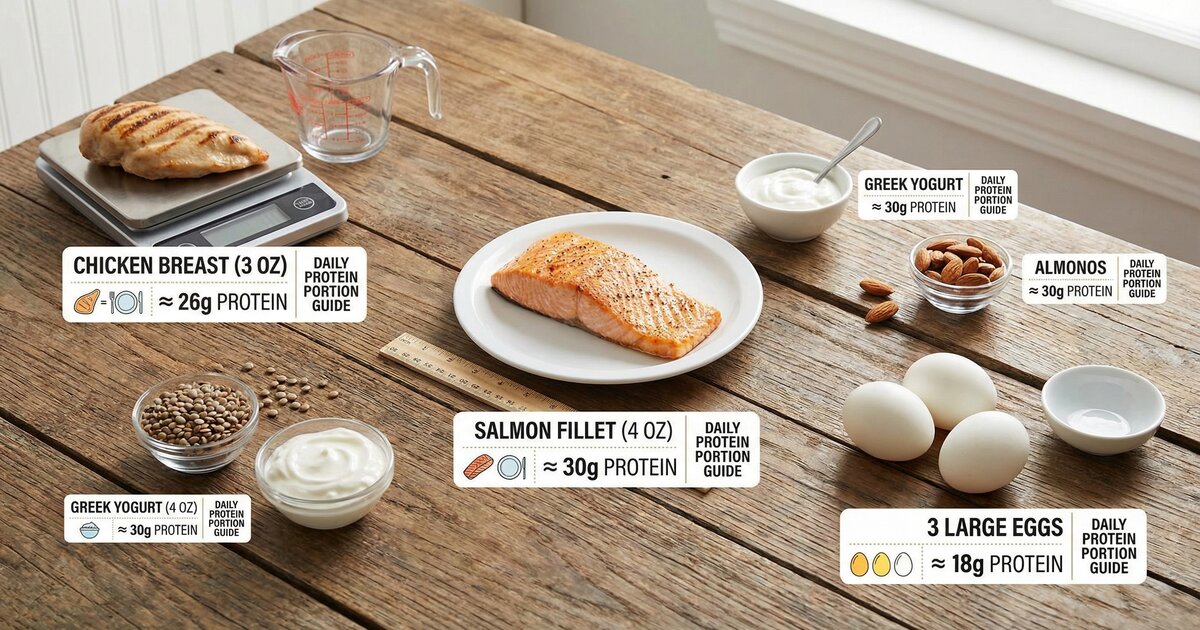
You hear it constantly. “Eat more protein.” “Get enough protein.” “Protein is essential.”
But when you actually try to figure out how much you personally need? The internet gives you everything from 50 grams to 200 grams depending on who’s talking.
Some sources say 0.8g per kilogram (which sounds low). Others say 1g per pound (which sounds high). Fitness influencers claim you need 200+ grams. Your doctor says the RDA is 50g. Who’s actually right?
Here’s the truth: Your protein needs depend on your weight, activity level, and goals. There’s no universal number—but there is a formula that works for your specific situation.
This guide breaks down exactly how to calculate your protein needs, explains why different goals require different amounts, and shows you how to hit your target with real food examples.
By the end, you’ll know your exact daily protein target and how to reach it without obsessing over every gram.
Want your complete macro breakdown including protein? Use our free macro calculator to get personalized targets in 60 seconds.
How Much Protein Do You Actually Need?
Let’s cut through the confusion with research-backed recommendations.
The Standard Recommendation: 0.7-1.0g Per Pound
For most active adults: 0.7-1.0 grams of protein per pound of bodyweight
This range covers the vast majority of people:
- 150-pound person: 105-150g protein daily
- 180-pound person: 126-180g protein daily
- 200-pound person: 140-200g protein daily
Where you fall in this range depends on your activity level and goals (more on this below).
Why Per Pound, Not Per Kilogram?
You’ll see recommendations both ways:
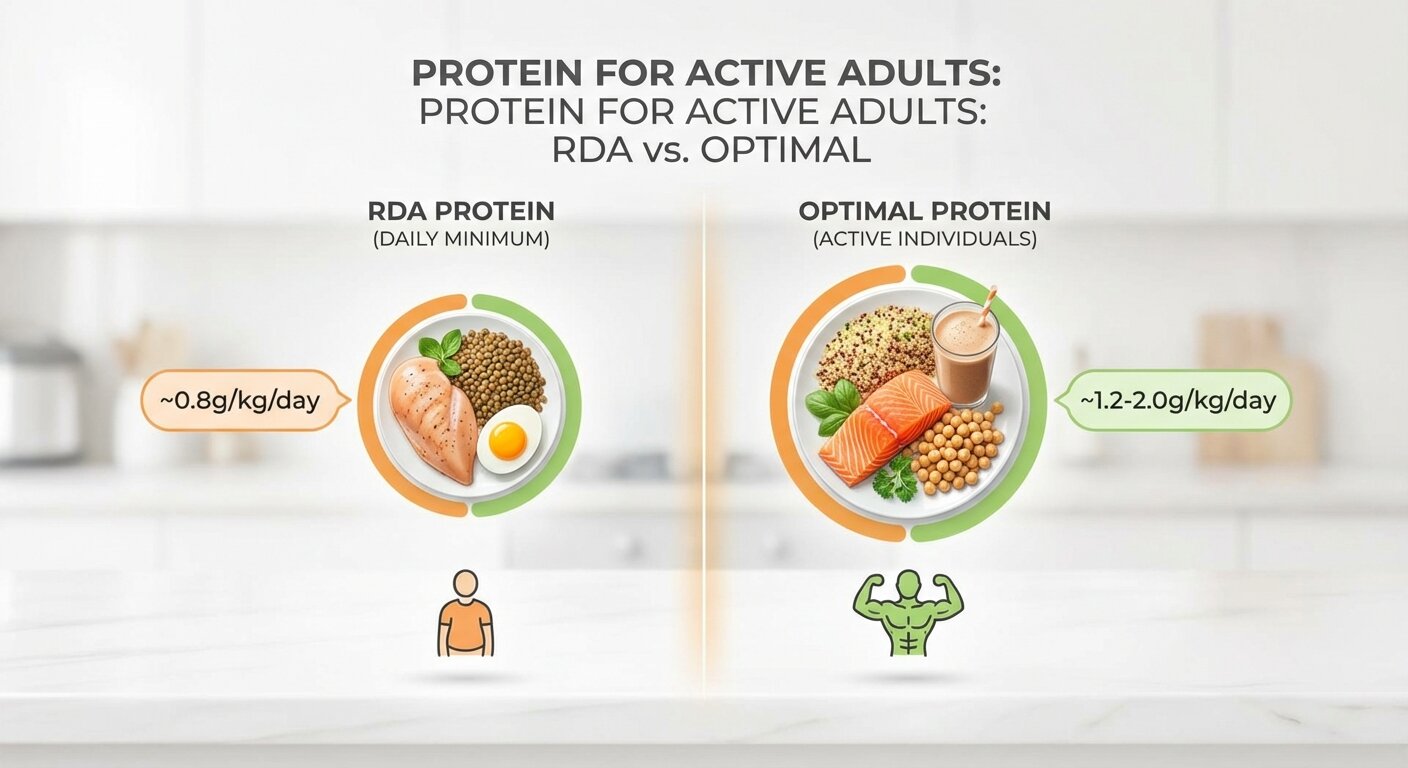
- 0.8g per kg (the RDA—bare minimum to prevent deficiency)
- 1.6-2.2g per kg (research-based optimal for active individuals)
- 0.7-1.0g per lb (the practical American standard)
0.8g per pound ≈ 1.76g per kg — which falls right in the optimal research-backed range.
Using pounds is simply easier for most people. The math is cleaner and the targets align with current sports nutrition science.
The RDA vs Optimal Intake
The RDA (Recommended Dietary Allowance): 0.36g per pound (0.8g per kg)
This is the minimum to prevent protein deficiency disease in sedentary populations. It’s not optimal—it’s the floor.
For a 150-pound person, the RDA is just 54g daily. That’s sufficient to avoid malnutrition, but far from enough to build muscle, recover from training, or optimize body composition.
Optimal intake for active individuals: 2-3x the RDA
Research consistently shows that active people, especially those lifting weights, benefit from significantly more protein than the RDA suggests.
Learn more in our comprehensive guide on protein as a macronutrient.
Protein Needs by Goal
Your protein target changes based on what you’re trying to achieve.
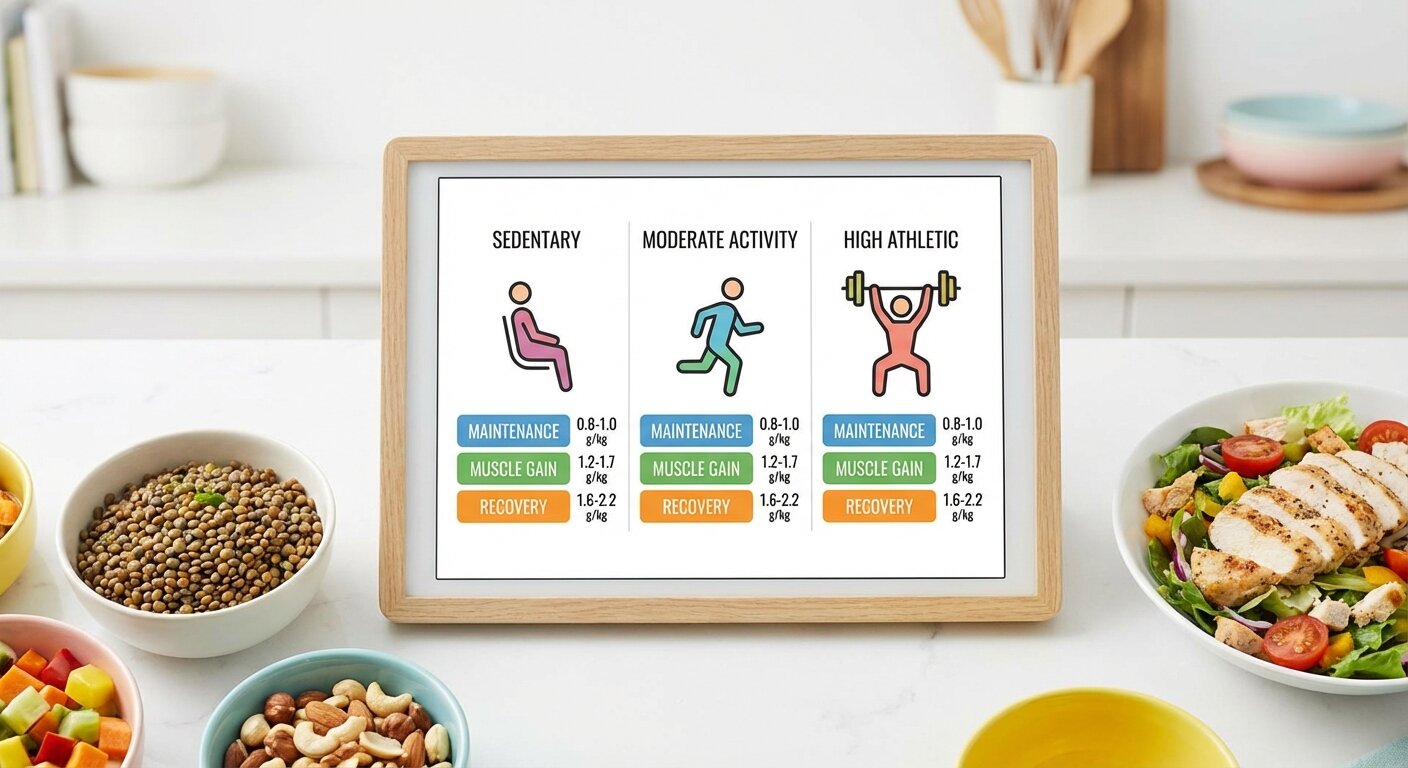
For Fat Loss: 0.8-1.0g Per Pound
Why higher protein during cuts:
When you’re in a calorie deficit, your body needs extra protein to:
- Prevent muscle loss
- Increase satiety (protein is the most filling macro)
- Support recovery despite eating less
- Maintain metabolic rate
Example: A 160-pound person cutting fat should aim for 128-160g protein daily.
The more aggressive your deficit, the more you should lean toward 1.0g per pound (or even slightly higher).
Going even higher: Some research suggests up to 1.2g per pound during aggressive cuts (500+ calorie deficits) for maximum muscle preservation.
Read our complete guide on macros for fat loss.
For Muscle Building: 0.8-1.0g Per Pound
Optimal for muscle growth:
Contrary to popular belief, you don’t need excessive protein to build muscle. Research shows benefits plateau around 0.8-1.0g per pound.
Example: A 175-pound person bulking should aim for 140-175g protein daily.
Eating more than 1.0g per pound won’t hurt, but it doesn’t accelerate muscle growth. Those extra calories are better spent on carbs (which fuel training) or enjoyed as food variety.
Exception: Brand new lifters or those returning after a long break can build muscle with slightly less protein (0.7g per pound) due to “newbie gains.”
Check out our detailed bulking macros guide for complete muscle-building nutrition.
For Maintenance/General Health: 0.7-0.8g Per Pound
For maintaining current body composition:
If you’re not actively trying to lose fat or build muscle, slightly lower protein is fine.
Example: A 165-pound person maintaining should aim for 116-132g protein daily.
This is enough to:
- Prevent muscle loss
- Support daily activity
- Recover from moderate exercise
- Feel satisfied
You can go higher if you prefer (protein is satiating and healthy), but it’s not necessary.
For Sedentary Individuals: 0.5-0.7g Per Pound
If you rarely exercise:
Sedentary people need less protein since they’re not creating training stimulus for muscle growth or recovery demands.
Example: A 150-pound sedentary person needs 75-105g protein daily.
However, even sedentary individuals benefit from protein for satiety and preserving lean mass as they age.
Note: If you’re sedentary and significantly overweight, use goal weight or lean body mass for calculations (not current total weight).
For Athletes: 0.8-1.2g Per Pound
Endurance athletes: 0.6-0.8g per pound (less than strength athletes, but more than sedentary)
Strength/power athletes: 0.8-1.0g per pound (standard recommendation)
Combat athletes cutting weight: 1.0-1.2g per pound (preserving muscle during aggressive cuts)
Athletes have higher protein turnover due to training volume and need adequate intake for recovery.
Special Considerations for Protein Needs
Some situations require adjustments to the standard formula.
If You’re Significantly Overweight
Issue: A 300-pound person with 50% body fat doesn’t need 300g protein.
Solution: Calculate based on:
- Goal weight, OR
- Lean body mass (total weight - fat mass)
Example: 300-pound person with 40% body fat (180 lbs lean mass): Use 180 lbs × 0.8-1.0 = 144-180g protein daily
This prevents unnecessarily high protein targets while obese.
If You’re Elderly (65+)
Research shows older adults need more protein to:
- Combat age-related muscle loss (sarcopenia)
- Support bone health
- Maintain strength and independence
Recommendation: 1.0-1.2g per pound (at the high end of the spectrum)
Higher protein intake in elderly populations correlates with better muscle retention, bone density, and longevity.
If You’re Pregnant or Breastfeeding
Pregnancy: Add 25-30g protein daily to your baseline needs
Breastfeeding: Add 15-20g protein daily
Always consult your healthcare provider for personalized recommendations during pregnancy.
If You’re Plant-Based
Plant proteins are less bioavailable than animal proteins (your body doesn’t absorb them as efficiently).
Recommendation: Aim for the higher end (0.9-1.0g per pound) and focus on complete proteins:
- Soy (tofu, tempeh, edamame)
- Quinoa
- Buckwheat
- Protein powder blends
Also consider combining incomplete proteins (rice + beans) to get complete amino acid profiles.
Read our full vegan macro guide for comprehensive plant-based nutrition.
If You’re Very Lean (<10% Body Fat Men, <20% Women)
Extremely lean individuals benefit from protein at the higher end (1.0-1.2g per pound) since they have minimal fat reserves and risk losing muscle during deficits.
Bodybuilders preparing for competition often use 1.2-1.4g per pound during final prep phases.
How to Calculate Your Personal Protein Needs
Let’s walk through the calculation step-by-step.
Step 1: Determine Your Body Weight
Use your current body weight in pounds.
Exception: If you’re significantly overweight (40+ pounds to lose), use a weight midway between current and goal.
Example calculations:
- 150-pound woman
- 200-pound man
- 250-pound person (goal weight 180) → use 215 lbs
Step 2: Choose Your Multiplier
Based on the table above, select your appropriate multiplier:
| Goal | Activity Level | Multiplier |
|---|---|---|
| Fat loss | Active (lifting 3-5x/week) | 0.8-1.0 |
| Fat loss | Very active (lifting 5-7x/week) | 1.0-1.2 |
| Maintenance | Moderately active | 0.7-0.8 |
| Muscle gain | Active (lifting 3-5x/week) | 0.8-1.0 |
| Sedentary | Minimal exercise | 0.5-0.7 |
When in doubt, use 0.8g per pound. This works well for most people.
Step 3: Calculate
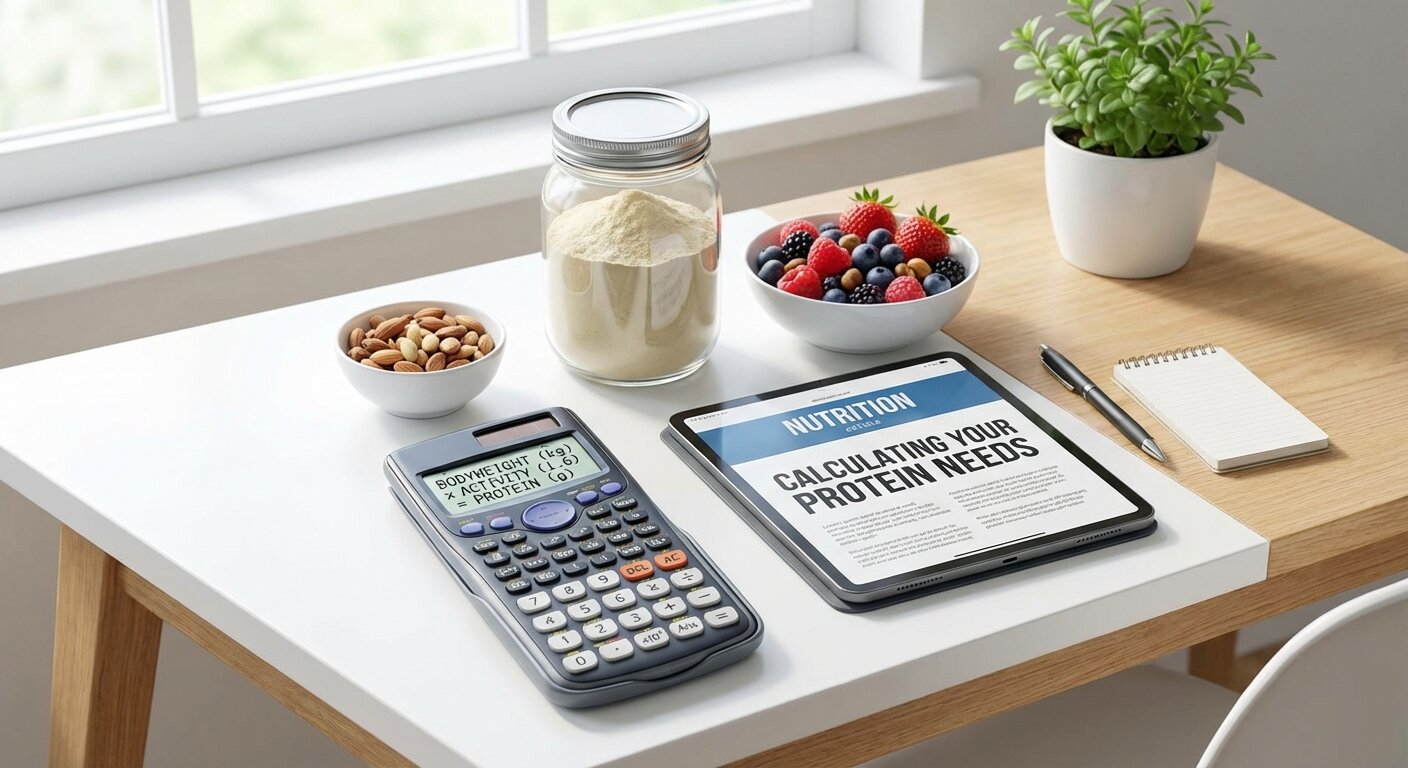
Formula: Bodyweight (lbs) × Multiplier = Daily protein target (grams)
Example 1: 150-pound woman, moderately active, cutting fat 150 × 0.9 = 135g protein per day
Example 2: 200-pound man, very active, building muscle 200 × 0.9 = 180g protein per day
Example 3: 175-pound person, lightly active, maintaining 175 × 0.75 = 131g protein per day
Step 4: Round for Simplicity
Don’t stress over hitting exactly 137g. Round to a clean number:
- 137g → 135g or 140g
- 163g → 160g or 165g
Your body doesn’t know the difference between 148g and 150g.
Want your complete macro breakdown? Our macro calculator calculates protein, carbs, and fats simultaneously based on your complete profile.
What 100g, 150g, and 200g of Protein Looks Like
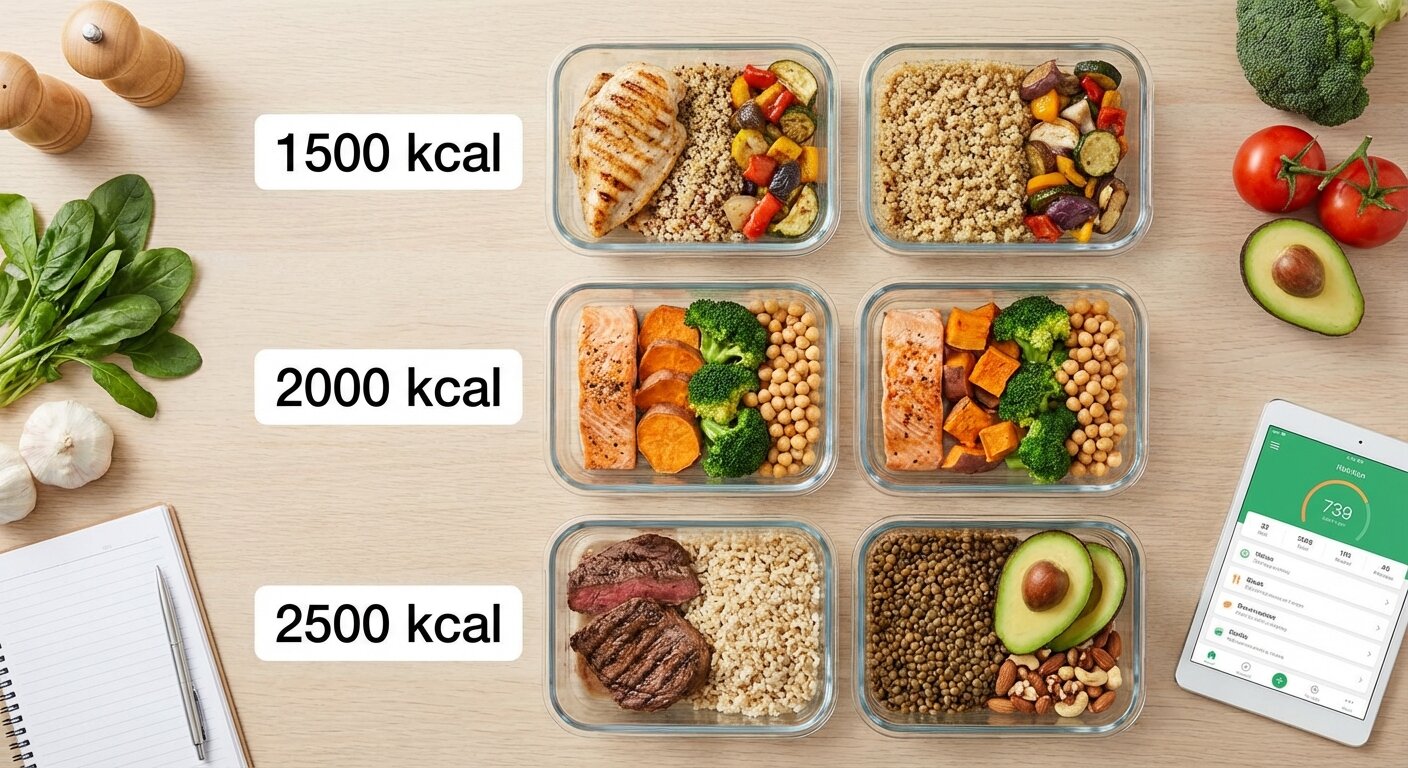
Let’s visualize these targets with real food.
100g Protein Per Day
Sample day:
- Breakfast: 3 eggs + 2 slices toast (18g)
- Snack: Greek yogurt (20g)
- Lunch: Turkey sandwich (25g)
- Snack: Protein shake (25g)
- Dinner: Chicken breast (4 oz) with rice (28g)
Total: 116g protein
150g Protein Per Day
Sample day:
- Breakfast: Egg white omelet (30g) + oatmeal with protein powder (30g)
- Snack: Cottage cheese (14g)
- Lunch: Grilled chicken salad (40g)
- Snack: Jerky (15g)
- Dinner: Salmon (6 oz) with quinoa (42g)
Total: 171g protein
200g Protein Per Day
Sample day:
- Breakfast: 5 egg whites + 1 whole egg (25g) + protein pancakes (20g)
- Snack: Protein shake (30g)
- Lunch: Double protein burrito bowl with chicken (50g)
- Snack: Greek yogurt + protein bar (35g)
- Dinner: Large steak (8 oz) with vegetables (56g)
Total: 216g protein
Notice: Higher targets require intentional protein focus at every meal.
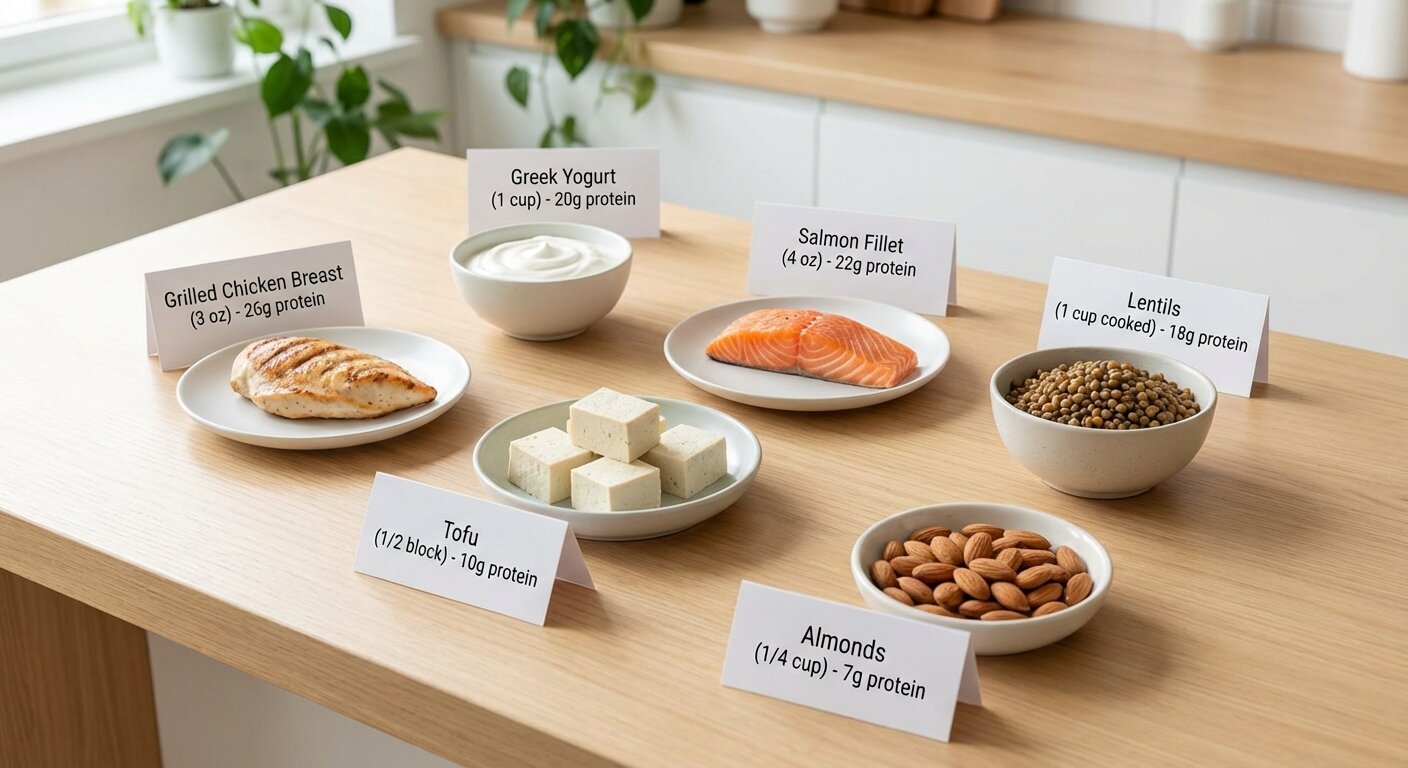
Protein Content of Common Foods
Animal proteins (per 4 oz):
- Chicken breast: 35g
- Salmon: 28g
- Ground beef (90/10): 30g
- Shrimp: 26g
- Eggs (large): 6g each
Dairy (per serving):
- Greek yogurt (7 oz): 20g
- Cottage cheese (1 cup): 28g
- Milk (1 cup): 8g
- Protein powder (1 scoop): 20-30g
Plant proteins (per cup cooked):
- Lentils: 18g
- Black beans: 15g
- Chickpeas: 15g
- Tofu (4 oz): 10g
- Quinoa: 8g
Convenience proteins:
- Protein bar: 15-20g
- Protein shake: 20-30g
- Jerky (1 oz): 9g
For complete lists and meal ideas, read how to hit your protein macros every day.
Common Protein Intake Mistakes
Mistake 1: Eating All Your Protein in One Meal
Problem: Your body can only use ~30-40g protein per meal for muscle protein synthesis. Excess is oxidized for energy or converted.
Solution: Distribute protein across 3-5 meals. Aim for 25-40g per meal.
Example: Instead of 150g at dinner, eat 30g at breakfast, 40g at lunch, 30g snack, 50g at dinner.
Mistake 2: Neglecting Protein on Rest Days
Problem: Muscle recovery happens on rest days, not just training days.
Solution: Keep protein consistent every day. Muscle protein synthesis stays elevated for 24-48 hours after training.
Mistake 3: Counting Incomplete Proteins Equally
Problem: Not all protein sources are equal. 20g from beans ≠ 20g from chicken in terms of bioavailability.
Solution: Prioritize complete proteins (animal sources, soy, quinoa). If plant-based, combine incomplete proteins or use protein powder to fill gaps.
Mistake 4: Using Bodyweight When Obese
Problem: A 350-pound person doesn’t need 280g protein (350 × 0.8).
Solution: Use goal weight or lean body mass for calculations if significantly overweight.
Mistake 5: Forgetting Protein is Satiating
Problem: People cut calories and feel hungry all day because they didn’t prioritize protein.
Solution: Protein is the most satiating macro. Higher protein intake makes calorie deficits dramatically easier to sustain.
Protein Timing: Does It Matter?
For most people: not really. Total daily protein matters far more than timing.
What Research Shows
Meal frequency: 3-5 protein-containing meals performs similarly to 6+ small meals. Your body doesn’t need constant protein every 2-3 hours.
Post-workout window: The “30-minute anabolic window” is largely a myth. Getting protein within a few hours of training is beneficial, but not critical if you ate protein before training.
Before bed: Casein protein before sleep may slightly benefit overnight muscle protein synthesis, but the effect is small.
Practical Timing Recommendations
Do this:
- Eat protein at every meal (breakfast, lunch, dinner)
- Include protein pre- and post-workout (within ~3-4 hour window)
- Aim for 25-40g per meal
Don’t stress about:
- Exact minute-by-minute timing
- Eating immediately after training
- Protein every 2-3 hours
Bottom line: Total daily intake >>> timing
FAQ: Protein Intake
Can I build muscle eating less than 0.8g per pound?
Possibly, but you’re not optimizing. Research shows benefits plateau around 0.8-1.0g per pound. Going lower leaves gains on the table.
Is 200g of protein too much?
For a 200-pound person: no. For a 130-pound person: it’s excessive but not harmful. Protein up to 1.5g per pound is safe for healthy individuals.
What if I can’t hit my protein target?
Use protein powder as a supplement (not a replacement). One shake adds 25-30g easily. Prioritize high-protein foods at every meal.
Does protein powder count toward my daily total?
Absolutely. Protein powder is just convenient, concentrated protein. It counts the same as chicken or Greek yogurt.
Do I need more protein if I’m sore?
Soreness indicates muscle damage, which is repaired using protein. Consistent protein intake (0.8-1.0g per pound) is sufficient—you don’t need to eat more on sore days.
Can I get enough protein without supplements?
Yes. Whole foods are always preferred. Supplements are convenient but not necessary if you plan meals strategically.
Should I eat more protein as I get older?
Yes. Older adults (65+) benefit from higher protein (1.0-1.2g per pound) to combat age-related muscle loss.
The Bottom Line
How much protein do you need?
For most active adults: 0.7-1.0g per pound of bodyweight.
- Sedentary: 0.5-0.7g per pound
- Maintenance: 0.7-0.8g per pound
- Fat loss: 0.8-1.0g per pound
- Muscle building: 0.8-1.0g per pound
- Aggressive cutting: 1.0-1.2g per pound
Calculate yours: Bodyweight × 0.8 = Daily protein target (grams)
Round to a clean number. Distribute across 3-5 meals. Prioritize complete protein sources.
Don’t overthink it. Getting within 10g of your target is perfectly fine. Consistency over weeks matters far more than daily perfection.
Ready to get your complete macro breakdown? Use our free macro calculator to get personalized protein, carb, and fat targets based on your weight, activity level, and goals.
Then read how to calculate your macros for a complete guide to setting up your full nutrition plan.
Hit your protein target consistently, and you’ll see better muscle retention, improved satiety, and superior body composition results—regardless of your specific goal.
Related Resources
Related Articles
Travel Macros: How to Track Nutrition While Traveling
Complete guide to managing macros while traveling. Learn meal planning strategies,...
Read guide →
Macros for Shift Workers: Complete Guide to Nutrition on Rotating Schedules
Master macro tracking on night shifts and rotating schedules. Learn meal timing, sleep...
Read guide →
Macros During Ramadan: Complete Nutrition Guide for Fasting
Learn how to track macros during Ramadan fasting. Expert guide covering meal timing,...
Read guide →Disclaimer: This content is for informational purposes only. Consult a healthcare provider before making changes to your diet.