Keto Macros: Complete Guide to Ketogenic Diet Ratios
Reviewed by Sarah Chen, MS, RD
You’ve heard keto can help you lose fat, improve mental clarity, and stabilize energy. But when you actually try to figure out what to eat, you’re overwhelmed by conflicting advice.
“Eat 80% fat!” “No, that’s too much fat.” “Protein will kick you out of ketosis!” “Actually, that’s a myth.” “Count net carbs.” “No, count total carbs.”
Here’s the truth: keto macros are simpler than the internet makes them seem. There’s a standard ratio that works for most people, clear guidelines for setting your personal targets, and a few key principles that, once understood, make keto straightforward.
This guide covers everything you need to know about keto macros—what they are, how to calculate yours, how to adjust them for different goals, and how to avoid the most common mistakes that derail people.
Ready to get your personalized keto macros? Use our Keto Macro Calculator for instant, customized recommendations.
What Are Keto Macros?
Keto macros refer to the specific macronutrient ratios that trigger and maintain ketosis—a metabolic state where your body burns fat for fuel instead of carbohydrates.
The Standard Keto Macro Ratio
Standard ketogenic diet (SKD):
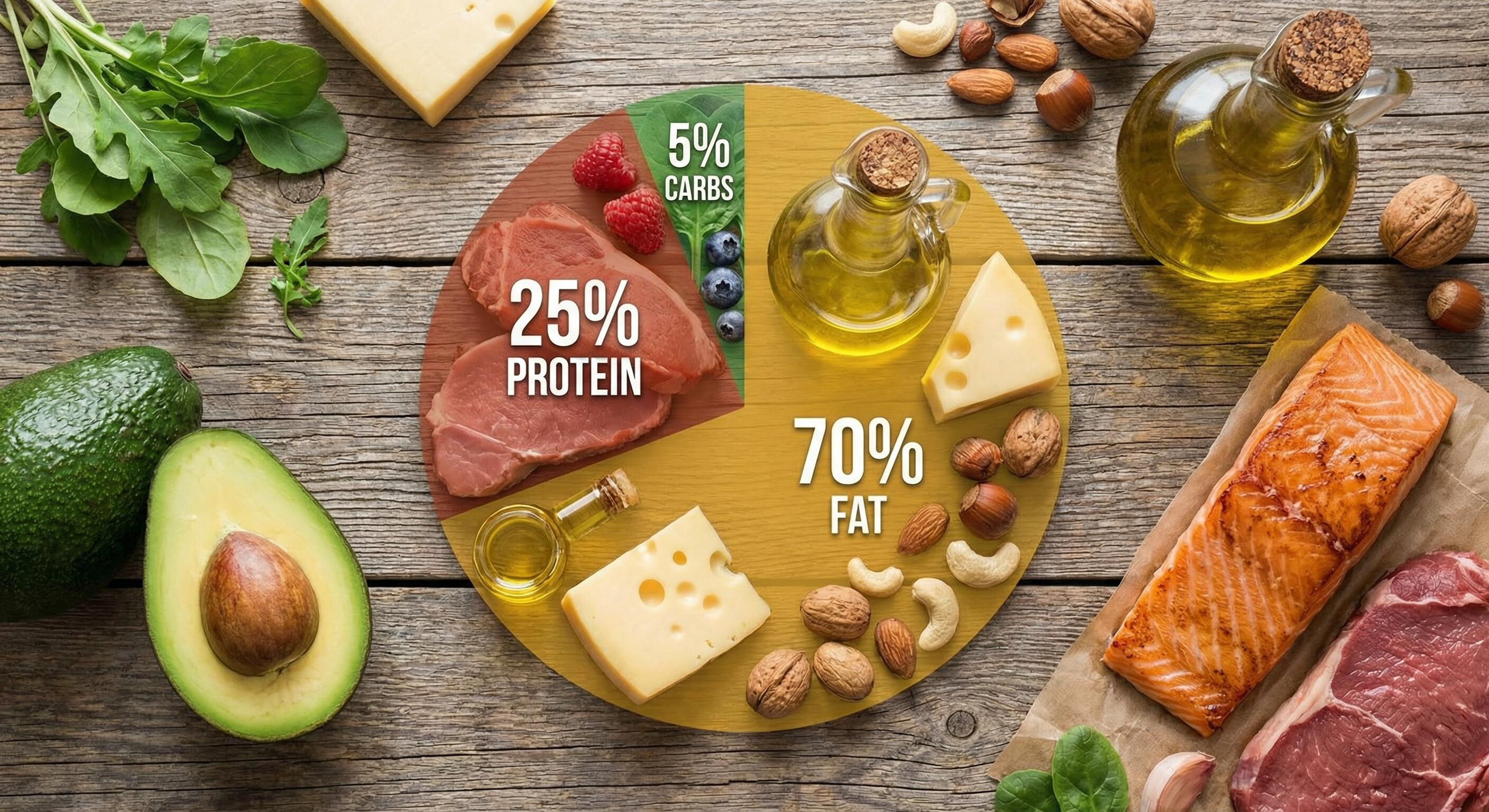
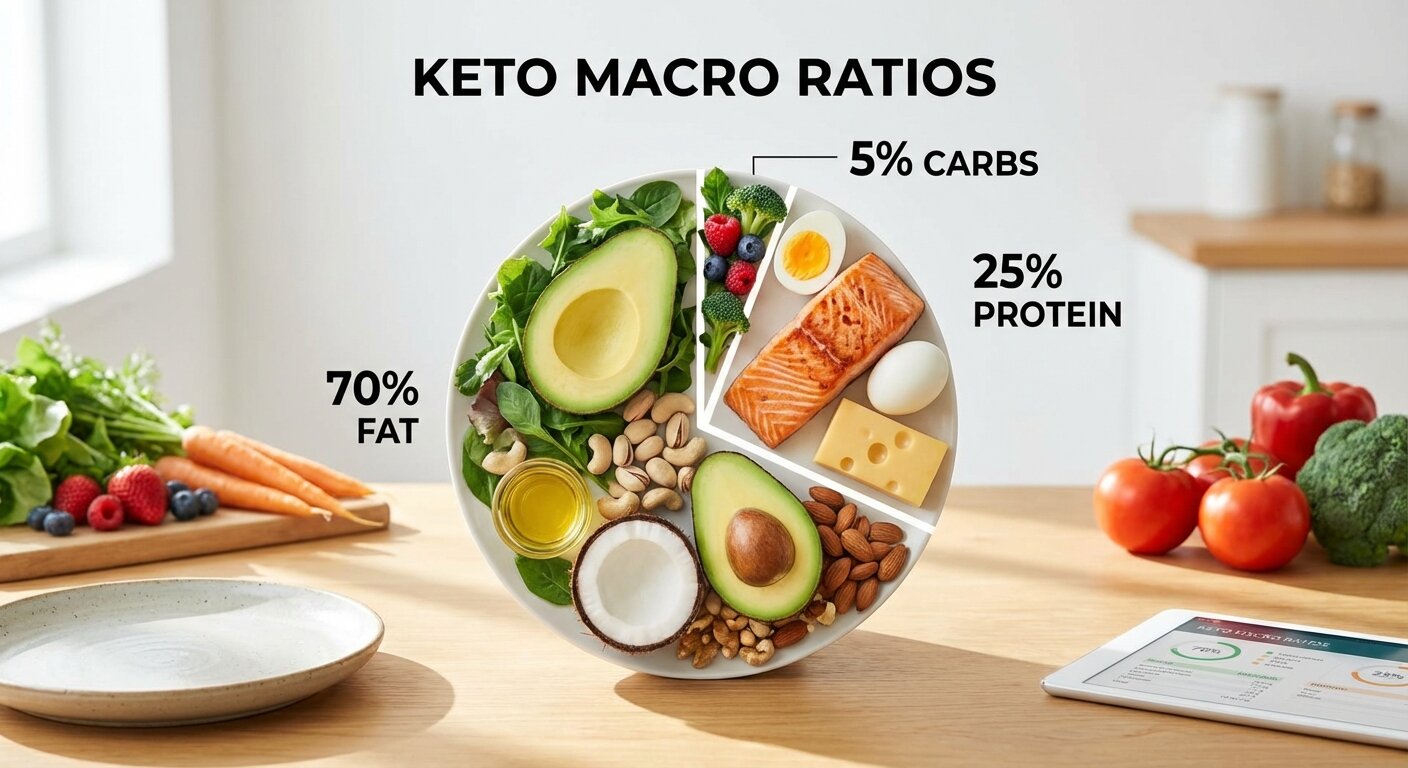
- 70-75% fat
- 20-25% protein
- 5-10% carbs
In grams for a 2,000-calorie diet:
- Fat: 156-167g (70-75% of calories)
- Protein: 100-125g (20-25% of calories)
- Carbs: 25-50g (5-10% of calories)
Why these ratios?
- High fat provides energy once your body adapts to burning fat
- Moderate protein preserves muscle without excess glucose conversion
- Very low carbs forces your body to switch from glucose to ketones for fuel
This ratio keeps most people in ketosis while providing enough protein to maintain muscle mass and enough fat to feel satisfied.
What Is Ketosis?
Ketosis is a metabolic state where your liver breaks down fat into ketones, which your brain and body use for energy instead of glucose.
How it works:
- You drastically reduce carbs (under 50g daily)
- Your body depletes glycogen (stored carbs) within 1-2 days
- Your liver starts converting fat into ketone bodies
- Your brain and muscles adapt to using ketones for fuel
- You become “fat-adapted” over 2-4 weeks
Benefits of ketosis:
- Steady energy (no blood sugar crashes)
- Reduced appetite and cravings
- Efficient fat burning
- Mental clarity (ketones are efficient brain fuel)
- Stable blood sugar and insulin levels
For a broader look at how macros work generally, check out our guide on what macronutrients are.
Keto Variations
Not everyone does strict keto. Common variations include:
Standard Keto (SKD): 70/25/5 ratio year-round. Most common approach.
Targeted Keto (TKD): Standard keto plus 25-50g fast-acting carbs before workouts. Good for athletes.
Cyclical Keto (CKD): 5-6 days strict keto, 1-2 days higher-carb “refeeds.” Advanced approach for bodybuilders.
High-Protein Keto: 60% fat / 35% protein / 5% carbs. Better for muscle building, still maintains ketosis for most people.
This guide focuses primarily on standard keto, which works for 90% of people.
The Keto Macro Breakdown
Let’s break down each macronutrient and its role on keto.
Fat: Your Primary Fuel (70-75%)
On keto, fat replaces carbs as your main energy source.
How much fat: 0.5-1.0g per pound of bodyweight, or 70-75% of total calories
Why so much fat?
- Provides energy without spiking insulin
- Promotes satiety (you feel full longer)
- Triggers ketone production
- Supports hormone production
- Carries fat-soluble vitamins (A, D, E, K)
Best fat sources:
- Oils: Olive oil, coconut oil, avocado oil, MCT oil
- Fatty fish: Salmon, mackerel, sardines (bonus: omega-3s)
- Avocados: Healthy monounsaturated fats
- Nuts and seeds: Macadamias, almonds, walnuts, chia, flax
- Full-fat dairy: Cheese, butter, heavy cream, Greek yogurt (if tolerated)
- Fatty cuts of meat: Ribeye, pork belly, chicken thighs with skin
Fat timing: You don’t need to hit your fat macro exactly. Fat is a lever—eat enough to feel satisfied and meet calorie needs, but if you’re trying to lose weight, eating slightly less dietary fat means your body burns more stored body fat.
Common mistake: Force-feeding fat (bulletproof coffee with 4 tbsp butter) when you’re not hungry. Let appetite guide fat intake within your macro range.
Protein: Muscle Preservation (20-25%)
Protein is essential but often misunderstood on keto.
How much protein: 0.7-1.2g per pound of lean body mass (or 1.0-1.2g per pound of goal weight)
Why moderate protein?
- Preserves muscle mass during weight loss
- Supports recovery from workouts
- High satiety (keeps you full)
- Thermic effect (20-30% of protein calories burned during digestion)
But won’t protein kick me out of ketosis?
No. This is the biggest keto myth.
The fear stems from gluconeogenesis (GNG)—the process where your body converts protein to glucose. But GNG is demand-driven, not supply-driven. Your body makes exactly the glucose it needs, regardless of protein intake.
Research shows: Most people can eat 1.0-1.2g protein per pound of lean mass without affecting ketosis.
Best protein sources on keto:
- Meat: Beef, pork, lamb, chicken, turkey
- Fish and seafood: Salmon, tuna, shrimp, cod
- Eggs: Whole eggs (yolks contain healthy fats)
- Full-fat dairy: Greek yogurt, cottage cheese, cheese
- Plant proteins: Tofu, tempeh (watch carbs with legumes)
Don’t under-eat protein. It’s the most important macro for body composition, even on keto.
Carbohydrates: The Limit (5-10%)
Carbs are the most restricted macro on keto, but the details matter.
How many carbs: Under 50g total carbs (or 20-30g net carbs) per day
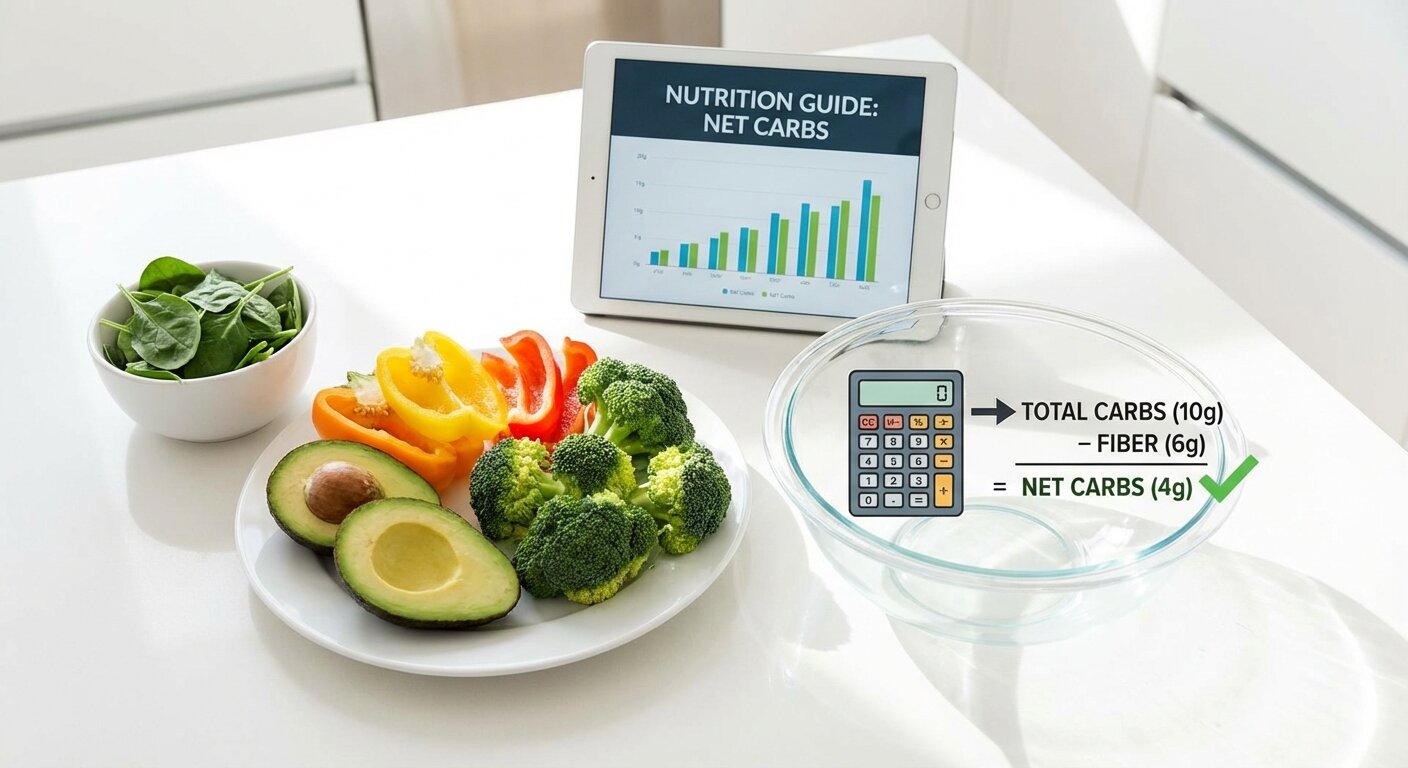
What are net carbs? Net Carbs = Total Carbs - Fiber - Sugar Alcohols
Fiber and most sugar alcohols don’t raise blood sugar, so they don’t count toward your carb limit.
Example:
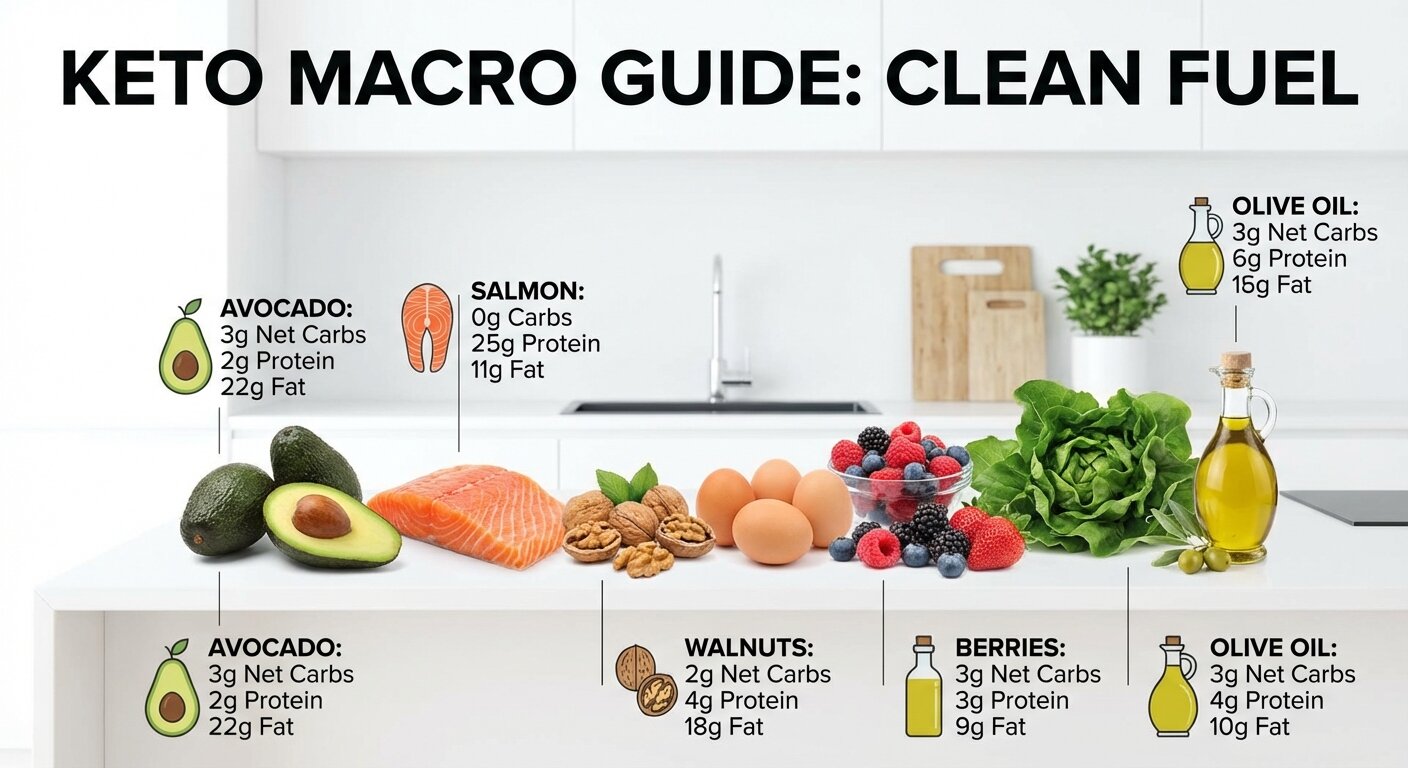
- Avocado: 12g total carbs, 10g fiber = 2g net carbs
- Quest Bar: 21g total carbs, 14g fiber, 6g erythritol = 1g net carbs
Should I count net carbs or total carbs?
Most people track net carbs. This gives you more flexibility to eat fiber-rich vegetables and allows some sugar-free products.
However: If weight loss stalls, try switching to total carbs to see if hidden carbs are the issue.
20g net carbs vs 50g net carbs:
- 20g net carbs: Guarantees ketosis for everyone. Strictest approach.
- 30-50g net carbs: Works for most people, especially active individuals. More flexibility.
Start with 20g net carbs for the first 2-4 weeks to ensure you’re in ketosis. Once fat-adapted, you can experiment with slightly higher carbs if desired.
Best carb sources on keto:
- Non-starchy vegetables: Spinach, kale, broccoli, cauliflower, zucchini, lettuce, peppers
- Low-carb fruits: Berries (strawberries, blueberries, raspberries—small amounts)
- Nuts and seeds: Almonds, walnuts, chia seeds, flax seeds (moderate portions)
- Avocados: Technically a fruit, very low net carbs
Foods to avoid:
- Grains (bread, pasta, rice, oats, quinoa)
- Sugar and sweeteners (except sugar alcohols like erythritol)
- Most fruits (except berries in small amounts)
- Starchy vegetables (potatoes, corn, peas)
- Legumes (beans, lentils, chickpeas)
- Most processed foods (hidden sugars and carbs)
How to Calculate Your Keto Macros
Let’s walk through the step-by-step process of calculating personalized keto macros.
Step 1: Calculate Your Calorie Target
First, determine your TDEE (Total Daily Energy Expenditure)—the calories you burn per day.
Use the Mifflin-St Jeor equation:
For Men: BMR = (10 × weight in kg) + (6.25 × height in cm) - (5 × age) + 5
For Women: BMR = (10 × weight in kg) + (6.25 × height in cm) - (5 × age) - 161
Then multiply by activity factor:
- Sedentary: BMR × 1.2
- Lightly active: BMR × 1.375
- Moderately active: BMR × 1.55
- Very active: BMR × 1.725
Adjust for your goal:
- Weight loss: TDEE - 500 calories (1 lb/week loss)
- Maintenance: TDEE
- Muscle gain: TDEE + 300 calories
Example (35-year-old man, 200 lbs / 91 kg, 5’10” / 178 cm, lightly active, wants to lose weight):
- BMR = (10 × 91) + (6.25 × 178) - (5 × 35) + 5 = 1,885
- TDEE = 1,885 × 1.375 = 2,592 calories
- Weight loss target: 2,592 - 500 = 2,092 calories
For a complete TDEE guide, see our TDEE calculator article.
Step 2: Set Your Carbs (Always Start Here)
Carbs are fixed on keto, not a percentage.
Start with 20g net carbs per day.
This guarantees ketosis for almost everyone. Once you’re fat-adapted (2-4 weeks), you can experiment with 30-50g if desired.
In our example: 20g carbs = 80 calories (20g × 4 cal/g)
Step 3: Set Your Protein (Based on Lean Mass)
Protein should be based on your lean body mass or goal weight, not total body weight.
Target: 0.7-1.0g per pound of lean mass
If you don’t know your lean mass, use goal weight:
- Sedentary or weight loss: 0.7-0.8g per lb goal weight
- Active or maintenance: 0.8-1.0g per lb goal weight
- Athletes or muscle building: 1.0-1.2g per lb goal weight
Our example (200 lbs, ~170 lbs lean mass, active):
- Protein: 170 × 1.0 = 170g
- Calories from protein: 170g × 4 = 680 calories
Step 4: Fill the Rest with Fat
After setting carbs and protein, fat fills the remaining calories.
Our example:
- Total calories: 2,092
- Carbs: 80 calories
- Protein: 680 calories
- Fat calories: 2,092 - 80 - 680 = 1,332 calories
- Fat grams: 1,332 ÷ 9 = 148g
Final Keto Macros (Example)
2,092 calories for weight loss:
- 20g carbs (4%)
- 170g protein (33%)
- 148g fat (63%)
This is slightly lower fat percentage than “standard” because higher protein is better for body composition. Don’t stress hitting exactly 70% fat—anywhere from 60-75% works.
The Easy Way: Use a Calculator
Skip the math. Use our Keto Macro Calculator to get your personalized macros in 60 seconds.

Keto Macros by Goal
Your macros should shift slightly based on what you’re trying to achieve.
Keto for Weight Loss
Macro approach:
- Carbs: 20g net carbs (strict for results)
- Protein: 1.0-1.2g per lb lean mass (preserve muscle)
- Fat: 60-70% of calories (moderate to allow body fat burning)
Calorie deficit: 500 calories below TDEE (1 lb/week loss)
Example (1,800 calories):
- Carbs: 20g (4%)
- Protein: 140g (31%)
- Fat: 130g (65%)
Key principles:
- Don’t fear the deficit—keto naturally suppresses appetite
- Prioritize protein to maintain muscle
- Let hunger guide fat intake (don’t force-feed fat)
- Be patient—keto weight loss often stalls weeks 2-3 (water weight fluctuation)
Learn more in our complete guide to macros for weight loss.
Keto for Maintenance
Macro approach:
- Carbs: 20-50g net carbs (more flexibility once adapted)
- Protein: 0.8-1.0g per lb lean mass
- Fat: 70-75% of calories
Calories: At TDEE
Example (2,200 calories):
- Carbs: 30g (5%)
- Protein: 140g (25%)
- Fat: 170g (70%)
Maintenance keto is sustainable long-term. Many people feel their best staying in ketosis indefinitely.
Keto for Muscle Gain
Macro approach:
- Carbs: 30-50g net carbs (slightly higher for training fuel)
- Protein: 1.0-1.2g per lb goal weight (high for muscle synthesis)
- Fat: 60-70% of calories
Calorie surplus: 300-500 calories above TDEE
Example (2,800 calories):
- Carbs: 40g (6%)
- Protein: 180g (26%)
- Fat: 210g (68%)
Building muscle on keto is possible but challenging:
- Progress may be slower than on higher carbs
- Consider targeted keto (carbs around workouts)
- Prioritize progressive overload in training
- Be patient—muscle growth takes time on any diet
For more on building muscle, see our macros for muscle gain guide.
Targeted Keto (TKD) for Athletes
If your workouts suffer on strict keto, try targeted keto:
Standard days:
- 20g net carbs throughout the day
Training days:
- 20g net carbs throughout the day
- PLUS 25-50g fast-acting carbs 30-60 min pre-workout
Pre-workout carb sources:
- Dextrose tablets
- Gummy candy
- White rice (small amount)
- Ripe banana (half)
This gives you glucose for high-intensity work without kicking you out of ketosis long-term. Your body uses the carbs during training and returns to ketosis afterward.
Cyclical Keto (CKD) for Advanced Lifters
Cyclical keto involves periodic carb refeeds:
5-6 days: Strict keto (20g carbs)
1-2 days: High-carb refeed (400-600g carbs)
Who this is for:
- Advanced lifters doing high-volume training
- People who prefer carb cycling
- Those who struggle with strict keto long-term
Who should avoid it:
- Beginners (stick to standard keto first)
- People with poor carb control (refeeds trigger binges)
- Those not training intensely enough to warrant it
CKD is complex and unnecessary for most people. Standard keto works better for 90% of people.
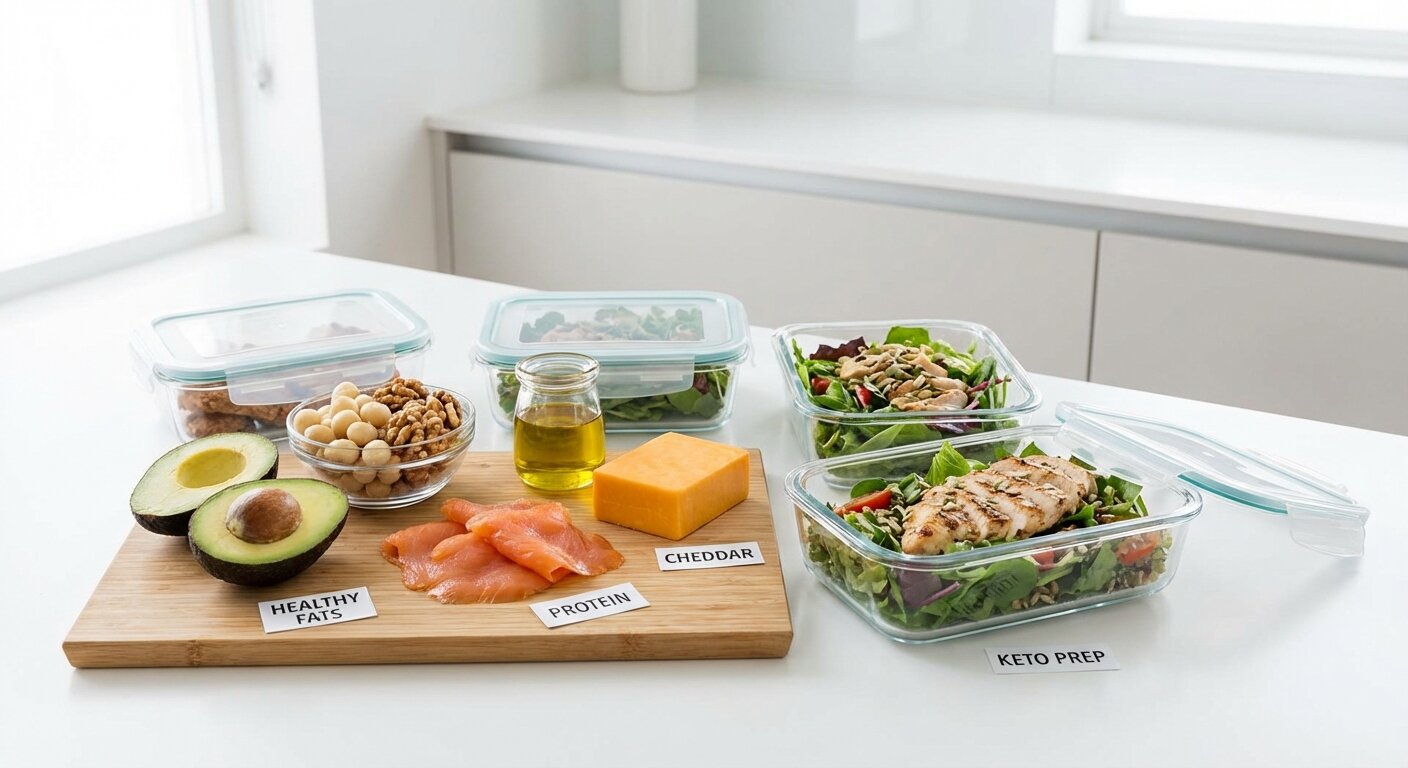
Keto Macro Mistakes to Avoid
Mistake 1: Eating Too Much Protein (Because You’re Scared)
The myth: “Protein kicks you out of ketosis.”
The truth: You can eat 1.0-1.2g per pound of lean mass without issues.
Why it matters: Under-eating protein leads to muscle loss, slower metabolism, and poor body composition.
Fix: Don’t fear protein. It’s essential for results.
Mistake 2: Not Eating Enough Fat (and Being Hungry)
The problem: You’re eating 1,500 calories but only 60% fat. You’re starving.
Why it happens: Fear of dietary fat from decades of “low-fat” dieting.
Fix: Fat is your fuel on keto. If you’re hungry, eat more fat. You’ll naturally eat less when satiated.
Mistake 3: Counting Total Carbs Instead of Net Carbs
The problem: You’re avoiding vegetables because “broccoli has 6g carbs.”
Why it matters: Fiber doesn’t raise blood sugar. Excluding fiber-rich vegetables leads to nutrient deficiencies and digestive issues.
Fix: Track net carbs (total carbs minus fiber). Eat plenty of low-carb vegetables.
Mistake 4: Forgetting Electrolytes
The problem: You feel terrible—headaches, fatigue, cramps (“keto flu”).
Why it happens: Keto is diuretic. You lose water and electrolytes rapidly.
Fix:
- Sodium: 3,000-5,000mg daily (salt your food, drink broth)
- Potassium: 3,000-4,000mg (avocado, spinach, salmon)
- Magnesium: 300-500mg (supplement or leafy greens)
This isn’t strictly about macros, but it’s critical for keto success.
Mistake 5: Giving Up Too Soon
The problem: You feel terrible week 1-2 and quit.
Why it happens: Your body is adapting from burning glucose to burning fat. This transition is uncomfortable.
Fix:
- Expect “keto flu” (fatigue, brain fog, irritability) days 2-7
- Stay hydrated and supplement electrolytes
- Give it 3-4 weeks before judging results
- True “fat adaptation” takes 2-4 weeks, not 3 days
Mistake 6: Eating “Keto” Processed Foods
The problem: You eat keto bars, cookies, and snacks that technically fit macros but stall weight loss.
Why it matters: Hidden carbs, inflammatory seed oils, and appetite-stimulating additives sabotage results.
Fix: Prioritize whole foods—meat, fish, eggs, vegetables, nuts, and healthy oils. Save packaged “keto” products for occasional treats.
Tracking Your Keto Macros
Best Apps for Tracking Keto
Cronometer: Best for keto (tracks net carbs automatically, shows micronutrients)
Carb Manager: Keto-specific app with recipes and macro tracking
MyFitnessPal: Huge food database, but you need premium for net carb tracking
Stupid Simple Keto: Minimalist tracking, great for beginners
How to Track on Keto
- Weigh and measure food (at least initially)
- Log everything (even “zero carb” foods have trace carbs)
- Track net carbs (total carbs minus fiber)
- Pay attention to hidden carbs (sauces, dressings, “sugar-free” products)
- Check ingredients (maltodextrin, dextrose, and other sneaky sugars)
Testing Ketones (Optional)
You can measure ketones to confirm ketosis:
Urine strips: Cheap but inaccurate (only detect excess ketones you’re peeing out)
Breath meters: Moderate cost, decent accuracy
Blood ketone meters: Most accurate but expensive ($1-3 per test strip)
Optimal blood ketone range for weight loss: 0.5-3.0 mmol/L
However: Testing isn’t necessary. If you’re eating under 20-50g carbs, you’re in ketosis. Focus on how you feel and your results, not ketone numbers.
When to Test Blood Sugar Instead
If you have diabetes or insulin resistance, tracking blood glucose matters more than ketones:
Fasting glucose: Under 100 mg/dL (ideally 70-90)
Post-meal glucose: Under 120 mg/dL
Stable blood sugar is one of keto’s biggest benefits for metabolic health.
Adjusting Your Keto Macros Over Time
Your macros aren’t static. Adjust as your body changes.
When to Increase Calories
- You’re losing weight too fast (>2 lbs/week)
- Energy is consistently low despite adequate electrolytes
- Performance in the gym is suffering badly
- You’ve been in a deficit for 12+ weeks (time for a diet break)
Fix: Add 200-300 calories, primarily from fat.
When to Decrease Calories
- Weight loss has stalled for 2-3 weeks
- You’ve lost 15-20 pounds (your TDEE has decreased)
- You’ve become less active
Fix: Reduce calories by 200-300, primarily from fat. Keep protein high.
When to Increase Carbs
- You’re an athlete and performance is suffering
- You’ve been strict keto for 6+ months and want flexibility
- You’re maintaining weight and want more dietary variety
Fix: Increase to 30-50g net carbs, see how you feel. Some people maintain ketosis up to 100g if very active.
When to Increase Protein
- You’re losing muscle along with fat
- You’re strength training intensely
- You’re over 40 (higher protein combats age-related muscle loss)
Fix: Increase protein to 1.2g per pound of lean mass. You’ll likely stay in ketosis.
Reverse Dieting Out of Keto
If you want to transition off keto:
- Slowly add carbs: 10-20g per week
- Keep protein high: Maintain muscle during transition
- Reduce fat gradually: As carbs increase, fat decreases
- Monitor weight: Expect 3-5 lbs water weight gain (glycogen replenishment)
- Focus on whole carbs: Sweet potato, oats, rice—not junk food
Learn more in our reverse dieting guide.
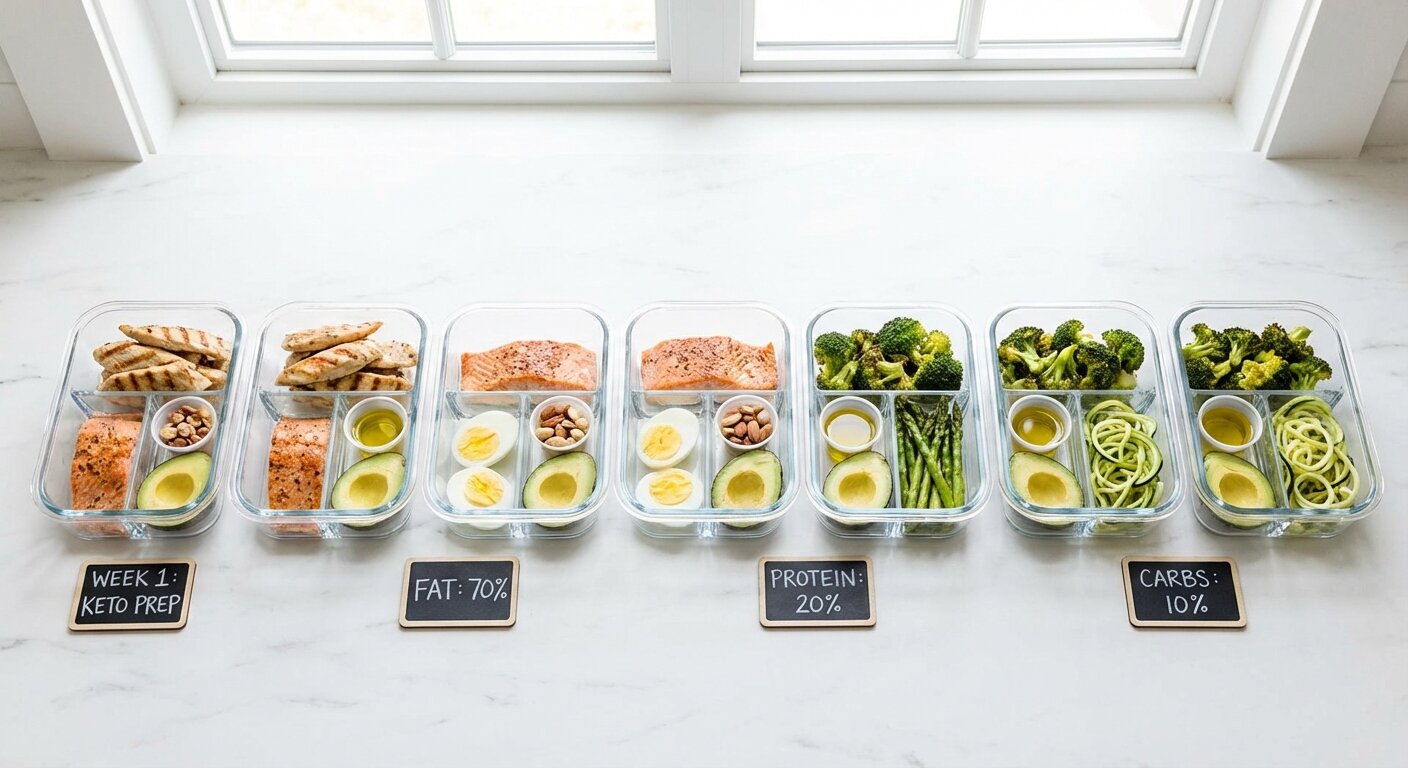
Keto Macro-Friendly Foods
High-Fat Protein Sources
- Ribeye steak, chuck roast, 80/20 ground beef
- Pork belly, pork shoulder, bacon
- Salmon, mackerel, sardines
- Chicken thighs (with skin), duck
- Whole eggs
Healthy Fats
- Avocado and avocado oil
- Olive oil (extra virgin)
- Coconut oil and MCT oil
- Grass-fed butter and ghee
- Nuts: macadamias, pecans, almonds, walnuts
- Seeds: chia, flax, hemp
Low-Carb Vegetables (Unlimited)
- Leafy greens: spinach, kale, lettuce, arugula
- Cruciferous: broccoli, cauliflower, Brussels sprouts, cabbage
- Zucchini, cucumber, celery, asparagus
- Bell peppers, mushrooms, tomatoes (moderate)
Low-Carb Fruits (Small Amounts)
- Berries: strawberries, blackberries, raspberries (1/2 cup portions)
- Avocado (technically a fruit, high fat, low carb)
Dairy (If Tolerated)
- Full-fat cheese (cheddar, mozzarella, cream cheese)
- Heavy cream (for coffee, cooking)
- Greek yogurt (full-fat, unsweetened, small portions)
- Butter and ghee
Keto Condiments and Flavor
- Salt, pepper, herbs, spices (check labels)
- Hot sauce (check for added sugar)
- Mustard (yellow, Dijon)
- Mayo (made with avocado or olive oil)
- Sugar-free sweeteners: erythritol, stevia, monk fruit
Foods to Avoid
- All grains and grain-based products
- Sugar in any form (including honey, agave, maple syrup)
- Most fruits (except berries in small amounts)
- Starchy vegetables (potatoes, corn, peas)
- Legumes (beans, lentils, chickpeas)
- Most processed foods (hidden carbs and sugars)
- Low-fat or “diet” products (usually high in sugar)
For specific food guides, check out our resources like chicken breast macros and salmon macros.
FAQ: Keto Macros
What are the standard keto macros?
Standard keto macros are 70-75% fat, 20-25% protein, and 5-10% carbs (typically under 50g carbs, ideally under 20g). This ratio keeps most people in ketosis while providing adequate protein for muscle maintenance and enough fat for energy and satiety.
How many carbs can I eat on keto?
Most people stay in ketosis eating under 50g total carbs (or 20-30g net carbs) per day. Some athletes can handle up to 100g on targeted or cyclical keto approaches. Start with 20g net carbs for guaranteed ketosis, then experiment carefully if desired.
Do I have to eat a lot of fat on keto?
Fat is your primary energy source on keto, but you don’t need to force-feed butter. Eat enough fat to feel satisfied and meet your calorie needs. If you’re trying to lose weight, eating slightly less fat allows your body to burn stored body fat for fuel.
Will too much protein kick me out of ketosis?
No, this is a myth. While excess protein can theoretically be converted to glucose (gluconeogenesis), this process is demand-driven, not supply-driven. Most people can eat 1.0-1.2g protein per pound of lean mass without any issues staying in ketosis.
What’s the difference between net carbs and total carbs?
Total carbs include all carbohydrates in food. Net carbs subtract fiber and sugar alcohols (which don’t significantly impact blood sugar). On keto, most people track net carbs: Net Carbs = Total Carbs - Fiber - Sugar Alcohols.
Can I build muscle on keto?
Yes, you can build muscle on keto, but it may be slightly slower than on a higher-carb diet. Prioritize protein (1.0-1.2g per lb), train hard with progressive overload, and consider targeted keto (carbs around workouts) if performance suffers.
How long does it take to get into ketosis?
Most people enter ketosis within 2-4 days of restricting carbs to under 20-50g daily. However, becoming ‘keto-adapted’ (fully efficient at burning fat) takes 2-4 weeks. The first week often includes ‘keto flu’ symptoms as your body adapts.
Should I test my ketones?
Testing ketones (via urine strips, breath meter, or blood monitor) can confirm ketosis but isn’t necessary for most people. If you’re following keto macros properly (under 20-50g carbs), you’re likely in ketosis. Focus on how you feel more than ketone numbers.
Related Articles
Travel Macros: How to Track Nutrition While Traveling
Complete guide to managing macros while traveling. Learn meal planning strategies,...
Read guide →
Macros for Shift Workers: Complete Guide to Nutrition on Rotating Schedules
Master macro tracking on night shifts and rotating schedules. Learn meal timing, sleep...
Read guide →
Macros During Ramadan: Complete Nutrition Guide for Fasting
Learn how to track macros during Ramadan fasting. Expert guide covering meal timing,...
Read guide →Disclaimer: This content is for informational purposes only. Consult a healthcare provider before making changes to your diet.