Macro Calculator for Women: Find Your Perfect Ratio
Reviewed by Sarah Chen, MS, RD
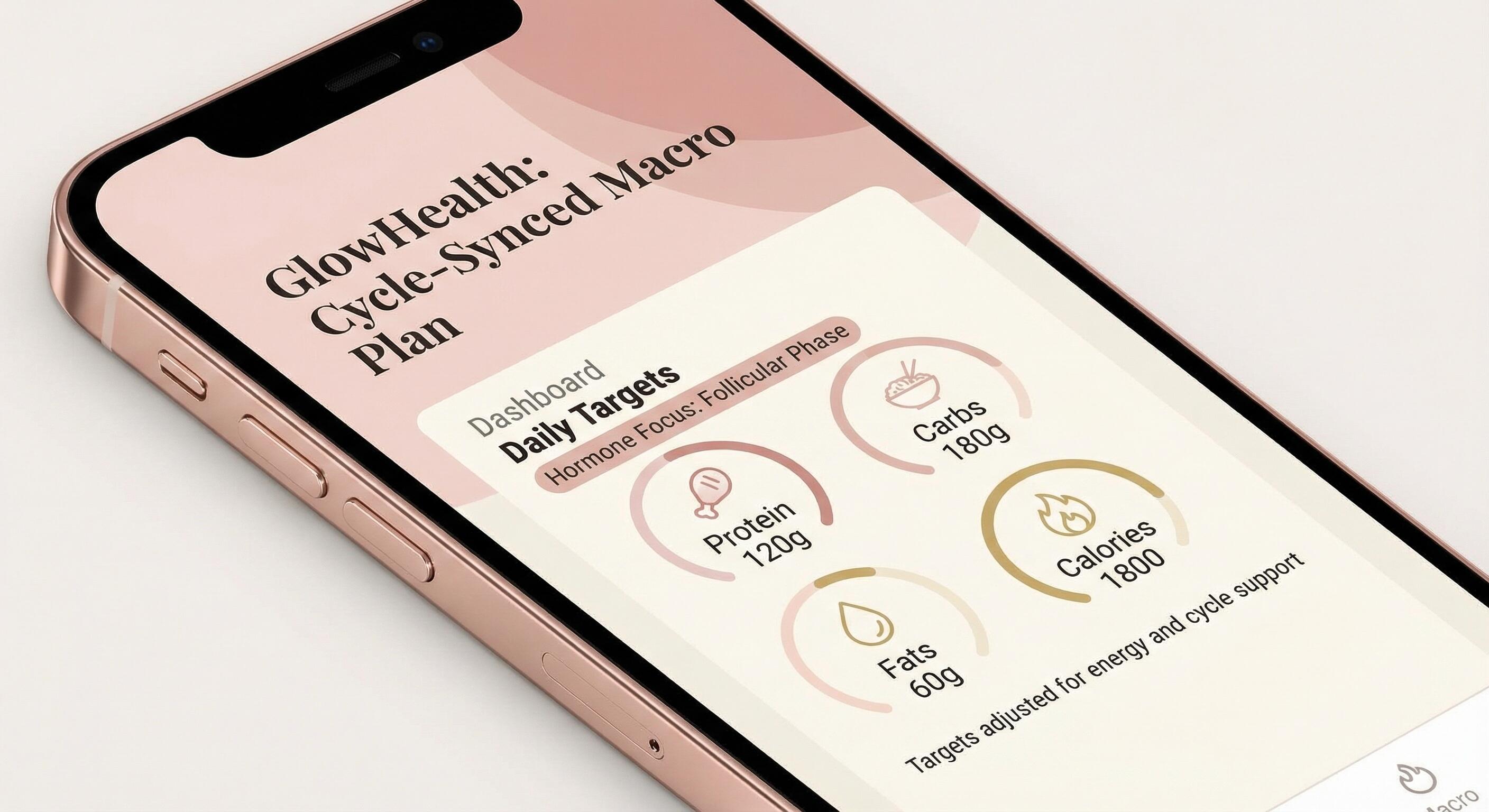
You’ve tried counting calories. You’ve followed meal plans designed for “everyone.” But somehow, the results don’t match what you see other people getting.
Here’s why: Women have different nutritional needs than men.
Different hormones. Different body composition. Different metabolic responses. A menstrual cycle that affects everything from cravings to energy to how your body uses nutrients.
Generic macro calculators don’t account for any of this. They give you the same formulas designed primarily around male physiology and expect them to work perfectly for women.
This guide explains how to calculate macros specifically for female bodies—accounting for hormones, cycle phases, age-related changes, and the unique challenges women face with body composition. For comprehensive female nutrition strategies beyond just calculations, see our complete macros for women guide.
Ready to get your personalized numbers? Our Macro Calculator provides female-specific recommendations in under 60 seconds.

Why Women Need Different Macros
Women aren’t just “smaller men.” Female physiology requires different nutritional considerations.
Hormonal Differences
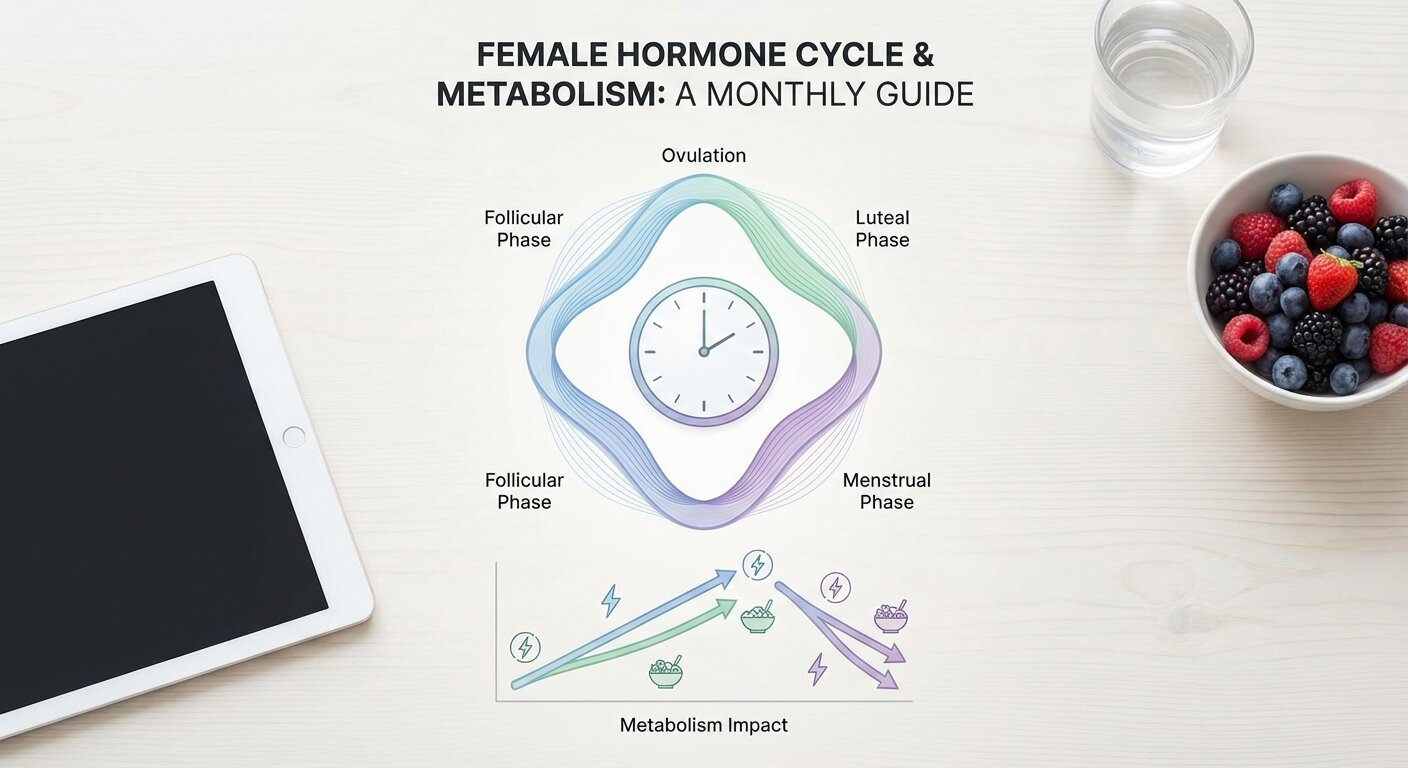
Women have cyclical hormone patterns that affect:
- Appetite and cravings (especially during luteal phase)
- Insulin sensitivity (varies throughout cycle)
- Energy expenditure (slightly higher pre-menstruation)
- Nutrient partitioning (how your body uses protein, carbs, and fats)
- Recovery needs (estrogen affects muscle repair differently)
Estrogen and progesterone fluctuate throughout the month, influencing macro needs. Men’s relatively stable testosterone levels create more predictable macro requirements.
Body Composition Differences
On average, women have:
- 10-12% higher essential body fat (reproductive function requires more fat)
- Less total muscle mass (lower testosterone means slower muscle building)
- Different fat distribution (hips and thighs vs android pattern in men)
- Lower basal metabolic rate at the same bodyweight
These differences mean women typically need fewer total calories but similar protein per pound of lean mass for optimal body composition.
Metabolic Differences
Women’s bodies are more efficient at:
- Using fat for fuel (better fat oxidation during exercise)
- Storing energy as fat (evolutionary adaptation for pregnancy/nursing)
- Surviving on fewer calories (metabolic adaptation happens faster)
This efficiency is great for survival, less great for fat loss. Women need to be more strategic with macros to overcome these adaptations.
Age-Related Changes
Women experience more dramatic metabolic shifts with age:
- Menopause drastically changes hormone levels and nutrient needs
- Muscle loss accelerates after menopause without adequate protein
- Insulin sensitivity decreases more noticeably in women over 40
- Bone density concerns require attention to overall nutrition
For women over 40, standard macro recommendations often need significant adjustment. Learn more in our guide to macros for women over 40.
How to Calculate Your Macros as a Woman
Let’s walk through the calculation process step-by-step.
Step 1: Calculate Your TDEE
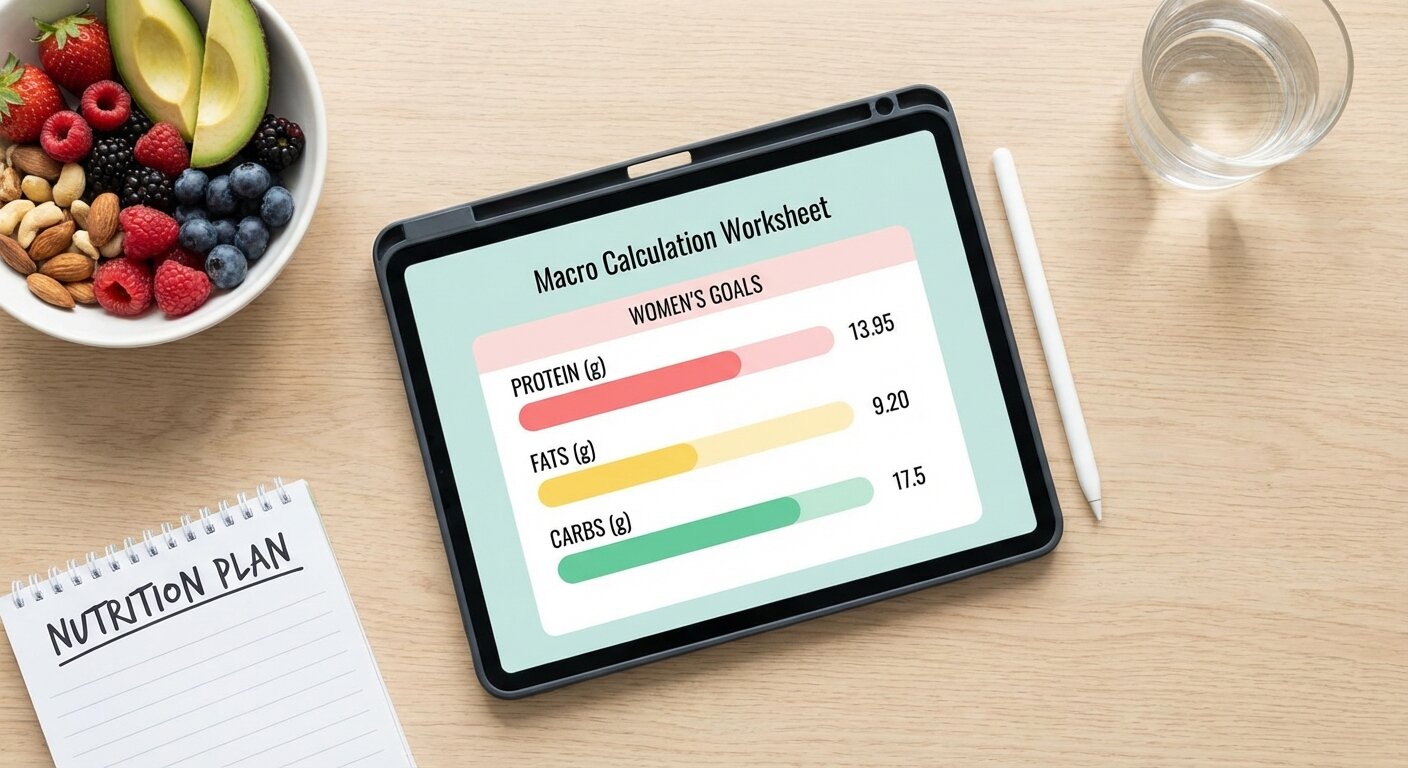
TDEE (Total Daily Energy Expenditure) is your baseline. Use the Mifflin-St Jeor equation, which accounts for sex differences:
For Women: BMR = (10 × weight in kg) + (6.25 × height in cm) - (5 × age) - 161
Then multiply by activity level:
- Sedentary: BMR × 1.2
- Lightly Active: BMR × 1.375
- Moderately Active: BMR × 1.55
- Very Active: BMR × 1.725
Example (35-year-old woman, 150 lbs / 68 kg, 5’5” / 165 cm, lightly active):
- BMR = (10 × 68) + (6.25 × 165) - (5 × 35) - 161 = 1,405 calories
- TDEE = 1,405 × 1.375 = 1,932 calories
For a detailed breakdown of TDEE, see our TDEE calculator guide.
Step 2: Adjust for Your Goal
For Weight Loss: TDEE - 300 to 500 calories
- Our example: 1,932 - 400 = 1,532 calories
For Maintenance: Eat at TDEE
- Our example: 1,932 calories
For Muscle Gain: TDEE + 200 to 300 calories
- Our example: 1,932 + 250 = 2,182 calories
Women should use smaller surpluses than men (200-300 vs 300-500) to minimize fat gain.
Step 3: Set Your Protein
Protein is the most important macro for women. It:
- Preserves muscle during weight loss
- Supports recovery and muscle building
- Increases satiety and reduces cravings
- Has a high thermic effect (burns calories to digest)
- Supports healthy hair, skin, and nails
Recommended protein intake for women:
- Weight loss or muscle building: 1.0-1.2g per pound of bodyweight
- Maintenance: 0.8-1.0g per pound
- Over 40 or postmenopausal: 1.2-1.4g per pound (higher to combat muscle loss)
Our example (150 lbs, weight loss goal):
- Protein: 150 × 1.0 = 150g per day
- Calories from protein: 150g × 4 = 600 calories
Many women under-eat protein. Don’t make this mistake. Learn more in our guide on protein requirements for women.
Step 4: Set Your Fat
Fat is essential for women’s hormonal health. Never go too low.
Minimum fat intake for women: 0.3g per pound of bodyweight (never drop below 20% of total calories)
Optimal range: 0.3-0.5g per pound
Our example (150 lbs, moderate fat approach):
- Fat: 150 × 0.4 = 60g per day
- Calories from fat: 60g × 9 = 540 calories
Women who cut fat too low often experience:
- Irregular or missing periods
- Low energy and mood issues
- Hormone imbalances
- Poor nutrient absorption
Step 5: Fill the Rest with Carbs
After setting protein and fat, the remaining calories come from carbohydrates.
Our example:
- Total calories: 1,532
- Protein calories: 600
- Fat calories: 540
- Remaining: 1,532 - 600 - 540 = 392 calories from carbs
- Carbs: 392 ÷ 4 = 98g per day
Final macros for weight loss (150 lb woman):
- 1,532 calories
- 150g protein (39%)
- 98g carbs (26%)
- 60g fat (35%)
The Easy Way: Use a Calculator
Skip the math and get personalized female-specific macros instantly with our Macro Calculator. It accounts for age, activity level, and goals automatically.
Macros for Women by Goal
Your macro ratios should shift based on what you’re trying to achieve.
Weight Loss Macros for Women
Recommended ratio: 40% protein / 30% carbs / 30% fat
For a comprehensive fat loss framework, see our complete macros for weight loss guide.
Why this works:
- High protein (1.0-1.2g/lb) preserves muscle while in a deficit
- Moderate fat (0.3-0.5g/lb) supports hormones without excess calories
- Moderate carbs provide energy without overeating
Example (1,500 calories):
- Protein: 150g (40%)
- Carbs: 113g (30%)
- Fat: 50g (30%)
Women tend to lose fat best on higher protein approaches. Don’t fear eating more protein—it’s your secret weapon. Read our complete guide on best macros for weight loss (female).
Muscle Building Macros for Women
Recommended ratio: 30% protein / 40% carbs / 30% fat
Why this works:
- High protein (1.0-1.2g/lb) supports muscle protein synthesis
- Higher carbs fuel training and recovery
- Moderate fat supports hormones without excess calories
Example (2,000 calories):
- Protein: 150g (30%)
- Carbs: 200g (40%)
- Fat: 67g (30%)
Women can absolutely build muscle—it just happens more slowly than for men. Consistent training plus adequate protein and calories is the formula. Learn more in our guide on macros for muscle gain.
Toning / Body Recomposition Macros
Recommended ratio: 40% protein / 30% carbs / 30% fat
Why this works:
- Very high protein (1.0-1.4g/lb) drives muscle growth while losing fat
- Moderate carbs support training without excess
- Moderate fat maintains hormonal health
Example (1,800 calories - at or slightly below maintenance):
- Protein: 150g (33%)
- Carbs: 135g (30%)
- Fat: 60g (30%)
Body recomposition works best for beginners or women returning to training after a break. Learn more in our body recomposition guide.
Maintenance Macros for Women
Recommended ratio: 30% protein / 40% carbs / 30% fat
Why this works:
- Adequate protein (0.8-1.0g/lb) maintains muscle
- Flexible carbs and fat allow for dietary variety
- Sustainable long-term
Example (2,000 calories):
- Protein: 150g (30%)
- Carbs: 200g (40%)
- Fat: 67g (30%)
Maintenance is underrated. After reaching your goal, you can maintain it without constant restriction.
Adjusting Macros for Your Menstrual Cycle
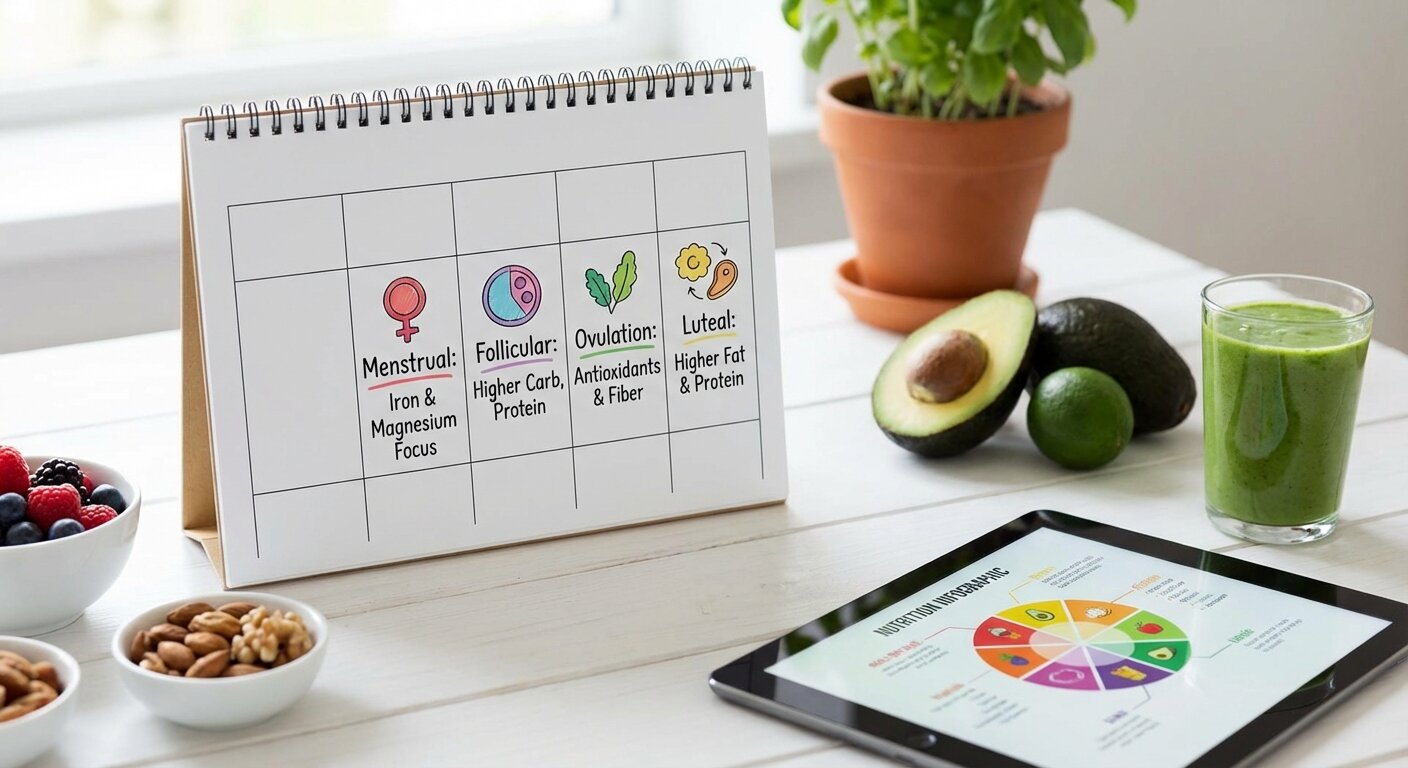
Your hormone levels fluctuate throughout the month, and your macros can (optionally) flex with them.
Follicular Phase (Days 1-14)
Hormones: Estrogen rising, progesterone low
How you feel: Higher energy, better workouts, lower appetite
Macro adjustments:
- Standard macros work great
- Good time to push harder in training
- No special adjustments needed
Ovulation (Day 14)
Hormones: Estrogen peaks
How you feel: Peak energy and strength
Macro adjustments:
- Take advantage of high energy for intense training
- May feel less hungry—don’t under-eat protein
Luteal Phase (Days 15-28)
Hormones: Progesterone rises, estrogen drops
How you feel: Increased appetite, cravings (especially carbs), slightly elevated metabolism, lower energy
Macro adjustments:
- Consider adding 100-200 calories, mostly from carbs
- Prioritize protein to manage cravings
- Don’t fight extreme hunger—eat at maintenance if needed
- You’re burning slightly more calories (5-10% increase in metabolism)
Menstruation (Days 1-5)
Hormones: Both estrogen and progesterone drop
How you feel: Fatigue, lower performance, possible cravings
Macro adjustments:
- Back to standard macros
- Focus on iron-rich proteins (red meat, dark leafy greens)
- Don’t stress perfection during this phase
Bottom line: Cycle-based macro adjustments are optional. Consistency matters more than perfection. If you find yourself starving the week before your period, adding 100-200 calories (mostly carbs) can prevent binge eating and make adherence easier.
Special Considerations for Women
Women Over 40
Metabolism slows and muscle loss accelerates after 40, especially approaching menopause.
Macro recommendations:
- Higher protein: 1.2-1.4g per pound (combat muscle loss)
- Moderate carbs: Insulin sensitivity decreases with age
- Adequate fat: Hormone production still needs fat
Read our complete guide on macros for women over 40 for detailed recommendations.
Women with PCOS
PCOS (Polycystic Ovary Syndrome) affects 1 in 10 women and changes macro needs significantly.
Macro recommendations:
- Higher protein: 40% of calories (1.0-1.2g/lb)
- Lower carbs: 25-35% (insulin resistance common with PCOS)
- Moderate fat: 30-35%
- Focus on low glycemic carbs
Read our complete guide on macros for PCOS for specific recommendations.
Pregnancy and Breastfeeding
Do NOT diet during pregnancy or while breastfeeding.
Pregnancy macro needs:
- Increase calories by 300-350 in 2nd trimester, 450-500 in 3rd
- Protein: 1.1g per kg bodyweight (up from 0.8g)
- Focus on nutrient quality, not restriction
Breastfeeding macro needs:
- Add 300-500 calories to maintenance
- Higher protein: 1.3g per kg (support milk production)
- Never aggressive calorie deficits (affects milk supply)
Read our guide on pregnancy and breastfeeding macros for complete details.
Menopause and Perimenopause
Hormone changes during menopause dramatically affect body composition and macro needs.
Macro recommendations:
- Much higher protein: 1.2-1.4g per pound
- Moderate carbs: 30-35% of calories
- Adequate fat: 25-30% (hormone production needs fat)
- Strength training is non-negotiable
Learn more in our menopause macros guide.
Common Macro Mistakes Women Make
Mistake 1: Not Eating Enough Protein
Women are often afraid of protein. “Won’t I get bulky?” No. You won’t.
The truth: Women don’t produce enough testosterone to get “bulky” from high protein intake. You’ll get lean, toned, and strong.
Fix: Aim for 0.8-1.2g per pound of bodyweight. Track your intake—you’re probably eating less than you think.
Mistake 2: Cutting Fat Too Low
“Fat makes you fat, right?” Wrong.
Dietary fat doesn’t make you fat—excess calories do. And women NEED adequate fat for:
- Hormone production (estrogen, progesterone)
- Menstrual health
- Mood and energy
- Vitamin absorption (A, D, E, K)
Fix: Never drop below 0.3g per pound (20% of calories). Aim for 0.3-0.5g per pound.
Mistake 3: Eating Too Little Overall
“I’ll just eat 1,200 calories and lose weight faster!”
This backfires for women more than men. Chronic under-eating leads to:
- Metabolic adaptation (your body burns fewer calories)
- Muscle loss
- Hormonal disruption (irregular or missing periods)
- Extreme hunger and eventual bingeing
Fix: Use moderate deficits (300-500 calories below TDEE). Slower fat loss that you can sustain beats rapid loss you can’t maintain.
Mistake 4: Copying Male Macro Splits
Your boyfriend eats 40% carbs and gets shredded. You try the same and plateau.
Men and women respond differently to macro ratios. Women often do better with higher protein and moderate carbs, especially for fat loss.
Fix: Use female-specific macro recommendations, not generic ones.
Mistake 5: Ignoring Hunger Cues During Your Cycle
You’re starving the week before your period, but you force yourself to stick to your macros. Then you binge on Saturday.
Your metabolism actually increases slightly during the luteal phase, and cravings are hormone-driven, not weakness.
Fix: Add 100-200 calories (mostly carbs) during high-hunger phases. This prevents binges and makes adherence easier.
Mistake 6: Expecting Male Results
Your male training partner loses 2 pounds per week. You lose 0.5 pounds and feel frustrated.
Women lose fat more slowly than men. It’s biology, not failure.
Fix: Expect 0.5-1% of bodyweight loss per week. For a 150 lb woman, that’s 0.75-1.5 lbs per week. Anything more risks muscle loss.
How to Track Your Macros as a Woman
Best Apps for Women
MyFitnessPal: Most popular, huge food database Cronometer: Most accurate micronutrient tracking MacroFactor: Adaptive algorithm adjusts your macros automatically Carbon Diet Coach: Specifically designed for women’s hormone cycles
Tracking Tips for Women
-
Weigh yourself daily, track weekly averages
- Weight fluctuates 2-5 lbs throughout your cycle
- Daily weigh-ins smooth out hormone-related water retention
- Only compare week-to-week averages, not day-to-day
-
Track your cycle alongside your macros
- Note energy, hunger, and performance throughout the month
- Adjust expectations during luteal phase and menstruation
- Recognize patterns (you’re not “failing,” it’s hormones)
-
Use your hands as portion guides when eating out
- Palm = protein serving
- Fist = carb serving
- Thumb = fat serving
-
Don’t stress perfection
- Hitting 90% of your macros is fine
- Slight variations day-to-day don’t matter
- Weekly averages matter more than daily precision
For complete tracking guidance, read our guide on how to count macros.
Next Steps: From Macros to Results
Now that you know how to calculate your macros as a woman, here’s what to do next:
-
Calculate your macros using our Macro Calculator
-
Track consistently for 2-4 weeks before making changes
-
Weigh yourself daily and calculate weekly averages
-
Adjust based on results:
- Not losing fat? Reduce carbs by 20-30g
- Losing too fast (>1.5 lbs/week)? Add 100-200 calories
- Feeling exhausted? Increase carbs around workouts
-
Consider hormone factors:
- Track your cycle alongside macros
- Be flexible during high-hunger phases
- Don’t expect linear progress throughout the month
-
Prioritize protein:
- Hit your protein target daily
- Carbs and fats can flex slightly
- Protein is non-negotiable for results
-
Be patient:
- Women’s results take longer than men’s
- Expect 0.5-1% bodyweight loss per week
- Focus on strength, measurements, and photos, not just the scale
For more guidance on achieving your specific goals, check out our comprehensive guides:
FAQ: Macro Calculator for Women
Do women need different macros than men?
Yes, women have different hormonal profiles, typically less muscle mass, different body composition goals, and menstrual cycle fluctuations that affect macro needs. Women generally need slightly lower overall calories but similar protein per pound of bodyweight for optimal results.
How do I calculate my macros as a woman?
Calculate your TDEE using the Mifflin-St Jeor equation, adjust for your goal (deficit, maintenance, or surplus), then set protein at 0.8-1.2g per pound, fat at 0.3-0.5g per pound, and fill remaining calories with carbs. Our calculator automates this process with female-specific adjustments.
Should I adjust my macros during my menstrual cycle?
Many women benefit from slightly higher carbs during the luteal phase (week before period) when cravings increase and metabolism may be slightly elevated. However, consistency is more important than perfect cycle-based adjustments for most women.
Why can’t I just use a regular macro calculator?
Generic calculators don’t account for female-specific factors like menstrual cycle, menopause, PCOS, or pregnancy. While they provide a starting point, a women’s macro calculator offers more accurate recommendations based on female physiology and hormonal considerations.
What are the best macros for women trying to lose weight?
For women’s weight loss, aim for 40% protein, 30% carbs, 30% fat as a starting point. This high-protein approach preserves muscle, manages hunger, and supports hormonal health. Adjust based on your activity level and individual response.
How much protein do women really need?
Women need 0.8-1.2 grams of protein per pound of bodyweight depending on goals. For weight loss or muscle building, aim for 1.0-1.2g per pound. For maintenance, 0.8-1.0g per pound is sufficient. Don’t fear higher protein—it’s essential for women.
Can women eat too little fat?
Yes, women need adequate dietary fat for hormone production, menstrual health, and nutrient absorption. Never drop below 0.3g per pound of bodyweight (about 20% of calories). Low-fat diets can disrupt periods, energy, and mood in women.
Do macros change for women over 40?
Yes, women over 40 typically need higher protein (1.0-1.4g per pound) to combat muscle loss, moderate carbs due to decreased insulin sensitivity, and adequate fat for hormone health. Metabolism slows slightly, so total calories may need adjustment.
Related Articles
Travel Macros: How to Track Nutrition While Traveling
Complete guide to managing macros while traveling. Learn meal planning strategies,...
Read guide →
Macros for Shift Workers: Complete Guide to Nutrition on Rotating Schedules
Master macro tracking on night shifts and rotating schedules. Learn meal timing, sleep...
Read guide →
Macros During Ramadan: Complete Nutrition Guide for Fasting
Learn how to track macros during Ramadan fasting. Expert guide covering meal timing,...
Read guide →Disclaimer: This content is for informational purposes only. Consult a healthcare provider before making changes to your diet.