Macro Counting vs Calorie Counting: Which is Better?
Reviewed by Sarah Chen, MS, RD
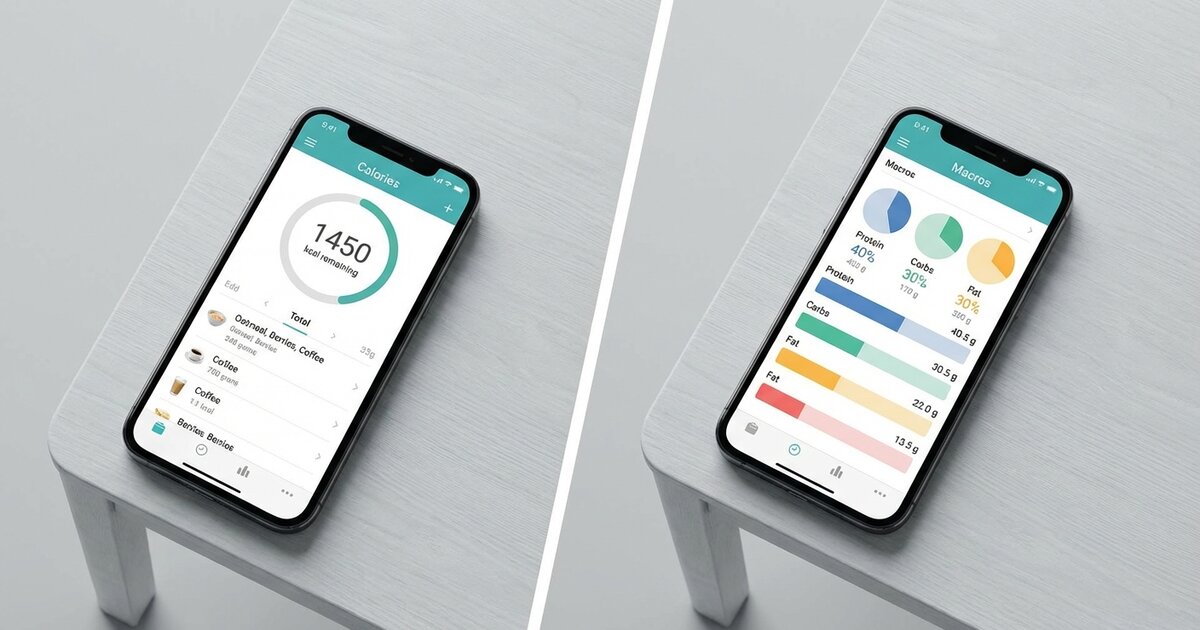
You’ve decided to take control of your diet. You know tracking something will help.
But should you count calories or count macros?
One method tracks a single number—total energy in. The other tracks three numbers—protein, carbs, and fat. One seems simpler. The other seems more precise. Which one actually gets results?
Here’s the truth: Both work. But they work differently, and one might be dramatically better for your specific goal.
This guide breaks down exactly how calorie counting and macro counting differ, the pros and cons of each, and which approach fits your situation. We’ll use real examples, compare outcomes, and help you make an informed choice.
By the end, you’ll know exactly which method to use—and why.
Want to skip ahead? If you’re leaning toward macro counting, our free macro calculator gives you personalized targets in 60 seconds.

Understanding Calories vs Macros
Let’s start with the fundamentals.
What Are Calories?
Calories measure energy. One calorie is the energy needed to raise one gram of water by one degree Celsius.
When you “count calories,” you’re tracking total energy intake—regardless of where that energy comes from.
Example: 500 calories from donuts = 500 calories from chicken and rice (in terms of pure energy)
What Are Macros?
Macros (macronutrients) are the three nutrients your body needs in large amounts:
- Protein: 4 calories per gram
- Carbohydrates: 4 calories per gram
- Fat: 9 calories per gram
Every food is made of some combination of these three building blocks.
When you “count macros,” you’re tracking how many grams of each macronutrient you eat—which automatically tracks calories as a byproduct.
Example: 150g protein + 200g carbs + 50g fat = 1,850 calories total
Want a deeper dive? Read what are macros for the complete explanation.
The Key Difference
Calorie counting: “Did I stay under 1,800 calories today?”
Macro counting: “Did I hit 140g protein, 180g carbs, and 60g fat today?”
One cares about the total. The other cares about the breakdown.
How Calorie Counting Works
Let’s examine pure calorie counting in detail.
The Process
- Calculate your Total Daily Energy Expenditure (TDEE)
- Set a calorie target based on your goal (deficit for fat loss, surplus for muscle gain)
- Track total calories consumed
- Stay within your target
That’s it. No attention to protein, carbs, or fat ratios. Just total energy.
What a Day of Calorie Counting Looks Like
Goal: 1,800 calories for fat loss
Example day:
- Breakfast: Bagel with cream cheese (450 cal)
- Snack: Granola bar (200 cal)
- Lunch: Turkey sandwich and chips (600 cal)
- Snack: Apple with peanut butter (250 cal)
- Dinner: Pasta with marinara (550 cal)
Total: 2,050 calories → over target, need to adjust
Notice: No consideration for protein content, just total calories.
When Calorie Counting Works Well
You’re a good fit for calorie counting if:
- You’re new to tracking and want simplicity
- You don’t lift weights or care about muscle definition
- You eat intuitively well (naturally get enough protein)
- You just want to lose a few pounds for health
- You’re maintaining a healthy weight and want awareness
For many casual dieters, calorie awareness alone creates enough structure to see results.
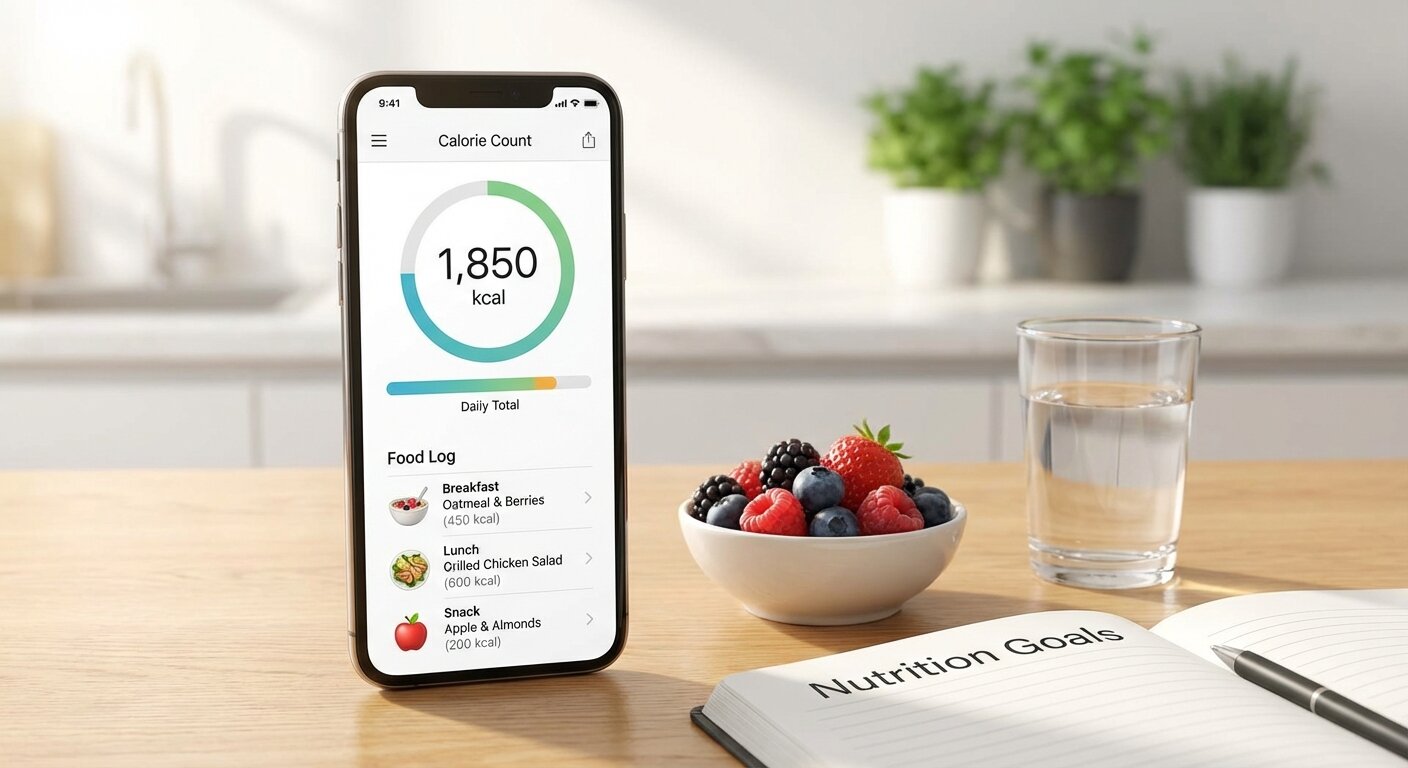
How Macro Counting Works
Now let’s look at the macro counting approach.
The Process
- Calculate your calorie target (same as calorie counting)
- Set protein target (typically 0.8-1g per pound bodyweight)
- Set fat target (typically 0.3-0.4g per pound bodyweight)
- Fill remaining calories with carbs
- Track daily intake for all three macros
More variables to track, but more control over outcomes.
What a Day of Macro Counting Looks Like
Goal: 1,800 calories | 140g protein | 180g carbs | 60g fat
Example day:
- Breakfast: Egg white omelet with oats (380 cal | 30P | 45C | 8F)
- Snack: Greek yogurt with berries (150 cal | 20P | 18C | 2F)
- Lunch: Chicken breast, rice, vegetables (550 cal | 45P | 65C | 8F)
- Snack: Protein shake (130 cal | 25P | 5C | 2F)
- Dinner: Salmon, sweet potato, asparagus (590 cal | 40P | 47C | 22F)
Total: 1,800 cal | 160P | 180C | 42F
Notice: This person hit their protein target (140g+), stayed on calories, and feels full because protein is high. They have room to add 18g of fat (maybe from avocado or nuts) to hit fat target exactly.
When Macro Counting Works Better
You’re a good fit for macro counting if:
- You lift weights and want to build/preserve muscle
- You’ve hit a weight loss plateau
- You get excessively hungry on traditional diets
- You want visible abs or muscle definition
- You’re an athlete optimizing performance
- You care about body composition, not just scale weight
For physique-focused individuals, macro counting is dramatically more effective.
Learn how to get started with our macro tracking for beginners guide.
Direct Comparison: Same Calories, Different Macros
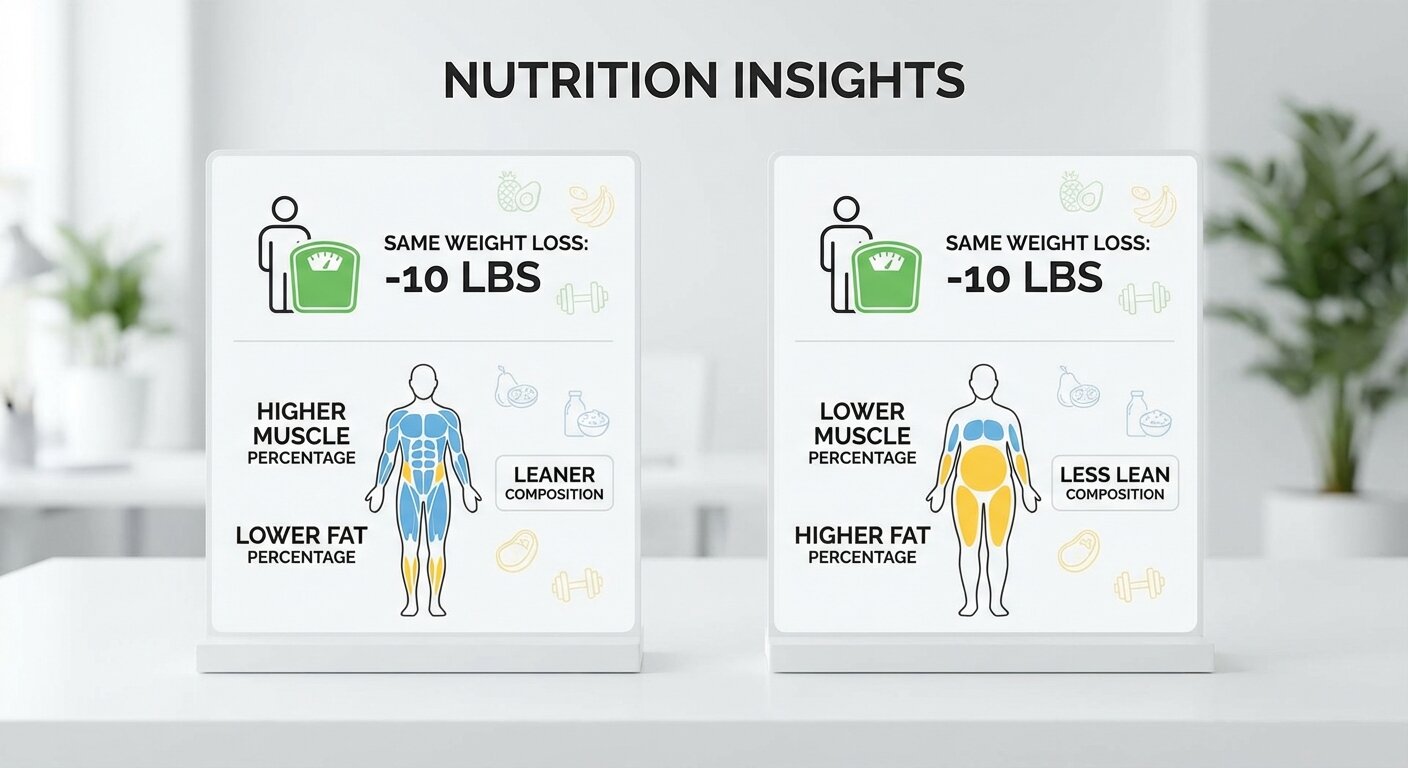
Let’s compare two people eating identical calories with different macro strategies.
Person A: Calorie Counting Only
Daily target: 1,800 calories (no macro targets)
Typical day:
- Breakfast: Cereal with milk (350 cal | 8P | 55C | 10F)
- Lunch: Chipotle burrito bowl, light protein (650 cal | 25P | 80C | 22F)
- Snack: Crackers and hummus (250 cal | 6P | 30C | 12F)
- Dinner: Pasta with vegetables (550 cal | 15P | 85C | 16F)
Daily totals: 1,800 cal | 54P | 250C | 60F
Result after 12 weeks:
- Lost 12 pounds (good!)
- Significant muscle loss (bad)
- Constantly hungry between meals (bad)
- Lost definition/muscle tone (bad)
- Metabolism slowed significantly (bad)
Person B: Macro Counting
Daily target: 1,800 calories | 140g protein | 180g carbs | 60g fat
Typical day:
- Breakfast: Egg scramble with toast (380 cal | 28P | 35C | 14F)
- Lunch: Grilled chicken salad with quinoa (520 cal | 45P | 48C | 16F)
- Snack: Greek yogurt with granola (220 cal | 22P | 25C | 5F)
- Dinner: Salmon, rice, broccoli (680 cal | 48P | 72C | 22F)
Daily totals: 1,800 cal | 143P | 180C | 57F
Result after 12 weeks:
- Lost 11 pounds (good!)
- Preserved muscle mass (excellent)
- Felt full and satisfied (excellent)
- Visible muscle definition improved (excellent)
- Metabolism stayed healthy (excellent)
The Difference
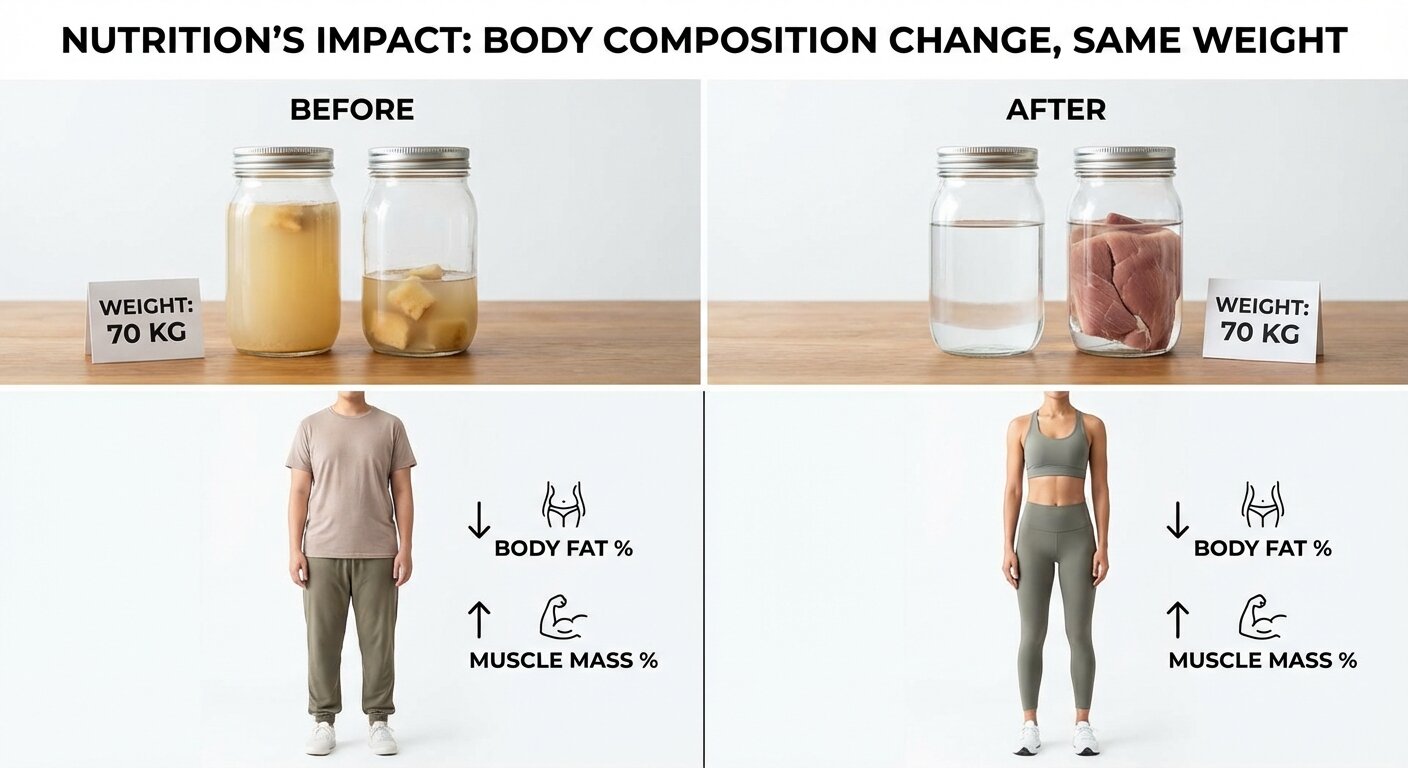
Same calories. Wildly different outcomes.
Person B prioritized protein, which:
- Preserved muscle during fat loss
- Increased satiety (protein is most filling macro)
- Supported metabolism (muscle burns calories)
- Improved body composition (lost fat, kept muscle)
This is why macro counting beats pure calorie counting for body composition goals.
Pros and Cons of Calorie Counting
Advantages of Calorie Counting
1. Simplicity Track one number instead of three. Less mental overhead.
2. Lower barrier to entry Beginners find it less intimidating.
3. Flexibility Eat anything as long as it fits your calorie budget.
4. Works for general weight management If you just need to lose a few pounds for health (not physique), it’s enough.
5. Less time-consuming initially Slightly faster to log foods.
Disadvantages of Calorie Counting
1. No muscle preservation guarantee Low protein intake can cause significant muscle loss during deficit.
2. Poor hunger management 200 calories of Oreos vs 200 calories of chicken feel completely different.
3. Doesn’t optimize body composition You might hit your goal weight but still have excess body fat and little muscle tone.
4. Can backfire for athletes Performance suffers if protein or carb timing is ignored.
5. No nutrient accountability You could eat 1,500 calories of junk food and technically hit your target.
6. Plateau-prone When progress stalls, “eat less” is the only solution—which eventually stops working.
Pros and Cons of Macro Counting
Advantages of Macro Counting
1. Preserves muscle mass High protein targets protect against muscle loss.
2. Superior hunger management Protein and fat targets keep you satisfied longer.
3. Optimizes body composition You lose fat while maintaining (or building) muscle.
4. Predictable results When dialed in, outcomes are consistent and reproducible.
5. Supports performance Athletes can fuel workouts with appropriate carb intake.
6. Built-in nutrient quality Hitting 140g protein requires eating quality protein sources.
7. Easier to troubleshoot When progress stalls, you can adjust individual macros strategically.
Disadvantages of Macro Counting
1. Steeper learning curve Tracking three numbers feels overwhelming at first.
2. More initial effort Takes 1-2 weeks to learn portion sizes and favorite food macros.
3. Requires more precision You can’t just estimate—you need to weigh/measure initially.
4. Potentially obsessive Some people become overly rigid (though this can happen with calorie counting too).
5. Overkill for casual dieters If you just want to maintain general health, it might be more than you need.
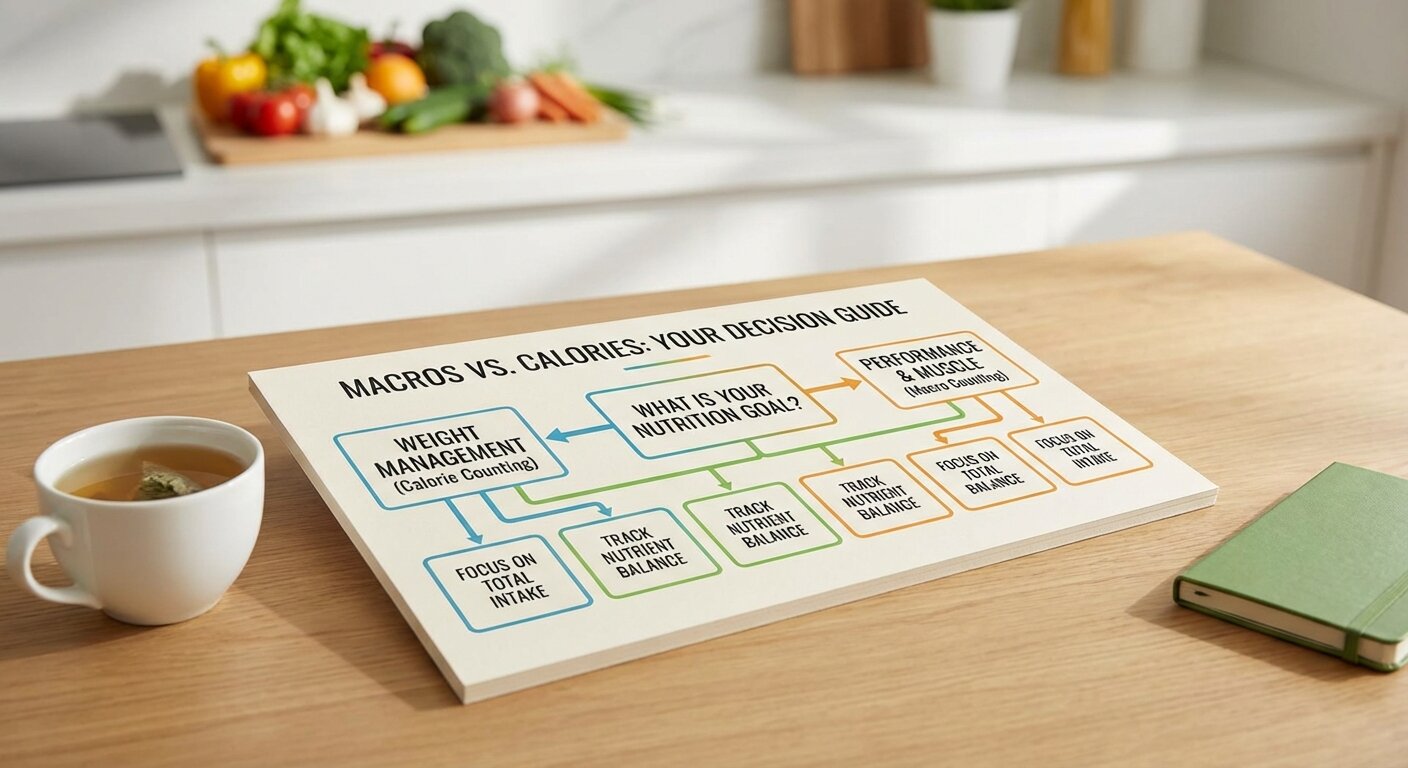
Which Method Should You Choose?
Here’s how to decide what’s right for you.
Choose Calorie Counting If:
✅ You’re brand new to tracking and want to start simple
✅ You don’t lift weights regularly
✅ You have modest weight loss goals (10-20 pounds)
✅ You naturally eat a balanced diet
✅ You’re maintaining and just want calorie awareness
✅ You have no specific body composition goals
Bottom line: Calorie counting is sufficient for general weight management without physique goals.
Choose Macro Counting If:
✅ You lift weights or do resistance training
✅ You want visible muscle definition
✅ You’ve hit a weight loss plateau with calorie counting
✅ You get excessively hungry on low-calorie diets
✅ You’re an athlete optimizing performance
✅ You care how your body looks, not just the scale number
✅ You’ve lost weight before but also lost muscle tone
Bottom line: Macro counting is superior for body composition, muscle preservation, and athletic performance.
The Hybrid Approach
Option 3: Track calories primarily but monitor protein as a minimum target.
For example:
- Hit 1,800 calories daily (main goal)
- Ensure at least 100g protein (secondary goal)
- Don’t worry about carb/fat breakdown
This gives you 80% of macro counting benefits with 50% of the effort. Great middle ground for busy people.
Transitioning from Calorie to Macro Counting
Already counting calories and want to level up? Here’s how.
Week 1: Add Protein Awareness
Keep tracking calories as normal, but start paying attention to protein.
Goal: Hit a minimum protein target daily (0.7-0.8g per pound bodyweight)
This single change improves satiety and preserves muscle.
Week 2: Add Fat Awareness
Now track calories and protein consistently. Start monitoring fat intake.
Goal: Keep fat between 0.3-0.4g per pound bodyweight
This ensures hormone health and satisfaction.
Week 3: Full Macro Tracking
Now track all three. Your carbs will naturally fill the remaining space.
By gradually adding variables, you avoid overwhelm.
Tools That Make It Easier
Modern apps display macros alongside calories with zero extra work:
- MyFitnessPal: Shows macros automatically when you log food
- Cronometer: Excellent macro breakdowns and charts
- MacroFactor: Adaptive targets that adjust based on progress
Read our full review in best apps for tracking macros.
Real-World Example: 6-Month Comparison
Let’s compare two real scenarios over 6 months.
Sarah: Calorie Counting
Starting: 165 lbs, 32% body fat Goal: Lose 20 pounds
Method: 1,600 calories daily, no macro targets
6-month results:
- Weight: 145 lbs (20 pounds lost ✅)
- Body fat: 28% (4% reduction)
- Lost: 13 lbs fat + 7 lbs muscle ❌
- Still has “soft” appearance despite weight loss
- Feels weaker in gym
- Metabolism slowed considerably
Outcome: Hit weight goal but unhappy with appearance.
Mike: Macro Counting
Starting: 185 lbs, 22% body fat Goal: Lose 15 pounds of fat
Method: 2,200 calories | 165g protein | 220g carbs | 73g fat
6-month results:
- Weight: 173 lbs (12 pounds lost)
- Body fat: 15% (7% reduction)
- Lost: 15 lbs fat + gained 3 lbs muscle ✅
- Visible abs and muscle definition
- Strength maintained or increased
- Metabolism stayed healthy
Outcome: Didn’t hit weight goal but transformed body composition.
The Difference
Mike lost fewer pounds on the scale but achieved far superior results because macro tracking preserved muscle and optimized fat loss.
This is the power of tracking macros instead of just calories.
Common Questions About Macros vs Calories
”If I hit my macros, do I automatically hit my calories?”
Yes. Since protein, carbs, and fat all have calorie values, hitting your macro targets means you’ve hit your calorie target.
Macros are more precise—you’re distributing those calories strategically.
”Can I lose weight eating high protein and low carbs vs low protein and high carbs?”
Yes, you can lose weight with either (calories still matter). But high protein yields:
- Better muscle retention
- Greater satiety
- Improved body composition
- Easier maintenance long-term
”Is macro counting necessary for everyone?”
No. If you’re happy with your body, eating intuitively, and have no physique goals, tracking anything might be overkill.
Macro counting is a tool—use it when you need it.
”Can I build muscle with just calorie counting?”
Technically yes, if you’re accidentally eating enough protein. But most people don’t—they focus on calories and neglect protein, limiting muscle growth.
Macro tracking ensures adequate protein for muscle building.
”Which method is better for long-term maintenance?”
Neither—the goal is learning portion awareness and intuitive eating. Both tracking methods are educational tools to teach you what appropriate intake looks like.
Most people eventually stop tracking and maintain intuitively using the habits they’ve built.
Tips for Success with Either Method
Regardless of which approach you choose, these principles apply:
1. Track Consistently
Track every day for at least 2-3 weeks before assessing. Weekend tracking matters as much as weekdays.
2. Be Honest
Log everything—the cooking oil, the bites of your kid’s mac and cheese, the handful of nuts. Untracked calories still count.
3. Use a Food Scale
Especially when starting. Eyeballing portions is notoriously inaccurate. After a few weeks, you’ll develop intuition. Learn more in our guide do you need a food scale.
4. Plan Ahead
Pre-logging your day’s food makes hitting targets infinitely easier than reactive tracking.
5. Give It Time
Your first week will feel tedious. By week 3, it’s second nature. Most people quit before they reach the “easy” phase.
6. Adjust Based on Results
If your weight isn’t moving in the desired direction after 2-3 weeks, adjust intake by 200-300 calories.
7. Focus on Whole Foods
Whether tracking macros or calories, prioritize lean proteins, whole grains, fruits, vegetables, and healthy fats. Tracking doesn’t mean eating junk—it means having a structured plan.
The Bottom Line
Calorie counting tracks total energy. It works for general weight loss but doesn’t optimize body composition or muscle retention.
Macro counting tracks protein, carbs, and fat separately. It preserves muscle, manages hunger better, and delivers superior body composition results.
Which is better? It depends on your goal.
For general health and modest weight loss: Calorie counting is sufficient.
For body composition, muscle definition, and athletic performance: Macro counting is dramatically better.
For most people reading this guide: You probably care about how you look, not just the number on the scale—which means macro counting is worth the extra effort.
Ready to get started with macro counting? Use our free macro calculator to get your personalized protein, carb, and fat targets in 60 seconds.
Then read how to calculate your macros for a complete walkthrough of the process.
Start tracking, be consistent, and watch your body transform in ways pure calorie counting never could.
Related Resources
Related Articles
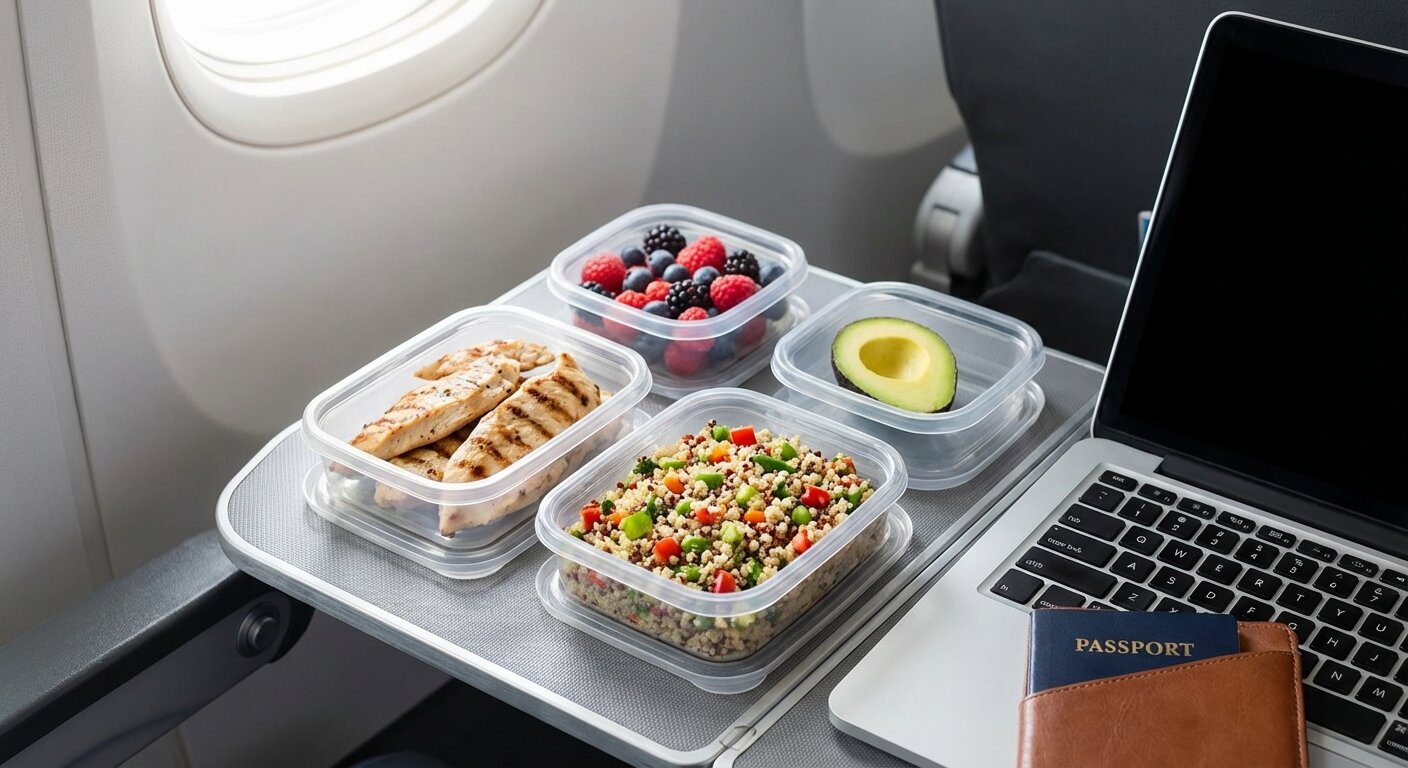
Travel Macros: How to Track Nutrition While Traveling
Complete guide to managing macros while traveling. Learn meal planning strategies,...
Read guide →
Macros for Shift Workers: Complete Guide to Nutrition on Rotating Schedules
Master macro tracking on night shifts and rotating schedules. Learn meal timing, sleep...
Read guide →
Macros During Ramadan: Complete Nutrition Guide for Fasting
Learn how to track macros during Ramadan fasting. Expert guide covering meal timing,...
Read guide →Disclaimer: This content is for informational purposes only. Consult a healthcare provider before making changes to your diet.