Macros for Athletes: A Complete Performance Nutrition Guide
Reviewed by Sarah Chen, MS, RD

You’re an athlete. You train hard, you push your limits, and you demand the best from your body. But are you fueling it for peak performance?
Nutrition for athletes is fundamentally different from nutrition for the general population. You’re not just eating for health or weight management; you’re eating to fuel performance, maximize recovery, and build a stronger, more resilient body. The foundation of that athletic fuel is your macronutrient intake. To understand the basics of macronutrients, start with our guide on what are macronutrients.
The right balance of protein, carbohydrates, and fats can be the difference between hitting a new personal record and hitting a wall. The wrong balance can lead to poor performance, slow recovery, and an increased risk of injury.
This comprehensive guide will cover the specific macro needs of different types of athletes, how to adjust your macros for different goals like cutting or bulking, and the science of nutrient timing to get the most out of every training session.
For general information on muscle gain or fat loss, see our guides on macros for muscle gain and macros for cutting.

Why Athletes Need Different Macros
An athlete’s body is in a constant cycle of stress, breakdown, and repair. This places unique demands on their nutritional needs compared to a sedentary person.
- Higher Energy Expenditure: Athletes burn significantly more calories through training. This energy must be replenished to prevent performance decline and muscle loss.
- Greater Protein Needs: Intense exercise causes micro-tears in muscle tissue. Protein provides the amino acids necessary to repair this damage and build stronger muscles.
- Carbohydrates as a Performance Fuel: Carbohydrates are the body’s primary and most efficient energy source for high-intensity exercise. Inadequate carb intake directly compromises performance.
- Enhanced Recovery Demands: The right macros, consumed at the right times, accelerate recovery, reduce muscle soreness, and allow you to train harder and more frequently.
In short, food is not just food for an athlete; it is fuel, building blocks, and recovery medicine.
Macro Ratios for Athletes by Sport Type
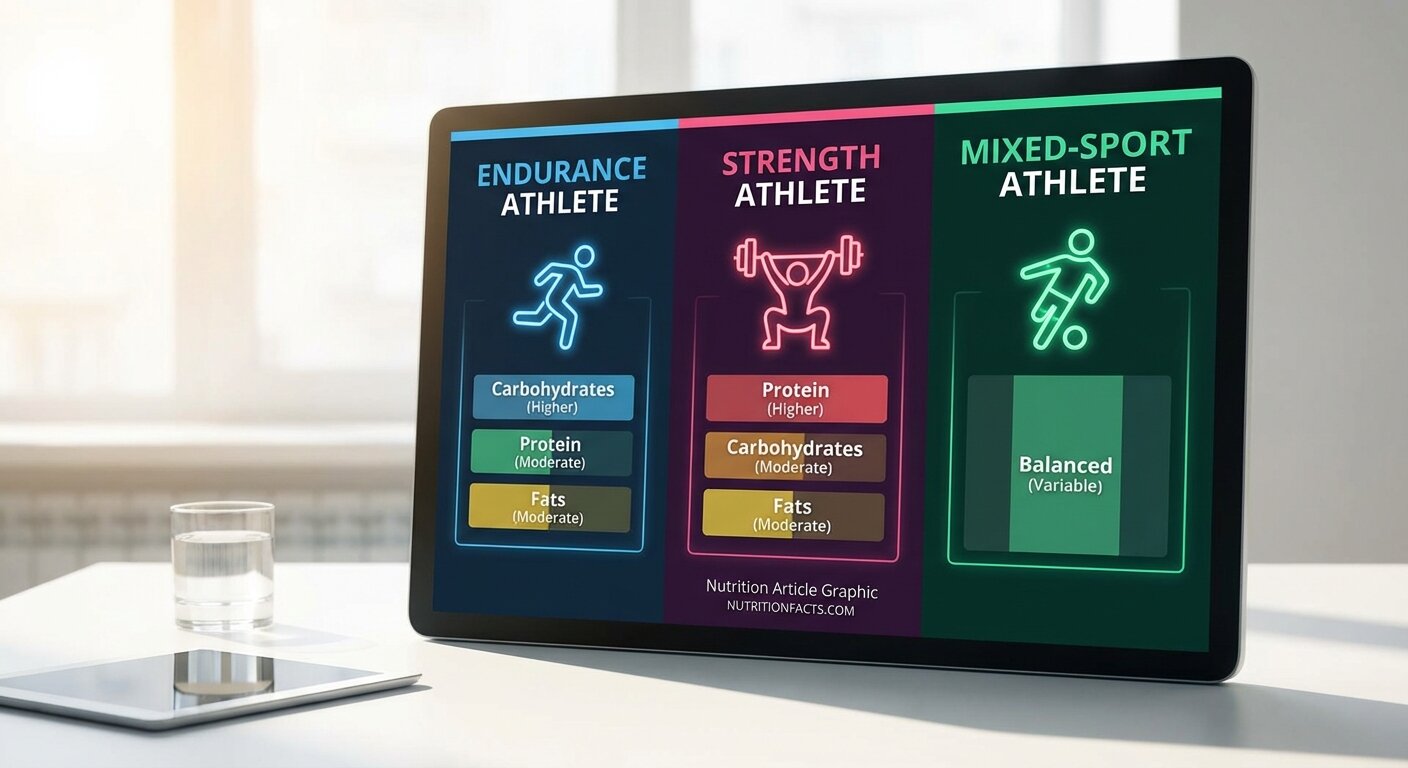
Not all athletes are the same. A marathon runner has vastly different needs than a powerlifter. We can break down athletic macro needs into three broad categories.
1. Endurance Athletes (Runners, Cyclists, Swimmers)
Primary Goal: Sustained energy output for long durations. Key Macro: Carbohydrates are king.
Recommended Ratio: 25% Protein / 50-60% Carbs / 15-20% Fat
- Carbohydrates (50-60%): The main event. Endurance athletes need to keep their muscle glycogen stores topped off. A high-carb diet is essential for performance in events lasting over 90 minutes.
- Protein (25%): Higher than the general population to repair muscle damage from repetitive motion, but less than strength athletes.
- Fat (15-20%): Kept lower to maximize room for carbohydrates, while still providing essential fatty acids for overall health.
2. Strength/Power Athletes (Powerlifters, Bodybuilders, Sprinters)
Primary Goal: Maximum force production and muscle hypertrophy. Key Macro: Protein is the priority.
Recommended Ratio: 35% Protein / 35% Carbs / 30% Fat
- Protein (35%): The cornerstone for repairing and building muscle tissue. A high protein intake is non-negotiable for strength athletes.
- Carbohydrates (35%): Crucial for fueling intense, short-burst training sessions. Timed strategically around workouts.
- Fat (30%): Important for hormone production (especially testosterone, which is vital for muscle growth) and overall calories.
3. Mixed-Sport / Power-Endurance Athletes (CrossFit, Soccer, Basketball)
Primary Goal: A mix of strength, power, and endurance. Key Macro: A balanced approach.
Recommended Ratio: 30% Protein / 40% Carbs / 30% Fat
- Carbohydrates (40%): Provides fuel for both high-intensity bursts and sustained effort during a game or WOD.
- Protein (30%): High enough to support muscle repair from both strength and endurance components of training.
- Fat (30%): A balanced intake to support hormonal health and provide sustained energy.
Protein for Athletes: The Recovery Cornerstone
Protein is arguably the most critical macro for adaptation to training.
How Much Protein Do Athletes Need?
Athletes need far more than the standard RDA. Recommendations are based on body weight.
- Strength Athletes: 1.0 - 1.2g per pound of body weight (2.2 - 2.6g per kg).
- Mixed-Sport Athletes: 0.8 - 1.0g per pound of body weight (1.8 - 2.2g per kg).
- Endurance Athletes: 0.7 - 1.0g per pound of body weight (1.5 - 2.2g per kg).
Example (200 lb Strength Athlete):
- 200 lbs x 1.2g/lb = 240g of protein per day.
Protein Timing
- Spread it out: Consume 30-40g of protein every 3-4 hours to keep muscle protein synthesis elevated throughout the day.
- Post-Workout: Consume a fast-digesting protein source (like a whey protein shake) within 2 hours of finishing your workout to kickstart the recovery process.
Carbohydrates for Athletes: The Performance Fuel
For most athletes, carbohydrates are the primary determinant of performance.
How Many Carbs Do Athletes Need?
Carb needs are vast and depend heavily on training volume and intensity.
- Endurance Athletes: 3 - 5g per pound of body weight (6 - 11g per kg).
- Mixed-Sport Athletes: 2 - 4g per pound of body weight (4.5 - 9g per kg).
- Strength Athletes: 2 - 3g per pound of body weight (4.5 - 6.5g per kg).
Example (150 lb Endurance Athlete):
- 150 lbs x 4g/lb = 600g of carbs per day.
Carb Timing is Everything
The when is just as important as the what.
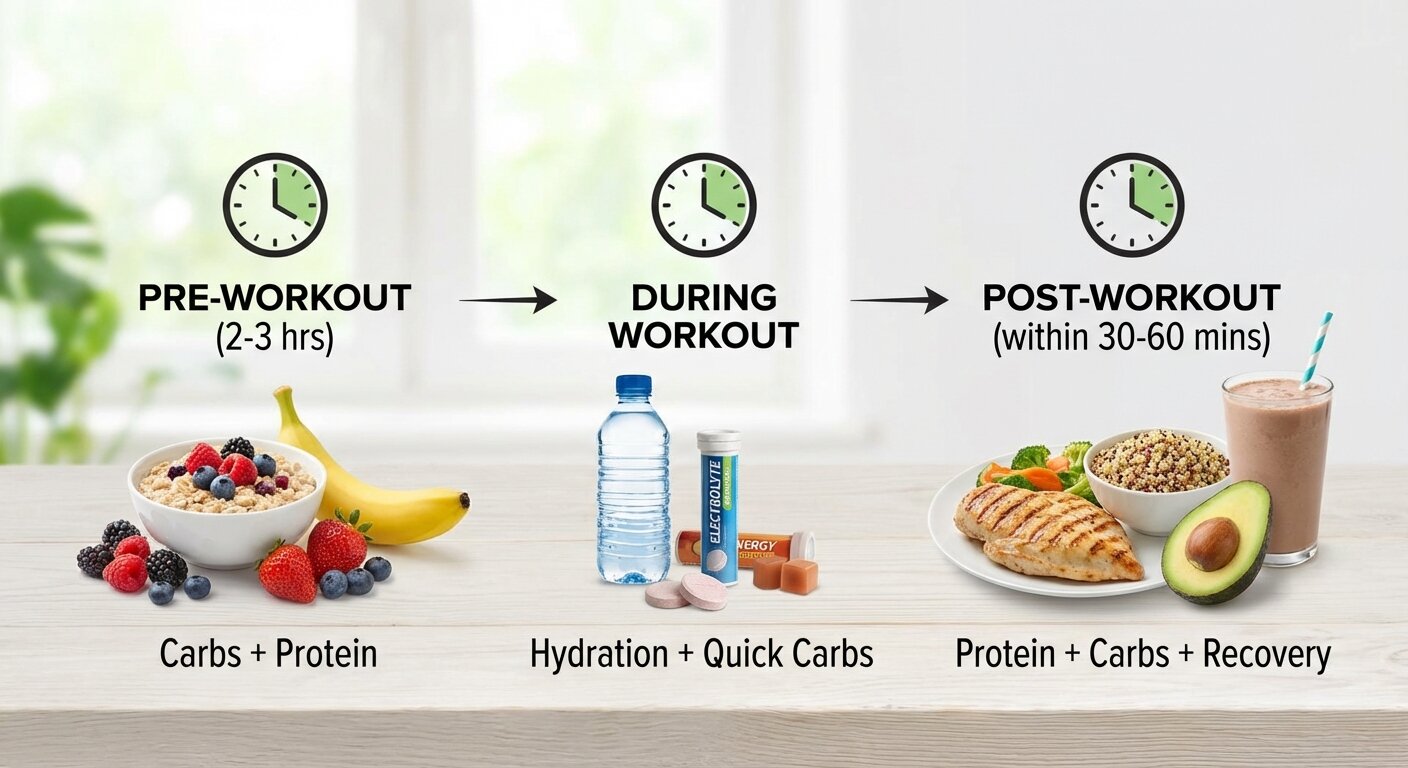
- Pre-Workout (1-2 hours before): Consume 30-50g of easily digestible, complex carbs (like oatmeal or a banana) to top off energy stores.
- Intra-Workout (for sessions > 90 min): Consume 30-60g of simple carbs per hour (from sports drinks, gels, or chews) to maintain blood glucose and spare muscle glycogen.
- Post-Workout (within 2 hours): Consume 50-100g of fast-acting carbs (like white rice, potatoes, or fruit) along with protein to rapidly replenish glycogen stores and enhance recovery.
- Rest of the Day: Focus on complex, high-fiber carbohydrates like sweet potatoes, quinoa, and vegetables.
Fats for Athletes: The Health Foundation
While not a primary performance fuel for most sports, dietary fat is essential for an athlete’s health.
How Much Fat Do Athletes Need?
Target: 0.3 - 0.5g per pound of body weight, or 20-30% of total calories.
Dropping fat intake too low (<20% of calories) can compromise:
- Hormone Production: Including testosterone and estrogen.
- Absorption of Fat-Soluble Vitamins: A, D, E, and K.
- Inflammation Control: Omega-3 fatty acids are crucial for managing training-induced inflammation.
Best Fat Sources
- Monounsaturated Fats: Olive oil, avocados, nuts.
- Omega-3 Fatty Acids: Fatty fish (salmon, sardines), flaxseeds, chia seeds, walnuts.
Fat Timing: Avoid consuming large amounts of fat immediately before or after a workout, as it can slow down the digestion and absorption of crucial carbohydrates and protein.
Macros for Athletic Goals: Cutting, Bulking, and Recomp
Athletes often cycle their nutrition to align with their training seasons and goals.
Macros for Cutting (Fat Loss)
The goal is to lose body fat while preserving as much muscle and performance as possible.
- Calorie Deficit: A modest deficit of 300-500 calories below TDEE.
- Protein: Keep it very high, at the top end of your range (e.g., 1.2g/lb for a strength athlete). This is critical to prevent muscle loss.
- Carbohydrates: Reduce carb intake, but keep them timed around your workouts to fuel performance. Your non-workout carbs will be lower.
- Fat: Reduce fat intake to help create the calorie deficit, but do not go below 20% of total calories.
Macros for Bulking (Muscle Gain)
The goal is to gain muscle with minimal fat gain.
- Calorie Surplus: A modest surplus of 300-500 calories above TDEE.
- Protein: Keep it high (1.0-1.2g/lb) to provide the building blocks for new muscle.
- Carbohydrates: Keep them high to fuel intense, high-volume training sessions that are necessary to stimulate muscle growth.
- Fat: A moderate intake (25-30%) to support hormones.
Macros for Body Recomposition
The goal is to lose fat and build muscle simultaneously. This is most effective for newer athletes or those returning from a layoff.
- Calories: Eat at or very close to your maintenance (TDEE).
- Protein: Extremely high (1.2-1.4g/lb). This is the key driver of recomp.
- Carbs and Fat: A balanced, moderate intake, with carbs focused around training.
- Patience: Progress is much slower than a dedicated cut or bulk, but the quality of change is high.
For a deep dive, read our guide on body recomposition macros.
Periodizing Your Macros
Just as your training changes, your nutrition should change with it.
- High-Volume Training Block: Your carbohydrate and total calorie needs will be at their highest to support the workload.
- Deload Week: Slightly reduce total calories (by ~10-15%), primarily from carbs and fats, as your energy expenditure is lower. Keep protein high to maximize recovery.
- Competition Day: Focus on easily digestible carbohydrates. Reduce fiber and fat to prevent digestive issues.
- Off-Season: A great time to eat at maintenance, focus on food quality, and give your body a break from a strict deficit or surplus. You might adopt a more flexible macro target during this time.
Advanced athletes may also practice carb cycling, eating more carbohydrates on heavy training days and fewer on rest days or light days.
Sample Athlete Meal Plans
Endurance Athlete Meal Plan (~3,500 calories)
- Breakfast: Large bowl of oatmeal with milk, berries, nuts, and a scoop of protein powder.
- Mid-Morning: Bagel with peanut butter and a banana.
- Lunch: Large serving of pasta with grilled chicken and marinara sauce, side salad.
- Pre-Workout: Sports drink and a granola bar.
- Post-Workout: Large protein shake with milk and fruit (high in carbs).
- Dinner: 8oz steak, large baked potato, roasted vegetables.
Strength Athlete Meal Plan (~3,500 calories)
- Breakfast: 6-egg omelet with cheese and veggies, side of whole-wheat toast.
- Mid-Morning: Greek yogurt with a scoop of protein powder and almonds.
- Lunch: 10oz ground beef with 2 cups of white rice and avocado.
- Pre-Workout: Protein shake and an apple.
- Post-Workout: Large protein shake and a bowl of cereal.
- Dinner: 10oz baked salmon, 1.5 cups quinoa, large serving of roasted asparagus.
These are just examples. Your personal calorie and macro needs will determine your portion sizes.
FAQ: Athlete Macros
What are the best macros for an athlete?
The best macros for an athlete depend on their sport. Endurance athletes thrive on higher carbs (50-60%), strength athletes need more protein (30-35%), and mixed-sport athletes need a balance (40% carbs, 30% protein). The common thread is that athletes need more total calories and more protein than sedentary individuals.
How much protein do athletes need?
Athletes need significantly more protein to repair and build muscle. Strength athletes should aim for 1.0-1.2g per pound of body weight (2.2-2.6g/kg), while endurance athletes need 0.7-1.0g per pound (1.5-2.2g/kg). This is crucial for recovery and adaptation to training.
How many carbs do athletes need per day?
Carbohydrate needs vary by sport. Endurance athletes may need 3-5g of carbs per pound of body weight to fuel long sessions. Strength athletes typically need less, around 2-3g per pound, primarily timed around their workouts to fuel performance and replenish glycogen.
Should athletes eat low-carb?
Generally, no. While some ultra-endurance athletes experiment with ketogenic diets, most athletes perform best when they are well-fueled with carbohydrates, which are the body’s preferred energy source for high-intensity exercise. A low-carb diet can compromise performance, intensity, and recovery.
What should an athlete’s macros be on rest days?
On rest days, athletes should still prioritize protein to continue the recovery and muscle-building process. Total calories can be slightly reduced (by 10-20%), typically by lowering carbohydrate and fat intake, as energy expenditure is lower. Drastic cuts are not recommended as recovery is an active process.
What is more important for an athlete: macros or calories?
Both are critical and work together. An athlete must consume enough calories to meet their high energy demands. If calories are too low, performance and recovery will suffer. Within that calorie target, the right macro split ensures that the energy is coming from the right sources—carbs for fuel, protein for repair, and fat for overall health.
How do macros change for cutting vs. bulking?
For cutting (fat loss), an athlete will eat in a modest 300-500 calorie deficit, keeping protein very high (1.2g/lb) to preserve muscle while reducing carbs and fats. For bulking (muscle gain), they will eat in a 300-500 calorie surplus, with high protein and sufficient carbs to fuel intense training.
When is the best time for an athlete to eat carbs?
Carb timing is key for athletes. Consume easily digestible carbs 1-2 hours before a workout for energy, simple carbs during long workouts (>90 min) to maintain performance, and a combination of simple and complex carbs within 2 hours post-workout to replenish glycogen stores and kickstart recovery.
Related Articles
Travel Macros: How to Track Nutrition While Traveling
Complete guide to managing macros while traveling. Learn meal planning strategies,...
Read guide →
Macros for Shift Workers: Complete Guide to Nutrition on Rotating Schedules
Master macro tracking on night shifts and rotating schedules. Learn meal timing, sleep...
Read guide →
Macros During Ramadan: Complete Nutrition Guide for Fasting
Learn how to track macros during Ramadan fasting. Expert guide covering meal timing,...
Read guide →Disclaimer: This content is for informational purposes only. Consult a healthcare provider before making changes to your diet.