Macros for PCOS: Complete Nutrition Guide for Managing PCOS
Reviewed by Sarah Chen, MS, RD
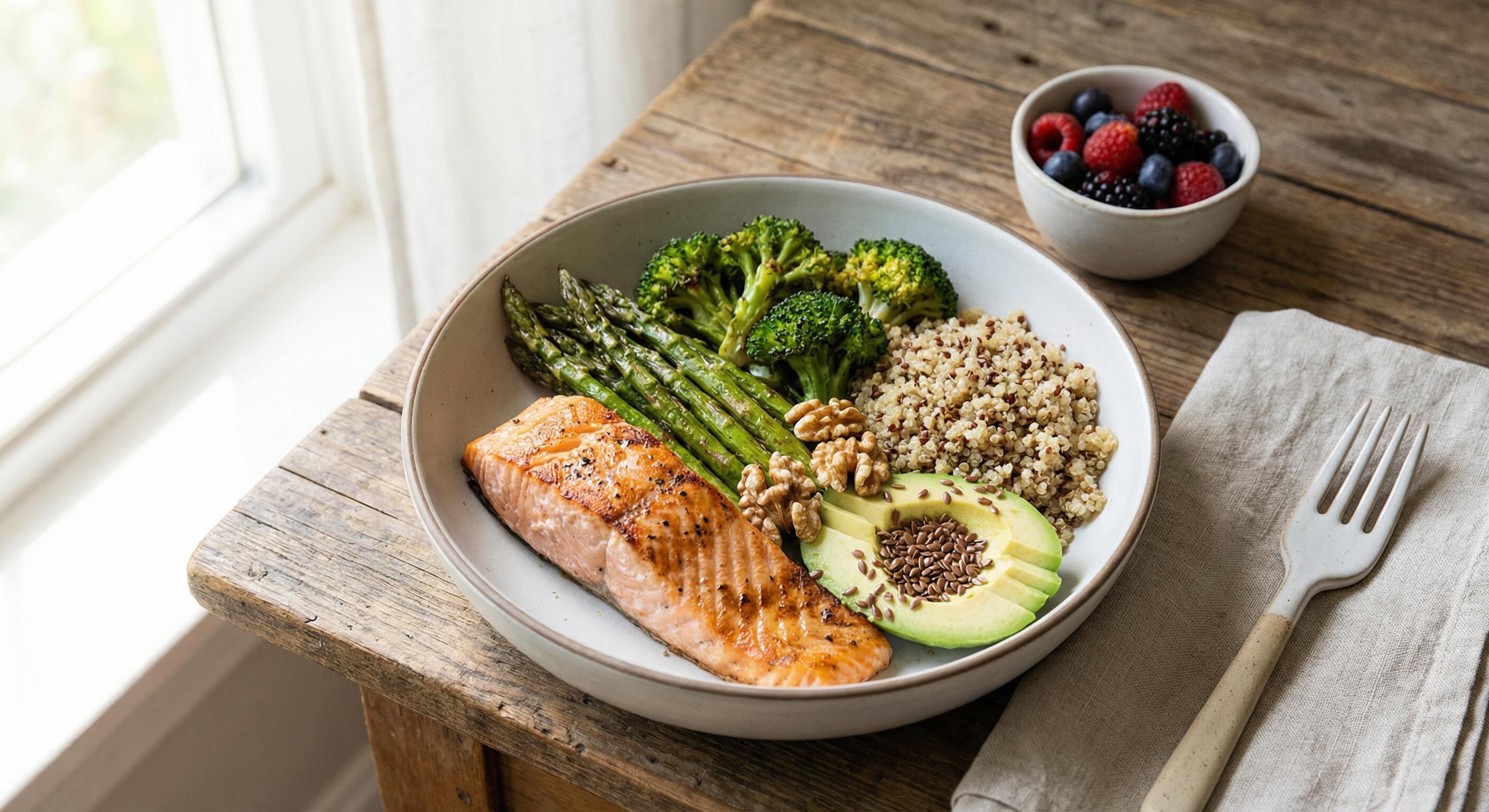
You have PCOS. You’ve tried every diet, and nothing seems to work the way it does for other women. You lose weight painfully slowly, you’re always hungry, and your hormones feel completely out of control.
Here’s the truth: Standard diet advice doesn’t work for PCOS.
Polycystic Ovary Syndrome affects 1 in 10 women, and it fundamentally changes how your body processes nutrients—especially carbohydrates. The insulin resistance, hormonal imbalances, and metabolic dysfunction that come with PCOS require a different nutritional approach.
The right macro ratio can help manage PCOS symptoms, improve insulin sensitivity, support weight loss, balance hormones, and reduce inflammation. But the “best” macros for PCOS aren’t the same as for women without PCOS. (For general women’s macro guidance, see our complete guide to macros for women.)
This guide explains exactly how to set your macros for PCOS management, what foods to prioritize, and how to adjust your approach based on your individual symptoms and severity.
Medical Disclaimer: This information is educational and not a substitute for medical advice. Always work with your doctor or endocrinologist when managing PCOS. Individual needs vary significantly.
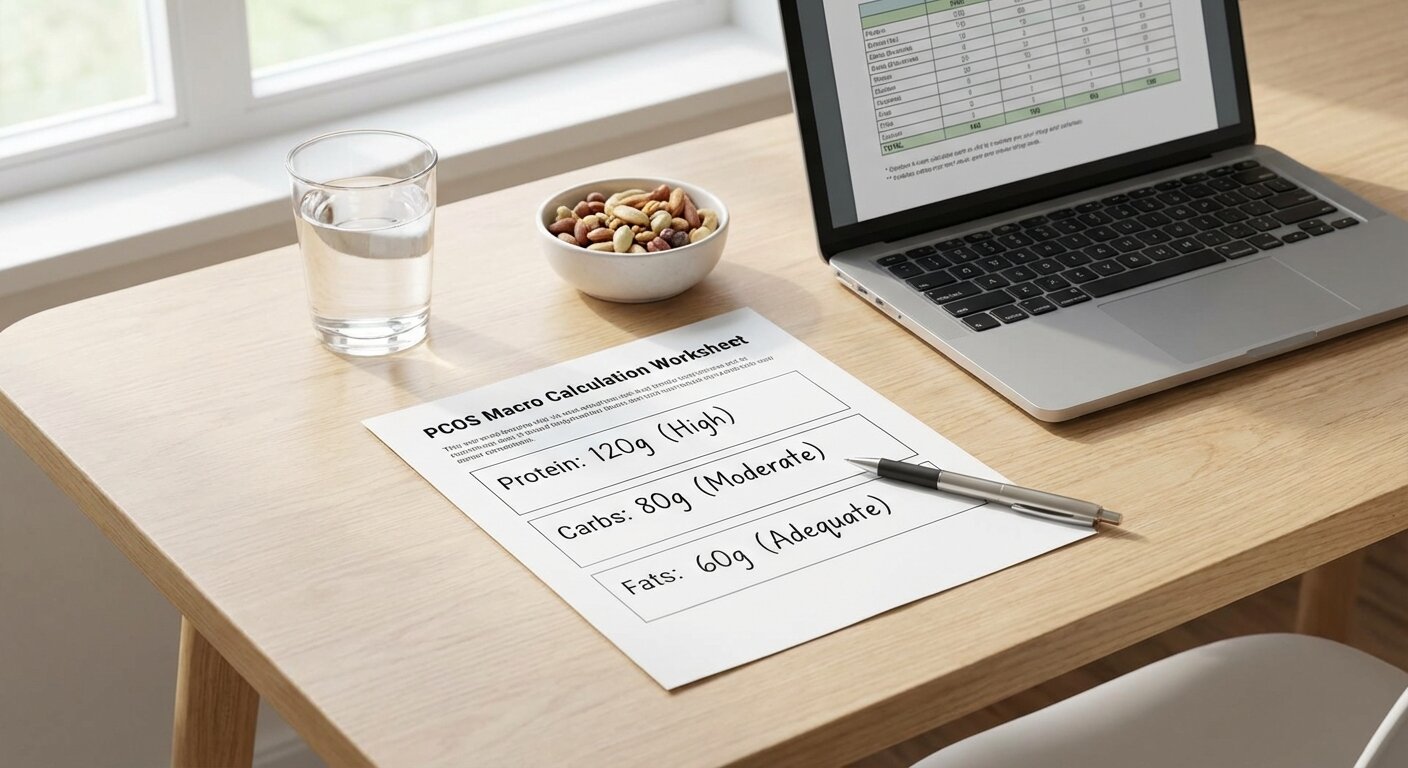
Ready for personalized recommendations? Use our Macro Calculator to get PCOS-friendly macros tailored to your body and goals.
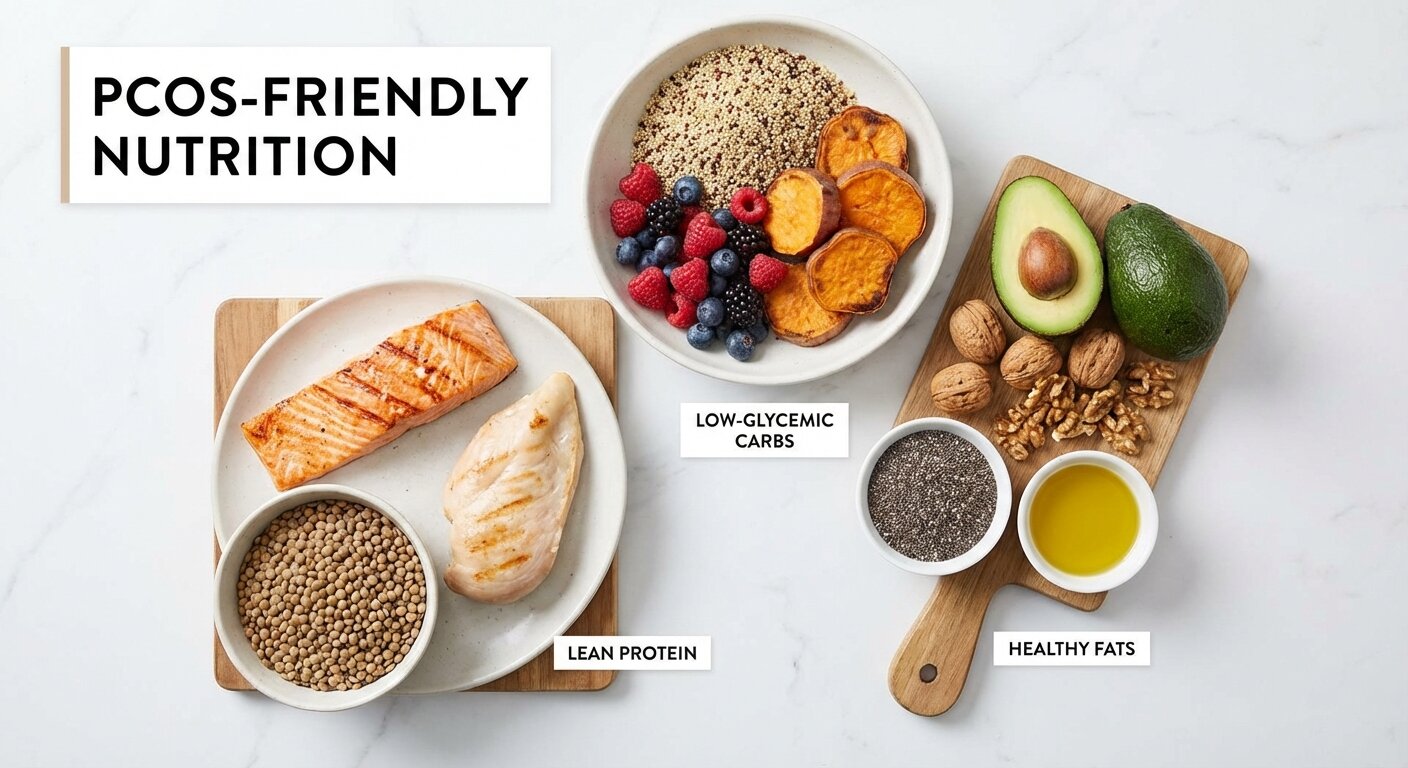
Understanding PCOS and Nutrition
Before diving into macros, let’s understand why PCOS changes your nutritional needs.
What Is PCOS?
Polycystic Ovary Syndrome (PCOS) is a hormonal disorder affecting women of reproductive age. Key characteristics include:
- Irregular periods (or no periods)
- Elevated androgens (testosterone, DHEA)
- Polycystic ovaries (multiple small cysts on ovaries)
- Insulin resistance (70-80% of women with PCOS)
- Weight gain (especially around the midsection)
- Difficulty losing weight
- Increased inflammation
Not all women with PCOS have all symptoms, but insulin resistance is the common thread for most.
The Insulin Resistance Connection
Insulin resistance is the core issue for most women with PCOS.
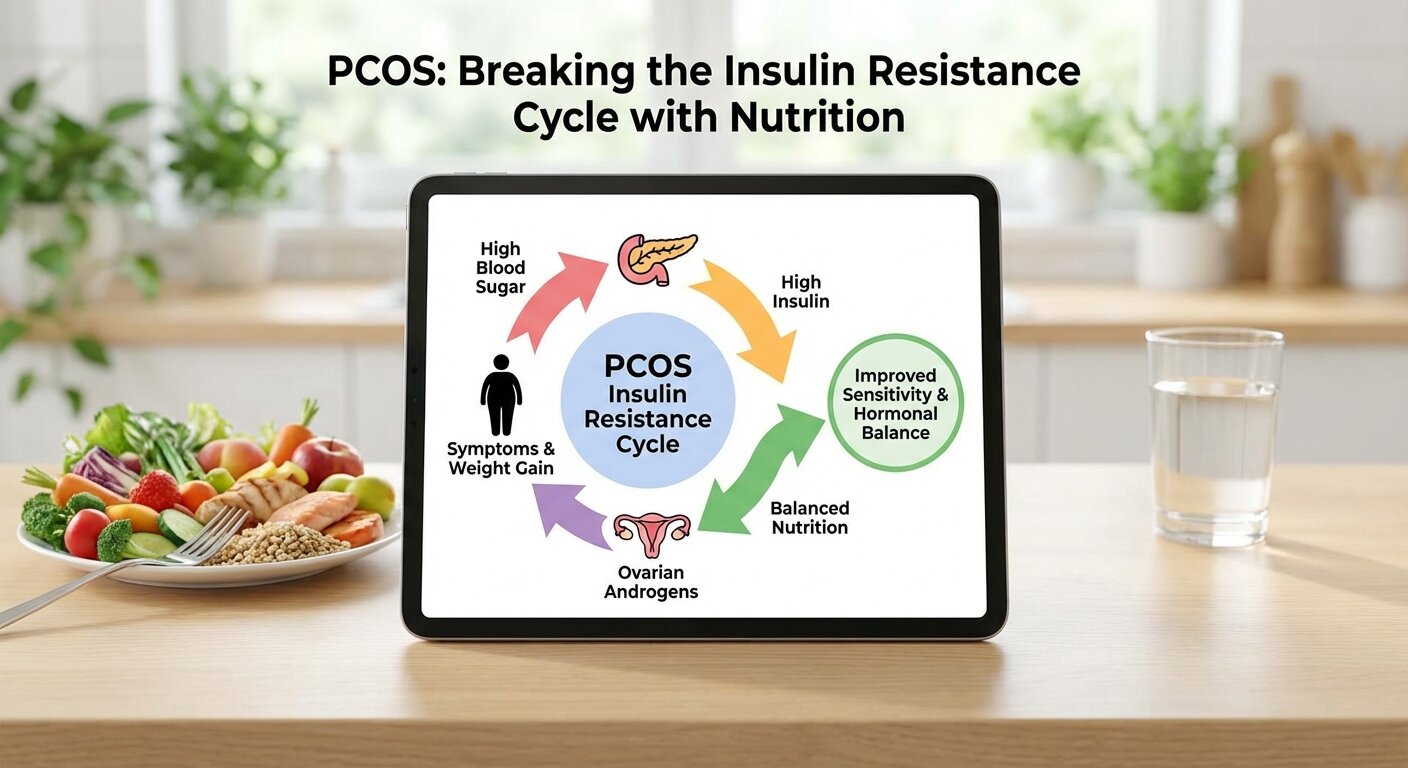
Here’s what happens:
- Your cells become resistant to insulin
- Your pancreas produces more insulin to compensate
- High insulin triggers ovaries to produce excess testosterone
- Excess testosterone disrupts ovulation and causes PCOS symptoms
- High insulin also promotes fat storage (especially belly fat)
- Stored fat worsens insulin resistance (vicious cycle)
This is why carbs are tricky with PCOS. Your body overreacts to carbohydrate intake, producing excess insulin and making weight loss extremely difficult.
Why Standard Diets Fail with PCOS
Most diet advice recommends:
- 45-65% carbs
- 15-20% protein
- 20-35% fat
For women with PCOS, this backfires:
- High carbs spike insulin → worsen symptoms
- Low protein → hunger, cravings, muscle loss
- Blood sugar roller coaster → energy crashes, mood swings
Women with PCOS need a different approach: higher protein, moderate carbs, adequate fat.
How Macros Can Help Manage PCOS
The right macro ratio can:
- Improve insulin sensitivity (better blood sugar control)
- Support weight loss (even with metabolic resistance)
- Reduce inflammation (less ovarian dysfunction)
- Balance hormones (lower testosterone, regular cycles)
- Increase satiety (reduce cravings and overeating)
- Preserve muscle mass (maintain metabolism)
Macros aren’t a cure for PCOS, but they’re one of the most powerful tools for management alongside exercise, stress management, and medical treatment.
Best Macro Ratios for PCOS
The optimal macro ratio for PCOS balances blood sugar control, hormone support, and satiety.
Recommended Starting Point
40% protein / 30% carbs / 30% fat
Why this works:
- High protein improves insulin sensitivity and satiety
- Moderate carbs provide energy without excessive insulin spikes
- Adequate fat supports hormone production (don’t go too low)
In grams (for 1,800 calories):
- Protein: 180g (40%)
- Carbs: 135g (30%)
- Fat: 60g (30%)
This is your baseline. You’ll adjust based on insulin resistance severity, activity level, and individual response.
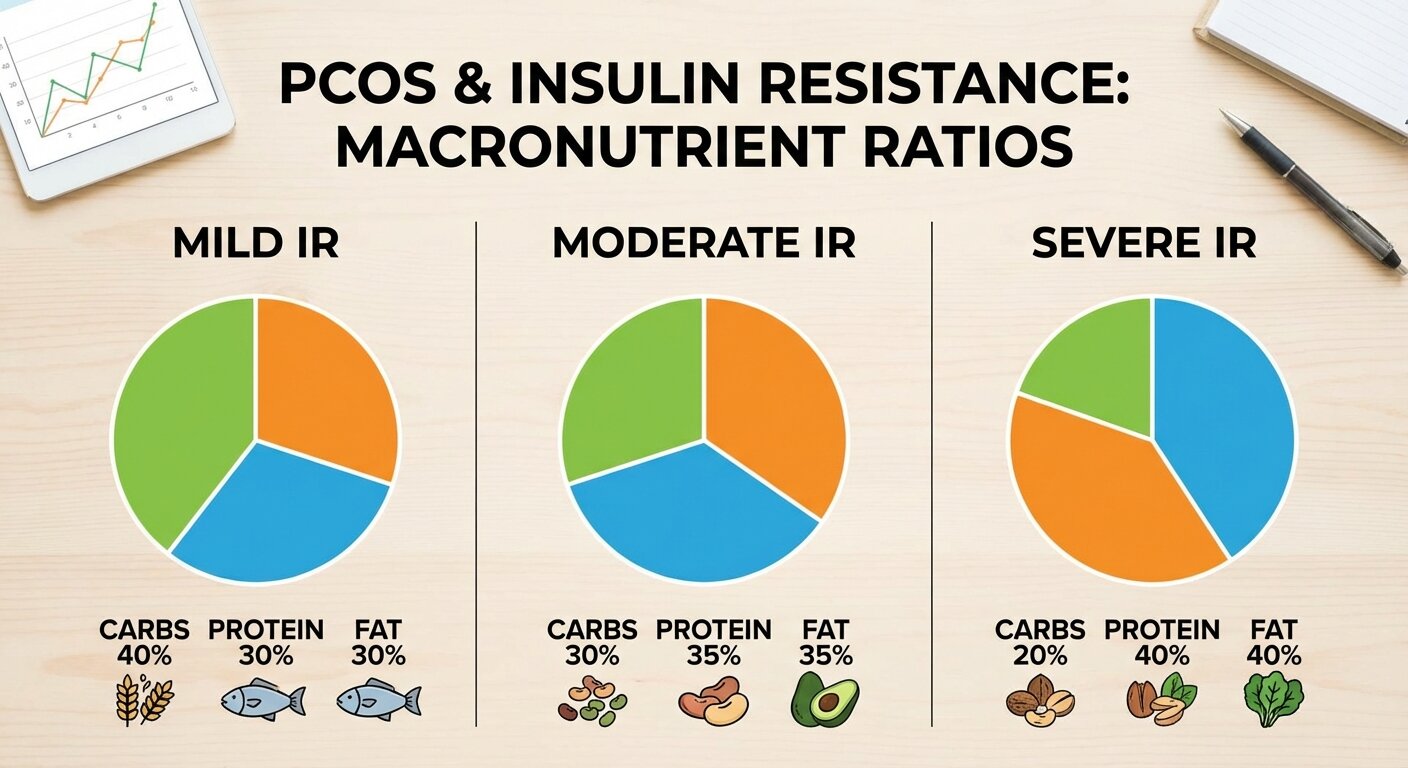
Alternative Ratios Based on Severity
Not all PCOS is the same. Adjust based on your insulin resistance:
| Severity | Carbs | Protein | Fat | Description |
|---|---|---|---|---|
| Mild IR | 35-40% | 35% | 25-30% | Some insulin resistance, active lifestyle |
| Moderate IR | 30-35% | 40% | 30% | Clear insulin resistance, standard approach |
| Severe IR | 20-25% | 35-40% | 40-45% | Very high fasting insulin, consider lower carb |
| Very Severe | 10% (keto) | 25% | 65% | Extreme insulin resistance, medical supervision |
How to know your severity:
- Fasting insulin test: <5 µIU/mL is ideal; >15 suggests severe IR
- HOMA-IR score: <1.0 is ideal; >2.5 suggests insulin resistance
- HbA1c: <5.5% is ideal; >5.7% suggests prediabetes
- Symptoms: Difficulty losing weight, dark skin patches (acanthosis nigricans), extreme cravings
Work with your doctor to determine your insulin resistance level through blood tests.
Should You Do Keto with PCOS?
Keto can help some women with PCOS, but it’s not necessary for everyone.
Consider keto (very low carb) if:
- Severe insulin resistance (fasting insulin >20)
- Prediabetic or diabetic (HbA1c >5.7%)
- Can’t control cravings on moderate carbs
- Have tried moderate carbs for 12+ weeks without improvement
Stick with moderate carbs if:
- Active lifestyle (exercise 4+ days/week)
- Mild to moderate insulin resistance
- Want long-term sustainability
- Thyroid issues (very low carb can affect thyroid)
Most women with PCOS do well with moderate carbs (30-35%) long-term. It’s more sustainable and still manages insulin effectively.
For details on keto, see our keto macros guide.
Calculating Your PCOS Macros
Let’s walk through calculating personalized macros for PCOS management.
Step 1: Calculate Your TDEE
Use the Mifflin-St Jeor equation:
For Women: BMR = (10 × weight in kg) + (6.25 × height in cm) - (5 × age) - 161
Then multiply by activity factor:
- Sedentary: BMR × 1.2
- Lightly active: BMR × 1.375
- Moderately active: BMR × 1.55
Example (30-year-old woman with PCOS, 180 lbs / 82 kg, 5’6” / 168 cm, lightly active):
- BMR = (10 × 82) + (6.25 × 168) - (5 × 30) - 161 = 1,519
- TDEE = 1,519 × 1.375 = 2,089 calories
Important: Women with PCOS often have slightly lower metabolic rates due to insulin resistance. If weight loss stalls, your actual TDEE may be 10-15% lower than calculated.
For detailed TDEE guidance, see our TDEE calculator guide.
Step 2: Set Your Calorie Target
For weight loss: TDEE - 300 to 500 calories
Use a moderate deficit with PCOS. Aggressive deficits worsen hormones and stall metabolism faster.
Our example:
- 2,089 - 400 = 1,689 calories
Round to 1,700 for simplicity.
Step 3: Set Your Protein (High Priority)
Protein is your most important macro with PCOS.
Target: 1.0-1.2g per pound of bodyweight
Our example (180 lbs):
- Protein: 180 × 1.0 = 180g
- Calories from protein: 180g × 4 = 720 calories
Why so much protein?
- Improves insulin sensitivity
- Increases satiety (reduces cravings)
- Preserves muscle during weight loss
- Minimal insulin response compared to carbs
- High thermic effect (burns calories to digest)
Step 4: Set Your Fat (Don’t Go Too Low)
Target: 0.3-0.4g per pound of bodyweight (minimum 20% of calories)
Our example (180 lbs):
- Fat: 180 × 0.35 = 63g
- Calories from fat: 63g × 9 = 567 calories
Why adequate fat matters with PCOS:
- Hormone production requires fat
- Helps absorb fat-soluble vitamins
- Provides satiety
- Reduces inflammation (especially omega-3s)
Women with PCOS should NEVER drop below 0.3g per pound or 20% of calories.
Step 5: Fill the Rest with Carbs
Our example:
- Total calories: 1,700
- Protein calories: 720
- Fat calories: 567
- Remaining: 1,700 - 720 - 567 = 413 calories from carbs
- Carbs: 413 ÷ 4 = 103g
Final PCOS Macros (Example)
1,700 calories for weight loss:
- 180g protein (42%)
- 103g carbs (24%)
- 63g fat (33%)
This is slightly higher protein and lower carb than the “standard” 40/30/30, which is fine. Prioritize hitting protein daily.
The Easy Way: Use a Calculator
Get personalized PCOS-friendly macros instantly with our Macro Calculator.
Carb Quality Matters with PCOS
Not all carbs are equal when you have PCOS. Carb quality matters MORE than quantity.
Low Glycemic Index (GI) Carbs
The glycemic index measures how quickly a food raises blood sugar. Low GI = slower rise = less insulin spike.
Best carbs for PCOS (Low GI):
- Sweet potatoes (not white potatoes)
- Quinoa, brown rice, wild rice
- Oats (steel-cut or rolled, not instant)
- Legumes (lentils, chickpeas, black beans)
- Non-starchy vegetables (unlimited: broccoli, spinach, peppers, zucchini)
- Berries (strawberries, blueberries, raspberries)
- Apples, pears (with skin for fiber)
Limit or avoid (High GI):
- White bread, bagels, crackers
- White rice, pasta
- Sugary foods and drinks
- Processed snacks
- Fruit juice
- Dried fruit (concentrated sugar)
Fiber Is Your Friend
Fiber slows carb absorption and improves insulin sensitivity.
Target: 25-30g fiber daily (minimum)
High-fiber carb sources:
- Legumes (black beans: 15g per cup)
- Chia seeds (10g per 2 tbsp)
- Berries (raspberries: 8g per cup)
- Avocado (10g per avocado)
- Vegetables (broccoli: 5g per cup)
- Oats (4g per serving)
Fiber benefits for PCOS:
- Slows glucose absorption (less insulin spike)
- Feeds healthy gut bacteria (reduces inflammation)
- Increases satiety (eat less overall)
- Improves cholesterol (common issue with PCOS)
Carb Timing Strategies
When you eat carbs matters with PCOS:
Best time for carbs:
- Post-workout (insulin sensitivity is highest)
- Earlier in the day (metabolism is more active)
Example distribution:
- Breakfast: 30-40g carbs (oats, berries)
- Lunch: 30-40g carbs (quinoa, sweet potato)
- Dinner: 20-30g carbs (vegetables, small portion of carbs)
- Snacks: Prioritize protein/fat (nuts, Greek yogurt)
This isn’t mandatory, but some women with PCOS notice better blood sugar control with this approach.
Protein for PCOS Management
Protein is arguably the most important macro for managing PCOS.
Why Protein Helps PCOS
1. Improves insulin sensitivity Research shows high-protein diets improve insulin sensitivity in women with PCOS.
2. Increases satiety Protein keeps you full longer, reducing cravings and overeating—a huge struggle with PCOS.
3. Preserves muscle mass Women with PCOS lose weight slowly. High protein ensures you’re losing fat, not muscle.
4. Minimal insulin response Unlike carbs, protein has minimal impact on insulin levels.
5. High thermic effect Your body burns 20-30% of protein calories just digesting it.
How Much Protein with PCOS?
Target: 1.0-1.2g per pound of bodyweight
Example (160 lbs):
- 160g protein minimum
- 192g protein optimal
This is higher than standard recommendations (0.8g/lb), but women with PCOS benefit from the extra protein.
Best Protein Sources for PCOS
Lean proteins (prioritize these):
- Chicken breast, turkey breast
- White fish (cod, tilapia, halibut)
- Lean ground turkey (93/7)
- Egg whites (yolks are fine too, but whites are pure protein)
- Shrimp, scallops
Moderate-fat proteins:
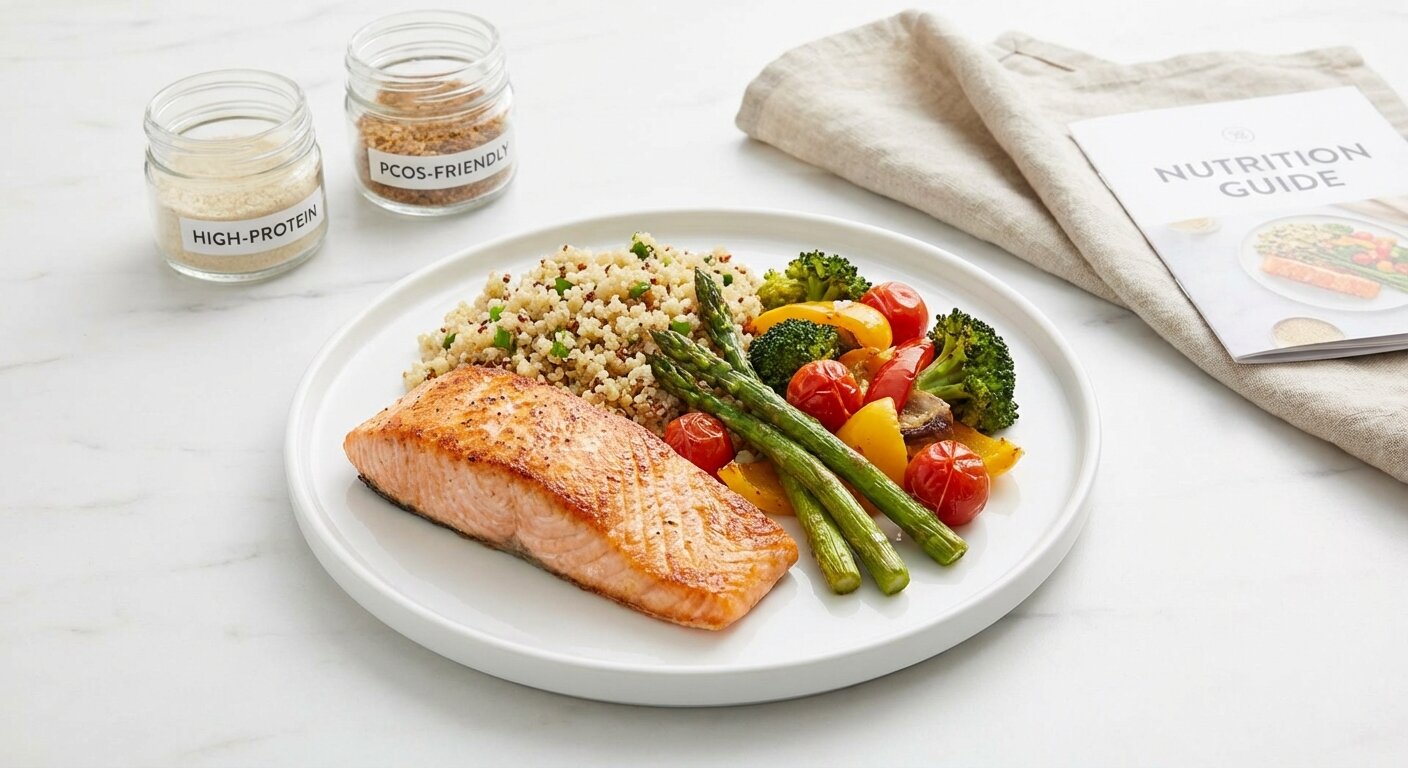
- Salmon, mackerel (bonus: omega-3s help inflammation)
- Whole eggs
- Greek yogurt (unsweetened, full-fat)
- Lean ground beef (90/10)
Plant proteins:
- Tofu, tempeh
- Edamame
- Lentils, chickpeas (watch carbs)
- Protein powder (whey or plant-based)
Protein timing: Spread protein across 3-5 meals (30-40g per meal). This maximizes muscle protein synthesis and keeps you satisfied throughout the day.
For more protein guidance, see our guide on protein needs.
Healthy Fats for Hormone Balance
Fat is essential for hormone production, even with PCOS.
Why Fat Matters for PCOS
1. Hormone production Your body needs dietary fat to produce estrogen, progesterone, and other hormones.
2. Reduces inflammation Omega-3 fatty acids (from fish and flax) reduce the chronic inflammation common with PCOS.
3. Improves insulin sensitivity Monounsaturated fats (from avocado, olive oil, nuts) improve insulin sensitivity.
4. Increases satiety Fat slows gastric emptying, keeping you full longer.
5. Nutrient absorption Vitamins A, D, E, and K are fat-soluble—you need dietary fat to absorb them.
How Much Fat with PCOS?
Minimum: 0.3g per pound bodyweight (never drop below 20% of calories)
Optimal: 0.3-0.5g per pound (25-35% of calories)
Example (160 lbs):
- Minimum: 48g
- Optimal: 48-80g
Best Fat Sources for PCOS
Prioritize these (anti-inflammatory):
- Fatty fish (salmon, mackerel, sardines) — omega-3s reduce inflammation
- Avocado and avocado oil — monounsaturated fats improve insulin sensitivity
- Olive oil (extra virgin) — anti-inflammatory, heart-healthy
- Nuts and seeds (almonds, walnuts, chia, flax) — omega-3s, fiber
- Olives
Moderate amounts:
- Grass-fed butter, ghee
- Whole eggs
- Full-fat Greek yogurt
Limit:
- Excessive saturated fat (can worsen insulin resistance)
- Processed seed oils (soybean, corn, canola—inflammatory)
- Trans fats (avoid completely)
Focus on omega-3s: Aim for 2-3 servings of fatty fish per week or supplement with fish oil (2-3g EPA+DHA daily).
PCOS Weight Loss Macros
Weight loss is harder with PCOS, but not impossible. The right approach makes a huge difference.
Why Weight Loss Is Harder with PCOS
- Insulin resistance makes your body efficient at storing fat
- Slower metabolism (5-10% lower than women without PCOS)
- Hormonal imbalances affect hunger hormones (leptin, ghrelin)
- Inflammation interferes with fat loss signals
- Metabolic adaptation happens faster (your body fights back harder)
Realistic Weight Loss Expectations
Without PCOS: 1-2 lbs per week is realistic
With PCOS: 0.5-1 lb per week is realistic (sometimes slower)
Don’t compare yourself to women without PCOS. Your body operates under different rules.
Celebrate non-scale victories:
- Improved energy
- Regular periods returning
- Reduced acne or hirsutism
- Better blood sugar control
- Increased strength
- Clothes fitting better
PCOS Weight Loss Macro Approach
Recommended:
- Calorie deficit: 300-500 calories below TDEE (moderate deficit)
- Protein: 40-45% (1.0-1.2g per lb) — preserve muscle
- Carbs: 25-30% (prioritize low-GI, high-fiber)
- Fat: 30-35% (minimum 0.3g per lb)
Example (1,600 calories):
- Protein: 160g (40%)
- Carbs: 100g (25%)
- Fat: 62g (35%)
Avoid crash diets: Aggressive deficits (<1,200 calories) worsen hormones, tank metabolism, and cause rebound weight gain.
Other Weight Loss Strategies for PCOS
1. Strength training 3-4x per week
- Builds muscle (increases metabolism)
- Improves insulin sensitivity dramatically
2. Walking 8,000-10,000 steps daily
- Low-intensity cardio doesn’t stress hormones
- Improves insulin sensitivity
3. Prioritize sleep (7-9 hours)
- Poor sleep worsens insulin resistance
4. Manage stress
- Chronic stress elevates cortisol (worsens PCOS)
5. Consider intermittent fasting (optional)
- Some women with PCOS benefit from 16:8 fasting
- Improves insulin sensitivity
- Don’t do IF if it causes binge eating
For more weight loss guidance, see our weight loss macros guide (female).
Sample PCOS Meal Plan
Here’s what a day of PCOS-friendly macros looks like.
Target: 1,700 calories | 170g protein | 105g carbs | 60g fat
Breakfast (500 calories)
- 3 whole eggs, scrambled (18g protein, 15g fat, 0g carbs)
- 1/2 cup oats (cooked) with cinnamon (5g protein, 2g fat, 27g carbs)
- 1/2 cup blueberries (1g protein, 0g fat, 11g carbs)
- 1 tbsp almond butter (3g protein, 9g fat, 3g carbs)
Total: 27g protein, 26g fat, 41g carbs
Lunch (500 calories)
- 6 oz grilled chicken breast (52g protein, 3g fat, 0g carbs)
- 1 cup quinoa (cooked) (8g protein, 4g fat, 39g carbs)
- Roasted vegetables (broccoli, peppers) (3g protein, 0g fat, 8g carbs)
- 1/2 avocado (2g protein, 11g fat, 6g carbs)
Total: 65g protein, 18g fat, 53g carbs
Snack (200 calories)
- 1 cup plain Greek yogurt (unsweetened, full-fat) (20g protein, 10g fat, 8g carbs)
- Handful of almonds (10 almonds) (3g protein, 6g fat, 3g carbs)
Total: 23g protein, 16g fat, 11g carbs
Dinner (500 calories)
- 6 oz salmon (40g protein, 12g fat, 0g carbs)
- Large salad with mixed greens, cucumber, tomato (2g protein, 0g fat, 8g carbs)
- 2 tbsp olive oil + vinegar dressing (0g protein, 14g fat, 0g carbs)
- 1/2 cup roasted sweet potato (2g protein, 0g fat, 12g carbs)
Total: 44g protein, 26g fat, 20g carbs
Daily Total
- Calories: 1,700
- Protein: 159g (37%)
- Carbs: 125g (29%)
- Fat: 86g (46%)
Note: Percentages don’t add to exactly 40/30/30 due to rounding and individual food variations. Close enough!
This is just one example. Adjust portions and foods based on your preferences and macro targets.
Supplements and Micronutrients for PCOS
While not strictly macros, certain supplements support PCOS management.
Inositol (Myo-inositol)
- Dose: 2-4g daily
- Benefit: Improves insulin sensitivity, supports ovulation
- Evidence: Multiple studies show benefit for PCOS
Vitamin D
- Dose: 2,000-4,000 IU daily (test levels first)
- Benefit: Improves insulin sensitivity, reduces inflammation
- Note: 67-85% of women with PCOS are deficient
Magnesium
- Dose: 300-400mg daily
- Benefit: Improves insulin sensitivity, reduces inflammation
- Form: Magnesium glycinate (better absorbed)
Omega-3 (Fish Oil)
- Dose: 2-3g EPA+DHA daily
- Benefit: Reduces inflammation, improves insulin sensitivity
Chromium
- Dose: 200-1,000 mcg daily
- Benefit: Improves insulin sensitivity
Important: Supplements support macros, they don’t replace them. Prioritize food and macros first, then add supplements with doctor supervision.
Tracking Progress with PCOS
Weight loss with PCOS is slower and less linear. Track multiple metrics.
What to Track
1. Weight (daily, calculate weekly average)
- Expect fluctuations due to hormone changes
- Compare week-to-week averages, not day-to-day
2. Body measurements
- Waist, hips, thighs (every 2-4 weeks)
- Sometimes you lose inches without scale changes
3. Progress photos
- Every 4 weeks (same lighting, time of day)
4. Energy levels
- Rate 1-10 daily
5. Menstrual cycle
- Regularity, symptoms
- Improvement = macros are working
6. Blood work (every 3-6 months)
- Fasting insulin (should decrease)
- HbA1c (should improve)
- Testosterone, DHEA-S (should normalize)
- Vitamin D, thyroid panel
7. Performance
- Strength gains in the gym
- Endurance improvements
When to Adjust Macros
Reduce calories if:
- No weight loss for 3-4 weeks (PCOS plateaus happen fast)
- Reduce by 100-200 calories (10-20g carbs)
Increase calories if:
- Losing >1.5 lbs per week
- Energy is consistently terrible
- Performance tanking
- Menstrual cycle stops
Increase carbs if:
- Training performance suffers badly
- Energy is low despite adequate sleep
- Mood is suffering
Increase protein if:
- Hungry all the time despite hitting targets
- Losing muscle (strength decreasing)
FAQ: Macros for PCOS
What are the best macros for PCOS?
The optimal macro ratio for PCOS is typically 40% protein, 30% carbs, 30% fat. This high-protein, moderate-carb approach helps manage insulin resistance, supports satiety, and promotes hormone balance. Individual needs may vary based on insulin resistance severity and activity level.
Should I do keto if I have PCOS?
While some women with PCOS benefit from ketogenic diets (especially with severe insulin resistance), it’s not necessary for everyone. Moderate-carb approaches (30-35% carbs) work well for most women with PCOS and are more sustainable long-term. Try moderate carbs first, then consider lower carb if needed.
How many carbs should I eat with PCOS?
Most women with PCOS do well with 100-150g carbs daily (30-35% of calories), focusing on low-glycemic, high-fiber sources. Women with severe insulin resistance may benefit from 50-100g carbs. Avoid very low carb unless medically necessary, as it can affect hormone production.
Why is protein important for PCOS?
High protein intake (1.0-1.2g per pound) helps manage PCOS by improving insulin sensitivity, increasing satiety (reducing cravings), preserving lean muscle mass, and supporting stable blood sugar levels. Protein has minimal impact on insulin compared to carbs.
Can macros help me lose weight with PCOS?
Yes, proper macros can help manage PCOS weight loss, though it’s typically slower than for women without PCOS. Focus on high protein (40%), moderate carbs (30%), adequate fat (30%), and a modest calorie deficit (300-500 calories). Consistency and patience are key.
What foods should I avoid with PCOS?
Women with PCOS should limit high-glycemic carbs (white bread, sugar, processed foods), excessive saturated fat, and dairy (if it triggers symptoms). Focus on lean proteins, low-glycemic carbs (quinoa, sweet potato, berries), healthy fats, and plenty of fiber.
Do I need supplements for PCOS?
While supplements aren’t strictly macros, inositol, vitamin D, magnesium, omega-3s, and chromium can support PCOS management alongside proper macros. Consult your doctor before starting supplements. Nutrition and lifestyle changes are the foundation.
How long until I see results with PCOS macros?
Most women notice improved energy and reduced cravings within 1-2 weeks. Menstrual cycle improvements typically take 2-3 cycles. Weight loss is slower with PCOS (expect 0.5-1 lb per week). Metabolic improvements (insulin sensitivity, hormone levels) show in bloodwork after 8-12 weeks.
Related Resources
Related Articles
Travel Macros: How to Track Nutrition While Traveling
Complete guide to managing macros while traveling. Learn meal planning strategies,...
Read guide →
Macros for Shift Workers: Complete Guide to Nutrition on Rotating Schedules
Master macro tracking on night shifts and rotating schedules. Learn meal timing, sleep...
Read guide →
Macros During Ramadan: Complete Nutrition Guide for Fasting
Learn how to track macros during Ramadan fasting. Expert guide covering meal timing,...
Read guide →Disclaimer: This content is for informational purposes only. Consult a healthcare provider before making changes to your diet.