Macros for Menopause: A Complete Nutrition Guide
Reviewed by Sarah Chen, MS, RD

You’ve hit your 40s or 50s, and suddenly, everything about your body feels different. The diet and exercise routine that worked for you for decades has stopped working. You’re gaining weight, especially around your middle, despite eating the same. You’re tired, your sleep is disrupted, and you feel like you’re fighting a losing battle against your own body.
Welcome to menopause. It’s not just you, and you’re not going crazy.
The hormonal shifts of perimenopause and menopause—primarily the decline in estrogen—fundamentally change your metabolism, how your body stores fat, and your ability to maintain muscle. What used to work won’t work anymore.
But there is a solution. By strategically adjusting your macronutrients, you can work with your changing physiology, not against it. A menopause-specific macro approach can help you manage weight, preserve muscle, stabilize energy, and navigate this transition with strength and confidence.
This guide will walk you through exactly how your macro needs change during menopause and how to set up your nutrition to thrive in this new chapter.
For more on women’s nutrition, see our guide on macros for women over 40.
How Menopause Changes Your Macro Needs
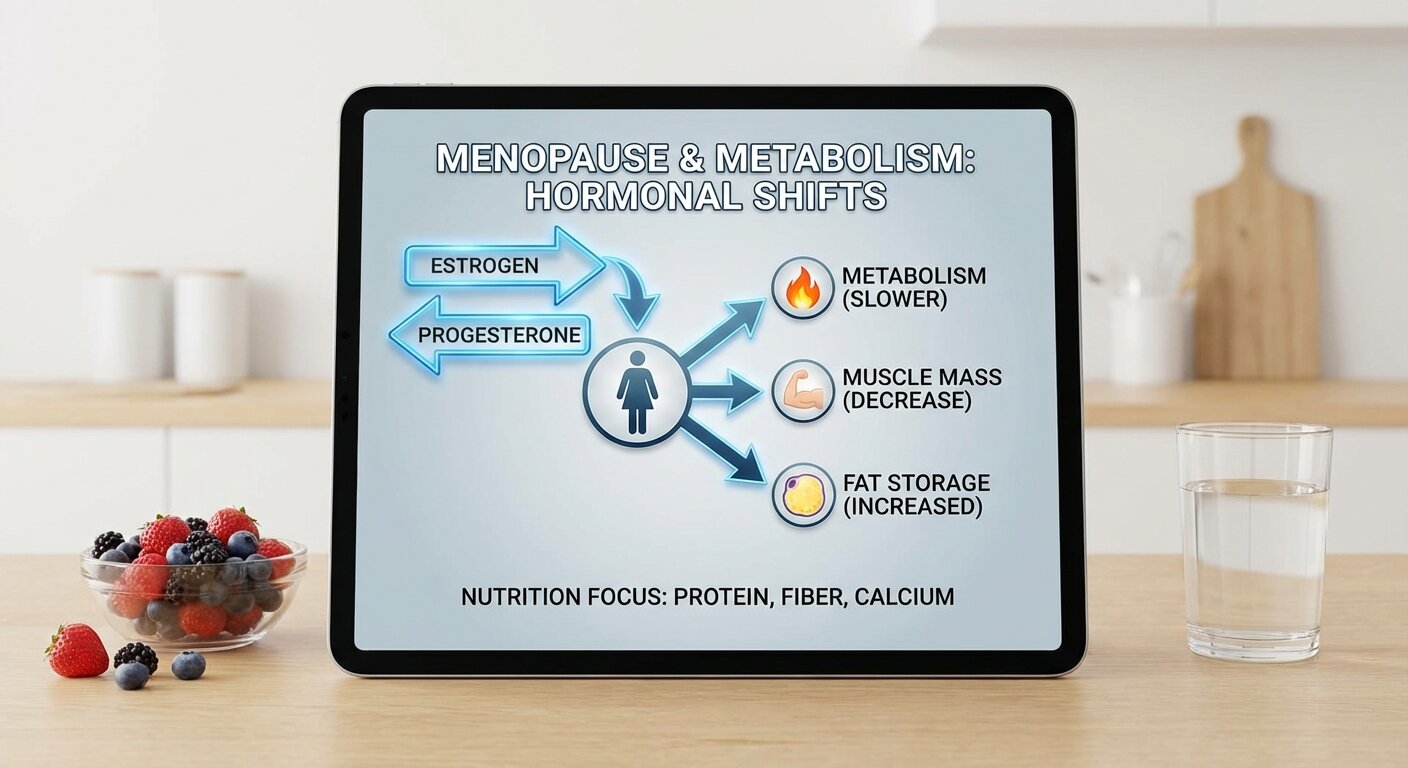
The decline in estrogen during perimenopause and menopause sets off a chain reaction that impacts every aspect of your metabolism.
1. Muscle Loss Accelerates (Sarcopenia)
Estrogen is anabolic, meaning it helps preserve muscle. As estrogen declines, your body’s natural rate of muscle loss (sarcopenia) speeds up dramatically.
- The Problem: Muscle is metabolically active. Less muscle means a slower metabolism. This is the #1 reason for menopausal weight gain.
- The Macro Solution: Dramatically increase protein intake to provide the building blocks to fight muscle loss.
2. Metabolism Slows Down
Because of muscle loss and other hormonal changes, your Total Daily Energy Expenditure (TDEE) drops.
- The Problem: Your body burns 200-300 fewer calories per day than it did before menopause, even at the same weight and activity level. If you keep eating the same, you will gain weight.
- The Macro Solution: Adjust total calories to your new, lower TDEE and optimize macros to preserve muscle, which is your metabolic engine.
3. Insulin Sensitivity Decreases
Estrogen helps with insulin sensitivity. As it declines, your body becomes less efficient at handling carbohydrates.
- The Problem: Your body is more likely to store carbs as fat, particularly belly fat. You may experience more significant blood sugar swings and cravings.
- The Macro Solution: Moderate your carbohydrate intake and focus on high-fiber, low-glycemic sources.
4. Fat Redistribution (Hello, Belly Fat)
The loss of estrogen shifts fat storage from the hips and thighs (gynoid or “pear” shape) to the abdomen (android or “apple” shape).
- The Problem: This isn’t just a cosmetic issue. Visceral belly fat is metabolically dangerous, increasing the risk of heart disease and type 2 diabetes.
- The Macro Solution: A high-protein, moderate-carb diet in a calorie deficit, combined with strength training, is the most effective way to lose visceral fat.
Best Macro Ratios for Menopause
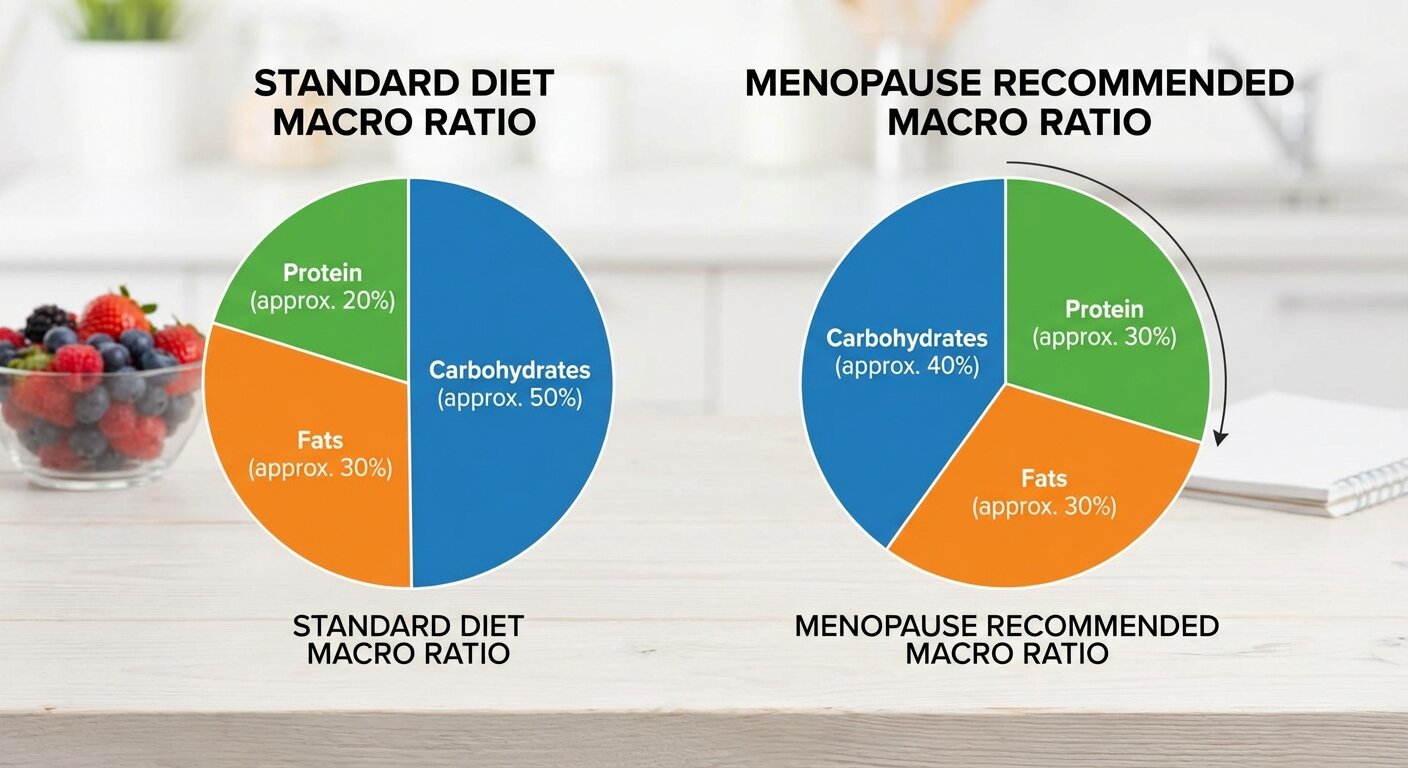
To combat these changes, your macro split needs a major overhaul. The standard high-carb, low-protein diet is a recipe for disaster in menopause.
The Optimal Menopause Macro Ratio
35-40% protein / 30-35% carbs / 30% fat
Why this works:
- High Protein: Fights muscle loss, boosts metabolism (thermic effect of food), and increases satiety to control hunger.
- Moderate Carbs: Provides energy without overloading your less insulin-sensitive system.
- Adequate Fat: Essential for hormone production (yes, you still make hormones!), brain health, and absorbing fat-soluble vitamins.
In grams (for a 1,600-calorie diet):
- Protein: 140-160g (35-40%)
- Carbs: 120-140g (30-35%)
- Fat: 53g (30%)
This is a profound shift from what most women are used to eating, but it is the key to managing menopausal body composition changes.
Protein: Your Menopause Superpower
If you remember one thing from this guide, let it be this: You need more protein than you think. A lot more.
Why Protein is Non-Negotiable
- Combats Muscle Loss: It provides the amino acids necessary to preserve and build metabolically active muscle.
- Boosts Metabolism: Protein has the highest thermic effect of food (TEF), meaning your body burns up to 30% of its calories just digesting it.
- Controls Hunger: Protein is the most satiating macronutrient, helping to manage the increased hunger and cravings that can come with hormonal shifts.
- Supports Bone Density: Your bones are made of a protein matrix. Adequate protein is crucial for preventing osteoporosis.
How Much Protein During Menopause?
Target: 1.2-1.4 grams per pound of your ideal body weight.
This is significantly higher than the standard RDA and even higher than recommendations for younger women.
Example (Ideal weight of 140 lbs):
- 140 lbs x 1.2 = 168g of protein per day
- 140 lbs x 1.4 = 196g of protein per day
This number will seem shockingly high. It is also the secret to success.
How to Get Enough Protein
- Prioritize protein at every meal: Aim for 30-40g of protein at breakfast, lunch, and dinner.
- Use protein powder: A high-quality whey or plant-based protein shake is an easy way to get 25-30g.
- Choose high-protein snacks: Greek yogurt, cottage cheese, hard-boiled eggs, beef jerky.
- Eat your protein first: Start your meal by eating the protein source on your plate to ensure you finish it.
Carbohydrates After Menopause
Your relationship with carbs needs to change during menopause. You don’t need to eliminate them, but you do need to be more strategic.
Why Moderate Carbs?
With decreased insulin sensitivity, a high-carb diet will lead to blood sugar swings, energy crashes, and efficient fat storage.
Target: 100-150g per day for most women.
Quality Over Quantity
- Best Carbs: Focus on high-fiber, low-glycemic index (GI) sources that provide sustained energy without a major blood sugar spike.
- Vegetables: All non-starchy vegetables (leafy greens, broccoli, cauliflower).
- Legumes: Lentils, chickpeas.
- Whole Grains: Quinoa, oats.
- Low-Sugar Fruits: Berries.
- Carbs to Limit: Refined, high-GI carbs that will send your blood sugar soaring.
- Sugar, white bread, pasta, pastries, and processed snacks.
Carb Timing
- Around Your Workouts: Consume a portion of your daily carbs before and after exercise to fuel performance and aid recovery.
- Earlier in the Day: Some women find they handle carbs better earlier in the day and do better with a lower-carb dinner.
Healthy Fats for Hormone Health
Don’t make the mistake of going low-fat. Your body still needs healthy fats for brain function, reducing inflammation, and producing the hormones it still makes.
How Much Fat?
Target: Around 30% of your total calories, or 0.3-0.4g per pound of ideal body weight.
Best Fat Sources
- Omega-3s: To fight inflammation, which increases after menopause. Found in fatty fish (salmon, mackerel), walnuts, flaxseeds, and chia seeds.
- Monounsaturated Fats: For heart and brain health. Found in olive oil, avocados, and almonds.
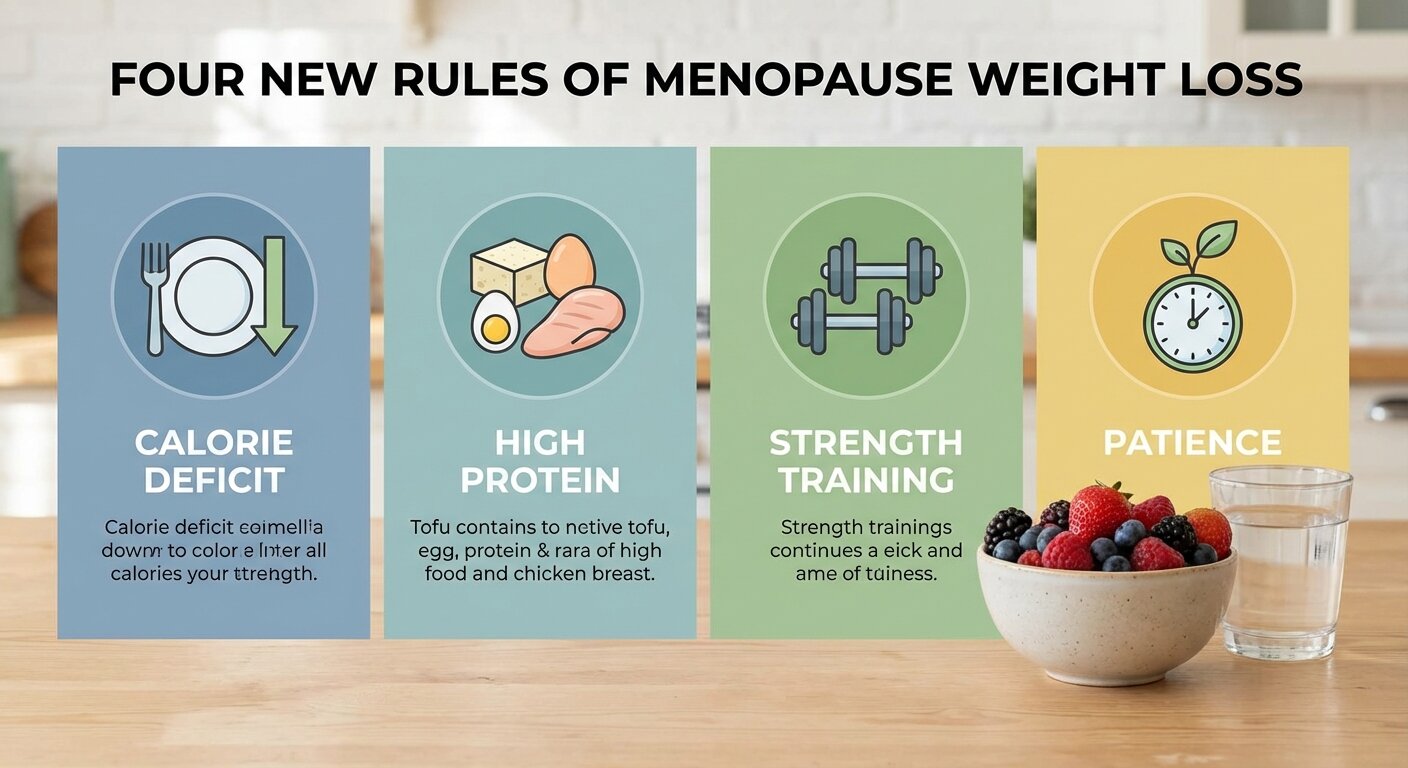
Menopause Weight Loss: The New Rules
Losing weight during menopause is possible, but it requires a different strategy.
1. A Modest Calorie Deficit
Your metabolism is slower, so your calorie needs are lower. You must be in a deficit to lose fat.
- Action: Calculate your new, lower TDEE and subtract 300-500 calories. Don’t use the TDEE from your 30s.
2. Extremely High Protein
This is the most important rule.
- Action: Hit your protein target of 1.2-1.4g per pound every single day. This ensures you lose fat, not precious muscle.
3. Strength Training is Non-Negotiable
You cannot solve the menopause puzzle with diet alone. Cardio is good for your heart, but it won’t build or preserve muscle.
- Action: Lift heavy weights 2-4 times per week. “Heavy” means challenging for you. The goal is to send a powerful signal to your body to build and maintain muscle.
4. Patience and Consistency
Weight loss will be slower than it was in your 30s. Accept this.
- Action: Aim for 0.5-1 pound of loss per week. Track your progress with measurements and photos, not just the scale. Look for long-term trends over 2-3 months, not week-to-week fluctuations.
Perimenopause vs. Menopause Macros
- Perimenopause: This is the 5-10 year transition before menopause. Hormones fluctuate wildly. You may have high-estrogen days and low-estrogen days.
- Strategy: Be flexible. Start increasing your protein and prioritizing strength training. Use a stable macro plan as your anchor during the hormonal chaos.
- Post-menopause: Defined as one full year after your last menstrual period. Your hormones are now consistently low.
- Strategy: Your new, high-protein, moderate-carb macro plan is now your permanent way of eating to manage your health long-term.
Sample Menopause Meal Plan
Target: 1,600 calories | 160g protein (40%) | 120g carbs (30%) | 53g fat (30%)
Breakfast (7 AM)
- High-Protein Greek Yogurt Bowl: 1.5 cups plain Greek yogurt (0% or 2%), 1 scoop vanilla protein powder, 1/2 cup berries, 1 tbsp chia seeds.
- Macros: ~45g protein, 25g carbs, 10g fat
Lunch (12 PM)
- Large Chicken Salad: 6 oz grilled chicken breast on a huge bed of mixed greens with lots of non-starchy veggies, 1/2 cup quinoa, and a light vinaigrette.
- Macros: ~50g protein, 30g carbs, 15g fat
Snack (3 PM)
- Cottage Cheese with an Apple: 1 cup low-fat cottage cheese and one small apple.
- Macros: ~30g protein, 25g carbs, 5g fat
Dinner (6 PM)
- Salmon and Roasted Veggies: 6 oz baked salmon fillet with a large portion of roasted broccoli and bell peppers (using 1 tbsp olive oil).
- Macros: ~40g protein, 20g carbs, 20g fat
This plan demonstrates the “protein-first” principle. Every meal is built around a significant protein source.
Beyond Macros: Other Important Considerations
- Calcium and Vitamin D: Essential for bone health. Get them from dairy, leafy greens, and supplements if needed.
- Phytoestrogens: Found in soy and flax, these plant compounds can have a weak estrogenic effect and may help with some symptoms.
- Hydration: Crucial for managing bloating and overall energy.
- Limiting Alcohol and Caffeine: Both can be triggers for hot flashes and sleep disruption.
Navigating menopause is a challenge, but with the right nutritional strategy, you can emerge stronger, leaner, and more resilient than before. Focus on protein, lift heavy, and be patient with your amazing, changing body.
FAQ: Menopause and Macros
What are the best macros for menopause?
The best macro ratio for menopause is approximately 35-40% protein, 30-35% carbs, and 30% fat. This high-protein approach is crucial to combat age-related muscle loss (sarcopenia), while moderate carbs and fats help manage insulin sensitivity and support hormone health.
Why can’t I lose weight during menopause?
Weight loss during menopause is harder due to a trifecta of changes: declining estrogen leads to muscle loss and increased belly fat, metabolism slows down by 200-300 calories per day, and insulin sensitivity decreases. A high-protein diet combined with strength training is the most effective strategy to counteract these changes.
How much protein do I need during menopause?
Women in menopause need significantly more protein than younger women. Aim for 1.2-1.4 grams per pound of your ideal body weight. This higher intake is essential to preserve and build muscle, which is the key to maintaining a healthy metabolism during and after menopause.
Should I do a low-carb diet during menopause?
A moderate-carb diet (100-150g per day) works best for most menopausal women. While insulin sensitivity decreases, going too low-carb can sometimes elevate cortisol and disrupt sleep, which are already common issues in menopause. Focus on high-fiber, low-glycemic carbs.
How do I get rid of menopausal belly fat?
Menopausal belly fat is linked to the loss of estrogen and increased insulin resistance. You cannot spot-reduce it, but you can lose it with a consistent approach: a high-protein, macro-controlled diet in a modest calorie deficit, and a strong focus on strength training to build muscle and improve insulin sensitivity.
What is the difference between perimenopause and menopause macros?
Perimenopause is the transitional phase where hormone fluctuations can be erratic. Macros should be flexible, with a focus on increasing protein. Once in post-menopause (one year after your last period), hormone levels are consistently low, and a stable, high-protein macro plan becomes even more critical to manage the long-term effects.
Is strength training necessary during menopause?
Yes, strength training is non-negotiable during menopause. It is the single most effective tool to combat muscle loss, which is the primary driver of metabolic slowdown. Macros support the results, but the training itself provides the stimulus to maintain and build muscle.
Can I build muscle after menopause?
Absolutely. While it may be slightly slower than in your 20s, women can and should build muscle after menopause. It requires a combination of progressive resistance training (lifting heavier over time) and a high protein intake (1.2-1.4g/lb) to provide the building blocks for muscle growth.
Related Resources
Related Articles
Travel Macros: How to Track Nutrition While Traveling
Complete guide to managing macros while traveling. Learn meal planning strategies,...
Read guide →
Macros for Shift Workers: Complete Guide to Nutrition on Rotating Schedules
Master macro tracking on night shifts and rotating schedules. Learn meal timing, sleep...
Read guide →
Macros During Ramadan: Complete Nutrition Guide for Fasting
Learn how to track macros during Ramadan fasting. Expert guide covering meal timing,...
Read guide →Disclaimer: This content is for informational purposes only. Consult a healthcare provider before making changes to your diet.