Macros vs CICO: Which Approach Is Better for Weight Loss?
Reviewed by Jessica Williams, CPT, CSCS
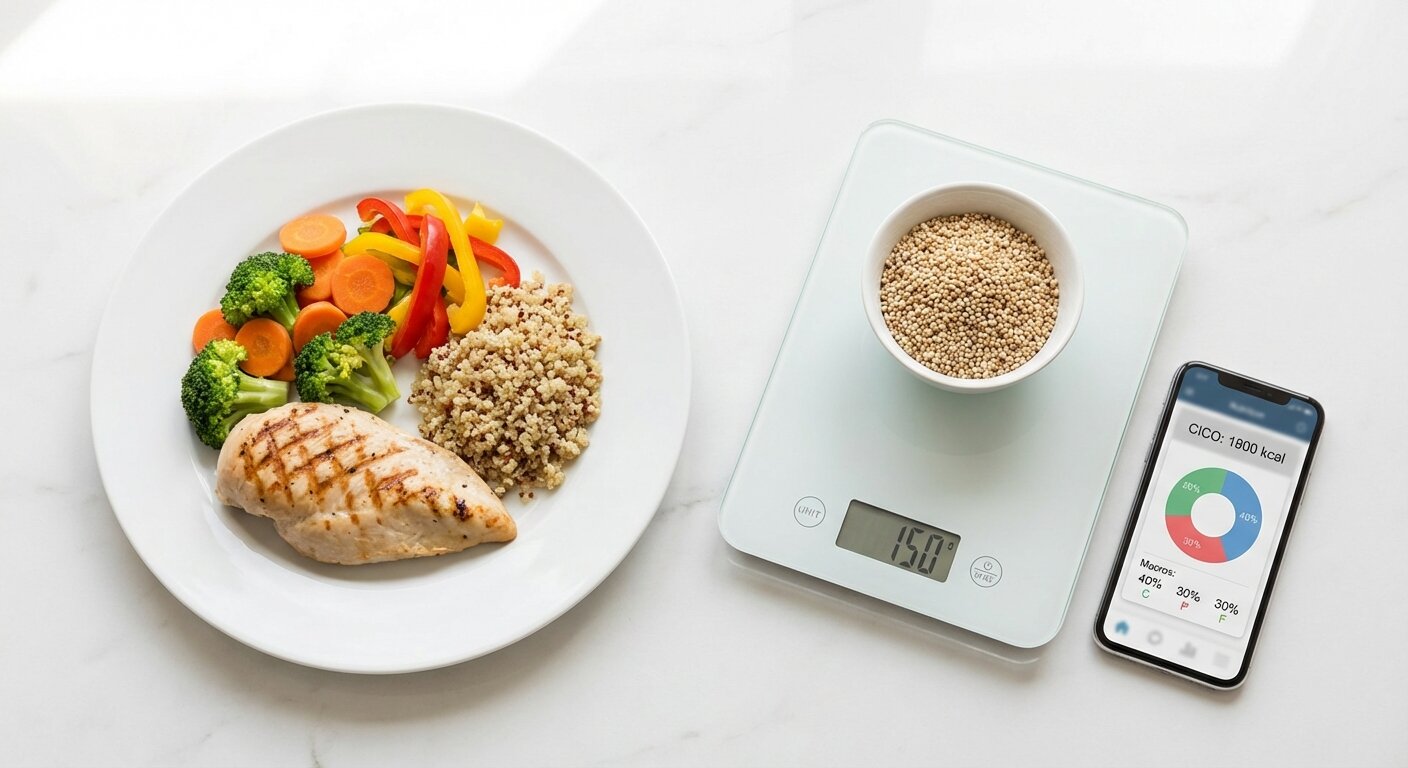
When it comes to weight loss and body composition, two approaches dominate the conversation: tracking macros and CICO (Calories In, Calories Out). Both methods can help you lose weight, but they differ significantly in complexity, precision, and the results they produce. Understanding these differences is crucial to choosing the right strategy for your goals and lifestyle.
While CICO focuses solely on the total amount of energy you consume versus what you burn, tracking macros goes deeper by breaking down where those calories come from—protein, carbohydrates, and fats. This distinction may seem small, but it can make a dramatic difference in your energy levels, body composition, hunger management, and long-term success.
In this comprehensive guide, we’ll break down exactly what macros and CICO are, how they differ, the pros and cons of each approach, and which one is right for you. Ready to take control of your nutrition? Try our macro calculator to get personalized targets based on your goals.
What Is CICO (Calories In, Calories Out)?
CICO is a simple weight management principle: your weight changes based on the balance between the calories you consume (calories in) and the calories you expend (calories out).
- Calories In: Total energy from food and drinks
- Calories Out: Total energy burned through basal metabolic rate (BMR), activity, exercise, and digestion (TEF - Thermic Effect of Food)
The CICO Equation
- Calorie deficit (eating fewer calories than you burn) → Weight loss
- Calorie surplus (eating more calories than you burn) → Weight gain
- Calorie maintenance (eating roughly what you burn) → Weight maintenance
This fundamental principle is backed by decades of scientific research. According to the first law of thermodynamics, energy cannot be created or destroyed—only transferred. In practical terms, if you consistently consume fewer calories than your body needs, you will lose weight.
How CICO Works in Practice
When following CICO for weight loss, you typically:
- Calculate your Total Daily Energy Expenditure (TDEE) using a TDEE calculator
- Subtract 300-500 calories to create a deficit
- Track your daily calorie intake using an app or food journal
- Adjust based on weekly weight trends
The beauty of CICO is its simplicity. You don’t need to worry about specific foods, meal timing, or nutrient ratios—just total calories. This straightforward approach makes it accessible for beginners and those who prefer minimal complexity in their diet strategy.
Limitations of CICO Alone
While CICO works for weight loss, it has significant limitations:
- No nutritional context: 2,000 calories of donuts affects your body differently than 2,000 calories of balanced meals
- Muscle loss risk: Without adequate protein, you’ll lose muscle along with fat
- Hunger and satiety: The source of calories dramatically affects how full you feel
- Hormonal impact: Different macronutrients influence hormones like insulin, leptin, and ghrelin differently
- Performance: Athletes need specific macro ratios for optimal recovery and performance
This is where macro tracking comes in.
What Are Macros?
Macros (short for macronutrients) are the three main nutrients your body needs in large quantities: protein, carbohydrates, and fats. Each macro serves distinct functions and provides different amounts of energy:
- Protein: 4 calories per gram – builds and repairs muscle, supports immune function, aids satiety
- Carbohydrates: 4 calories per gram – primary energy source, fuels brain and muscles, supports athletic performance
- Fats: 9 calories per gram – hormone production, nutrient absorption, cellular health, long-lasting energy
(Note: Alcohol is sometimes called the “fourth macro” at 7 calories per gram, but it doesn’t provide nutritional value. Learn more about alcohol and macros.)
Why Macros Matter
Your macro distribution determines far more than just your calorie total:
Protein is essential for preserving lean muscle mass during weight loss, keeping you full between meals, and supporting recovery from workouts. Without adequate protein, your body will break down muscle tissue to meet its amino acid needs—resulting in a “skinny fat” appearance even at a lower weight.
Carbohydrates are your body’s preferred fuel source, especially for high-intensity exercise. They replenish glycogen stores, support thyroid function, and help regulate mood. Low-carb diets can be effective for some people, but dramatically cutting carbs without strategic planning often leads to fatigue, poor workouts, and metabolic adaptation.
Fats are critical for hormone production (including testosterone and estrogen), vitamin absorption (A, D, E, K), brain health, and satiety. Going too low on fat can disrupt menstrual cycles in women, decrease testosterone in men, and leave you feeling constantly hungry.
Macro Tracking in Practice
When you track macros, you:
- Calculate your target macros using a macro calculator
- Track protein, carbs, and fats separately (which automatically tracks total calories)
- Aim to hit your targets within 5-10 grams of each macro
- Adjust based on your progress, energy levels, and performance
For example, a 170-pound person aiming for fat loss might target:
- Protein: 170g (680 calories)
- Carbs: 180g (720 calories)
- Fats: 55g (495 calories)
- Total Calories: 1,895
This provides the precision to optimize body composition while ensuring adequate nutrition.
Macros vs CICO: Key Differences
Let’s break down the specific differences between these two approaches across multiple factors:
1. Complexity and Learning Curve
CICO: Simple to understand and implement. You track one number—total calories. Most people can start immediately with minimal education. Food tracking apps make this even easier.
Macros: More complex. You need to understand the role of each macro, calculate appropriate targets for your goals, and balance three separate numbers daily. There’s a steeper learning curve, but once you understand the basics, it becomes second nature.
Winner: CICO for simplicity, Macros for those willing to invest time in learning.
2. Body Composition Results
CICO: Effective for total weight loss, but doesn’t distinguish between fat loss and muscle loss. You’ll likely lose both fat and muscle on a calorie deficit without attention to macros. The result is often a “smaller but similar shape” rather than the lean, toned look most people want.
Macros: Superior for body composition. High protein intake (typically 0.8-1.2g per pound of body weight) preserves muscle mass during fat loss. This creates the “toned” appearance and maintains metabolic rate. Essential for anyone doing strength training or wanting to build muscle.
Winner: Macros, especially if body composition is a priority.
3. Hunger and Satiety
CICO: Hunger levels vary wildly depending on food choices. 300 calories of candy leaves you hungry in an hour; 300 calories of chicken and vegetables keeps you full for hours. CICO provides no framework for managing appetite.
Macros: Protein and fiber (found in complex carbs) are the most satiating nutrients. By ensuring adequate protein intake (typically 25-35% of calories), macro tracking naturally reduces hunger. Strategic carb and fat distribution also helps manage cravings and energy levels throughout the day.
Winner: Macros for hunger management.
4. Athletic Performance
CICO: No guidance on fueling workouts or recovery. Athletes following CICO alone often undereat carbs (leading to poor performance) or protein (leading to inadequate recovery).
Macros: Essential for athletes. Proper carb intake fuels high-intensity training, adequate protein supports muscle recovery and growth, and sufficient fats support hormone production and anti-inflammatory processes. Most athletes need macros for athletes to optimize performance.
Winner: Macros for anyone training seriously.
5. Metabolic Health and Hormones
CICO: Doesn’t account for hormonal responses to different foods. High-carb, low-protein diets can spike insulin repeatedly throughout the day. Extremely low-fat diets can disrupt sex hormone production.
Macros: Allows you to balance macros for optimal hormonal health. Adequate protein supports glucagon and satiety hormones. Strategic carb timing can optimize insulin sensitivity. Sufficient fat intake supports testosterone, estrogen, and cortisol regulation.
Winner: Macros for hormonal optimization.
6. Flexibility and Sustainability
CICO: Highly flexible—you can eat whatever fits your calorie budget. This appeals to people who don’t want food restrictions. However, without nutritional guidance, you might feel terrible eating low-quality foods.
Macros: Also flexible (IIFYM - If It Fits Your Macros is built on this), but provides guardrails. You can’t “waste” all your protein on low-quality foods without consequences. This structure helps most people make better choices while still enjoying treats occasionally.
Winner: Tie—both can be flexible or restrictive depending on implementation.
7. Ease of Tracking
CICO: Faster to track. One number per food item. Takes 5-10 minutes per day once you’re familiar with your common foods.
Macros: Takes longer, especially initially. You need to track three numbers per food, which requires more attention. However, most tracking apps (MyFitnessPal, MacrosFirst, Cronometer) make this relatively painless. After a few weeks, it becomes quick.
Winner: CICO for speed and convenience.
8. Long-Term Results
CICO: Works initially, but many people plateau because they’re losing muscle along with fat, which decreases metabolic rate. The more muscle you lose, the fewer calories you burn, requiring further calorie cuts—a frustrating cycle.
Macros: Better for long-term success because muscle preservation keeps metabolism higher. This makes weight maintenance easier and provides more room for occasional indulgences without immediate weight regain.
Winner: Macros for sustainable, long-term results.
When to Choose CICO
CICO is the right choice if you:
- Are just starting your weight loss journey and want the simplest approach possible
- Have a significant amount of weight to lose (50+ pounds) and aren’t worried about muscle mass yet
- Don’t exercise regularly or do only light cardio
- Find detailed tracking overwhelming and need to build the habit of food logging first
- Want to understand energy balance before diving into more advanced nutrition strategies
CICO is also useful as a stepping stone. Many people start with simple calorie counting, see initial success, then transition to macro tracking as their goals evolve and they want better body composition results.
CICO Success Tips
If you choose CICO:
- Focus on whole foods: Even without tracking macros, prioritize protein, vegetables, and fiber to naturally manage hunger
- Use a calorie deficit calculator to determine appropriate intake
- Track consistently for at least 4-6 weeks before evaluating results
- Consider protein minimums: Even on CICO, aim for at least 0.6-0.8g protein per pound of body weight to preserve muscle
- Adjust based on progress: If weight loss stalls, don’t immediately slash calories—evaluate food quality and activity first
When to Choose Macro Tracking
Macro tracking is the better choice if you:
- Lift weights or strength train regularly and want to build or maintain muscle
- Have specific body composition goals beyond just losing weight (e.g., visible abs, athletic build)
- Experience excessive hunger on calorie-restricted diets
- Are an athlete or train intensively and need to fuel performance
- Have already tried CICO and plateaued or lost too much muscle
- Want optimal hormone balance (especially important for women and men over 40)
- Are willing to invest time in learning proper nutrition
Macro tracking is essentially “CICO plus”—you get all the benefits of calorie awareness with the added precision of nutrient optimization.
Macro Tracking Success Tips
If you choose macro tracking:
- Start with a macro calculator to determine your targets
- Prioritize protein first: Hit your protein goal daily, then fill in carbs and fats
- Use a food scale: Accuracy matters more with macros than simple CICO
- Prep ahead: Meal prep makes hitting macros much easier
- Allow flexibility: The 80/20 rule works well—be precise 80% of the time, relaxed 20%
- Track consistently for 8-12 weeks before evaluating—body composition changes take time
- Learn from tracking: Pay attention to which foods keep you full, energized, and satisfied
Can You Combine CICO and Macro Tracking?
Absolutely—and this is actually the ideal approach for most people.
When you track macros, you’re automatically tracking calories because macros add up to your total calorie intake. The formula is simple:
Total Calories = (Protein grams × 4) + (Carb grams × 4) + (Fat grams × 9)
This combined approach gives you:
- The simplicity of understanding CICO principles
- The precision of macro tracking for body composition
- The flexibility to adjust either total calories or macro distribution as needed
The Progressive Approach
Many successful dieters use this progression:
- Phase 1 (Weeks 1-4): Track only total calories to build the habit
- Phase 2 (Weeks 5-8): Add a protein minimum while still focusing on calories
- Phase 3 (Week 9+): Transition to full macro tracking with specific targets for all three macros
This gradual approach prevents overwhelm and allows you to build skills progressively.
Common Misconceptions
”Macros don’t matter, only calories”
This is partially true for weight loss (CICO determines weight change), but completely false for body composition, health, performance, and satiety. Two people can eat identical calories but have vastly different results based on macros.
A study comparing high-protein versus low-protein diets at the same calorie deficit found that the high-protein group lost 38% more body fat and preserved significantly more lean mass—despite identical calorie intakes.
”Tracking macros is too complicated”
It has a learning curve, but it’s not rocket science. After 1-2 weeks of consistent tracking, most people can estimate their macros fairly accurately and spend less than 10 minutes per day logging food. Apps make it incredibly easy with barcode scanning and saved meals.
”You can’t lose weight if you don’t track macros”
False. Millions of people have lost weight focusing only on CIO. Macro tracking is a tool for optimization, not a requirement for weight loss. However, for body composition and long-term sustainability, macros provide significant advantages.
”CICO is outdated and doesn’t work”
Also false. CICO is fundamental thermodynamics—you cannot violate the laws of physics. However, CICO alone doesn’t account for metabolic adaptation, hormonal changes, food quality, or body composition. It’s not that CICO doesn’t work; it’s that it’s incomplete for optimal results.
”Macro ratios are more important than calories”
Incorrect. Calories determine whether you gain, lose, or maintain weight. Macros determine the quality of that weight change and how you feel in the process. Both matter, but calories are primary for weight changes.
Real-World Comparison: Two People, Different Approaches
Let’s illustrate the difference with two hypothetical individuals:
Person A - CICO Only:
- Goal: Lose 20 pounds
- Approach: Tracks 1,800 calories daily
- Typical day: Cereal for breakfast, sandwich for lunch, pasta for dinner, ice cream if it fits
- Result after 12 weeks: Lost 18 pounds (14 pounds fat, 4 pounds muscle), feels hungry often, workouts suffered, metabolism slowed
- Body composition: Smaller but similar shape, “skinny fat” appearance
Person B - Macro Tracking:
- Goal: Lose 20 pounds of fat, maintain muscle
- Approach: Tracks 1,800 calories via 150g protein, 170g carbs, 50g fat
- Typical day: Eggs and oatmeal for breakfast, chicken and rice for lunch, salmon and vegetables for dinner, Greek yogurt for snacks
- Result after 12 weeks: Lost 16 pounds (15 pounds fat, 1 pound muscle), feels satisfied, maintained workout strength, metabolism stable
- Body composition: Leaner, more defined, “toned” appearance despite losing less total weight
Both lost weight because they maintained a calorie deficit (CICO works). But Person B optimized body composition through strategic macro distribution, resulting in a better visual outcome and more sustainable approach.
Frequently Asked Questions
What is the difference between macros and CICO?
CICO focuses exclusively on the total number of calories consumed versus calories burned to determine weight change. It’s based on the fundamental principle of energy balance. Tracking macros involves monitoring the specific breakdown of protein, carbohydrates, and fats in addition to total calories. Macro tracking provides more detailed nutritional insight, allowing you to optimize body composition, energy levels, and performance while still adhering to CICO principles. Think of CICO as the foundation and macros as the detailed blueprint built on that foundation.
Is tracking macros better than CICO for weight loss?
Neither approach is universally “better”—the right choice depends on your specific situation and goals. CICO alone is effective for straightforward weight loss and is simpler to implement, making it ideal for beginners or those who find detailed tracking overwhelming. However, macro tracking is superior if you want to preserve muscle mass while losing fat, optimize athletic performance, manage hunger more effectively, or achieve a specific body composition (lean and toned rather than just “smaller”). Most serious athletes, bodybuilders, and fitness enthusiasts prefer macro tracking for these reasons.
Can you lose weight with CICO without tracking macros?
Yes, absolutely. Weight loss fundamentally comes down to a calorie deficit, so CICO alone will result in weight loss as long as you consistently consume fewer calories than you burn. However, without paying attention to macros—particularly protein intake—you’ll likely lose more muscle tissue along with fat. This results in a slower metabolism, less impressive body composition, potentially more hunger, and a higher likelihood of weight regain. You’ll lose weight on the scale, but the results may not match the lean, toned physique most people envision.
Do macros matter if you’re in a calorie deficit?
Yes, macros matter significantly even when you’re in a calorie deficit. Adequate protein intake (typically 0.8-1.2g per pound of body weight) is critical for preserving lean muscle mass during weight loss. Without sufficient protein, your body will break down muscle tissue for amino acids, slowing your metabolism and worsening your body composition. Additionally, balanced carbohydrates support workout performance and prevent excessive fatigue, while adequate fats ensure proper hormone production, including thyroid hormones and sex hormones. Two individuals eating the same calorie deficit but different macro distributions will experience very different results in energy levels, body composition, hunger management, and long-term success.
Which is easier: tracking macros or CICO?
CICO is easier from a tracking perspective because you’re only monitoring one number—total calories. This simplicity makes it more approachable for beginners and requires less mental effort. Macro tracking involves balancing three separate numbers (protein, carbs, fats), which demands more attention to detail and initially takes more time. However, many people find macro tracking more sustainable long-term because the higher protein intake naturally reduces hunger, making it easier to stick with the plan. After a few weeks, macro tracking becomes quite efficient, especially with modern food tracking apps that provide macro breakdowns automatically.
Can you follow both CICO and macro tracking?
Yes, and this is actually the ideal approach for most people. When you track macros, you’re automatically tracking calories since protein, carbs, and fats add up to your total calorie intake. This combination gives you the foundational understanding of energy balance from CICO principles plus the precision and body composition benefits of macro tracking. You can think of it as “CICO with guardrails”—the calorie target ensures weight loss, while the macro targets ensure that weight loss is primarily fat, not muscle. Most successful long-term dieters use this integrated approach.
How do I know if I should track macros instead of just calories?
Consider tracking macros if you’re strength training regularly, have specific body composition goals beyond just losing weight, experience excessive hunger on calorie-restricted diets, participate in sports or intensive training, have plateaued with CICO alone, are over 40 (when muscle preservation becomes more critical), or have conditions like PCOS or insulin resistance where macro balance matters. Stick with simple CICO if you’re just starting out, have 50+ pounds to lose and aren’t focused on muscle yet, find detailed tracking overwhelming, or prefer maximum simplicity. You can always transition from CICO to macro tracking as your needs and goals evolve.
What macro ratio should I use for weight loss?
The optimal macro ratio for weight loss depends on your individual factors, but general guidelines include protein at 25-35% of calories (or 0.8-1.2g per pound of body weight), carbohydrates at 30-50% of calories (higher if very active), and fats at 20-35% of calories (never below 15-20% for hormonal health). A common starting point for fat loss is 40% carbs, 30% protein, 30% fat. However, these percentages matter less than hitting your absolute protein target—once protein needs are met, carbs and fats can be adjusted based on personal preference, activity level, and how your body responds. Use our macro calculator to get personalized targets.
Can macro tracking help with muscle gain?
Absolutely. Macro tracking is essential for effective muscle building. To build muscle, you need a slight calorie surplus (typically 200-500 calories above maintenance) combined with adequate protein (0.8-1g per pound of body weight minimum) to provide the building blocks for new tissue. Sufficient carbohydrates fuel intense training sessions and replenish glycogen for recovery. Moderate fat intake supports testosterone production and overall recovery. Without tracking macros, it’s difficult to ensure you’re eating enough protein while not overshooting calories so much that you gain excessive fat. Learn more about macros for muscle gain.
Do I need to hit my macros exactly every day?
No, perfection isn’t necessary. Aim to get within 5-10 grams of each macro target on most days. Protein should be your top priority—try to hit this target daily because your body can’t store amino acids like it stores energy from carbs and fats. Carbs and fats can vary more day-to-day as long as your weekly average is on target. Many successful macro trackers follow the 80/20 rule: be precise with tracking 80% of the time, more relaxed 20% of the time. Focus on progress over perfection, and remember that consistency over weeks and months matters far more than daily perfection.
Conclusion: Which Should You Choose?
Both CICO and macro tracking are valid, evidence-based approaches to weight management. The “best” choice isn’t universal—it depends entirely on your goals, experience level, and commitment.
Choose CICO if:
- You’re new to tracking and want the simplest starting point
- You have significant weight to lose and aren’t concerned about body composition yet
- You prefer maximum flexibility and minimal complexity
- You don’t exercise regularly
Choose macro tracking if:
- You lift weights or train seriously
- You want to optimize body composition (build muscle, minimize fat)
- You’ve plateaued with CICO alone
- You want better hunger management and energy levels
- You’re willing to invest time in learning nutrition fundamentals
The ideal approach for most people: Start with CICO to build the habit of tracking, add a protein minimum after a few weeks, then transition to full macro tracking once you’re comfortable with the basics. This progressive strategy prevents overwhelm while setting you up for long-term success.
Remember: the best diet is the one you can stick with consistently. Whether you choose CICO, macro tracking, or a combination, consistency and adherence matter far more than the perfect approach.
Ready to get started? Use our macro calculator to determine your personalized targets, then check out our comprehensive guide on how to track your macros for step-by-step instructions.
Your nutrition journey is unique to you—choose the approach that fits your lifestyle, and adjust as your goals evolve.
Related Articles

Travel Macros: How to Track Nutrition While Traveling
Complete guide to managing macros while traveling. Learn meal planning strategies,...
Read guide →
Macros for Shift Workers: Complete Guide to Nutrition on Rotating Schedules
Master macro tracking on night shifts and rotating schedules. Learn meal timing, sleep...
Read guide →
Macros During Ramadan: Complete Nutrition Guide for Fasting
Learn how to track macros during Ramadan fasting. Expert guide covering meal timing,...
Read guide →Disclaimer: This content is for informational purposes only. Consult a healthcare provider before making changes to your diet.