How to Meal Prep for Your Macros: Complete Guide (2025)
Reviewed by Sarah Chen, MS, RD
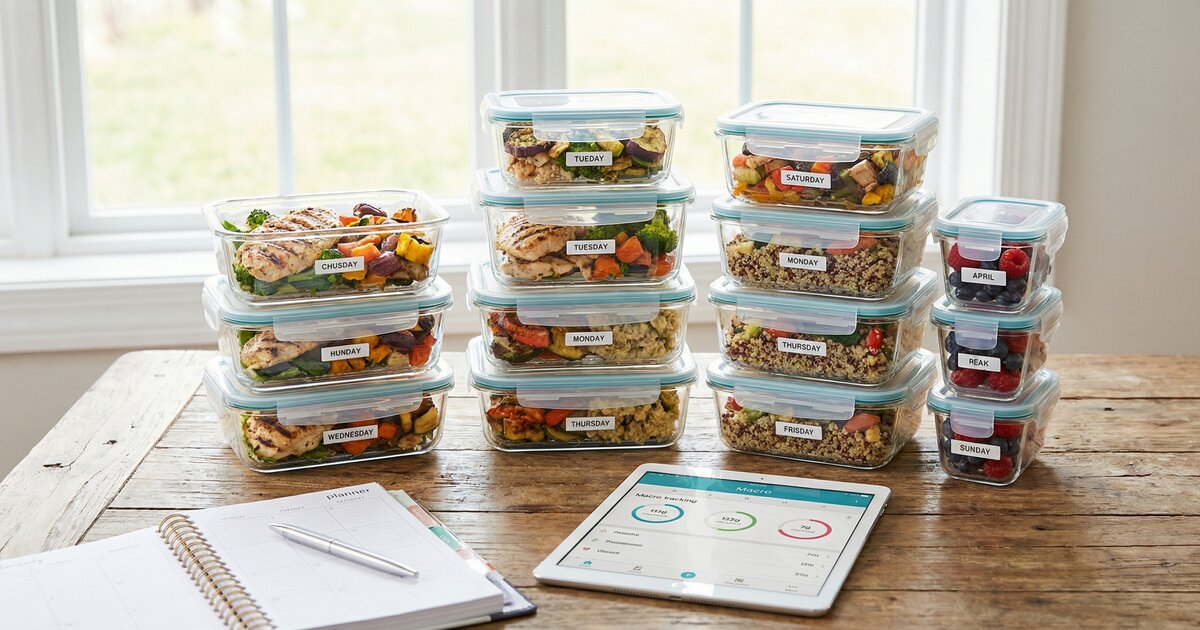
You know your macros. You have your targets. But every night at 6 PM, you stand in your kitchen thinking, “What the hell am I supposed to eat?”
You scramble to throw something together. You guess at portions. You log it in MyFitnessPal and realize you just blew through 80g of fat with one meal—and you’ve only eaten 60g of protein for the entire day.
Sound familiar?
Here’s the truth: Hitting your macros consistently is nearly impossible without meal prep.
Random, reactive eating leads to missed targets, overeating, and frustration. Strategic meal prep eliminates guesswork, saves hours weekly, and makes macro tracking effortless.
This guide walks you through the complete meal prep process—from calculating shopping lists to batch cooking strategies to storage and reheating. You’ll learn practical systems used by bodybuilders, fitness competitors, and busy professionals to nail their macros week after week.
By the end, you’ll have a repeatable meal prep routine that makes hitting your nutrition goals automatic.
Need macro targets first? Our free macro calculator gives you personalized numbers in 60 seconds.
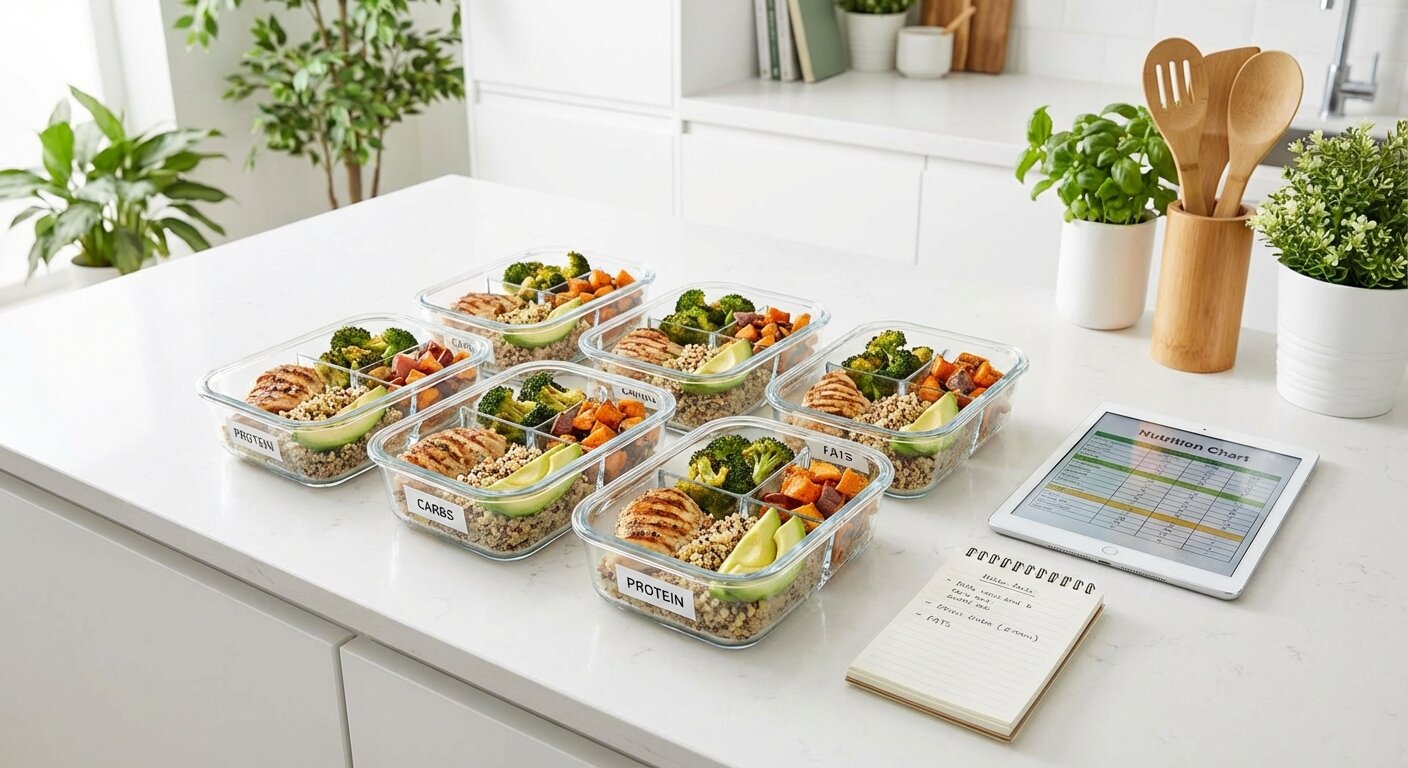
Why Meal Prep Is Essential for Macro Tracking
Before diving into the how-to, understand why meal prep works.
The Problem with Reactive Eating
Without meal prep:
- You make food decisions when hungry (worst time to choose)
- Portion sizes vary wildly day to day
- You run out of high-protein foods by Wednesday
- You resort to takeout when nothing is ready
- Tracking becomes exhausting and inaccurate
Result: You hit your macros maybe 3-4 days per week—not enough for consistent progress.
The Meal Prep Advantage
With meal prep:
- Food decisions made once weekly when clear-headed
- Portion sizes consistent and pre-tracked
- All meals ready in 2-3 minutes (just reheat)
- No “what’s for dinner?” stress
- Tracking becomes simple (same meals = same macros)
Result: You hit your macros 6-7 days per week effortlessly.
Additional Benefits
Time savings: 10-15 hours of weekly cooking condensed into 2-3 hours Money savings: Buying in bulk and cooking at home saves 40-60% vs eating out Mental energy: One decision weekly instead of 21 decisions Consistency: The #1 factor in achieving any fitness goal
For more on why tracking matters, read do I need to track macros.
Step 1: Calculate Your Weekly Macro Needs
Before shopping or cooking, know exactly what you need.
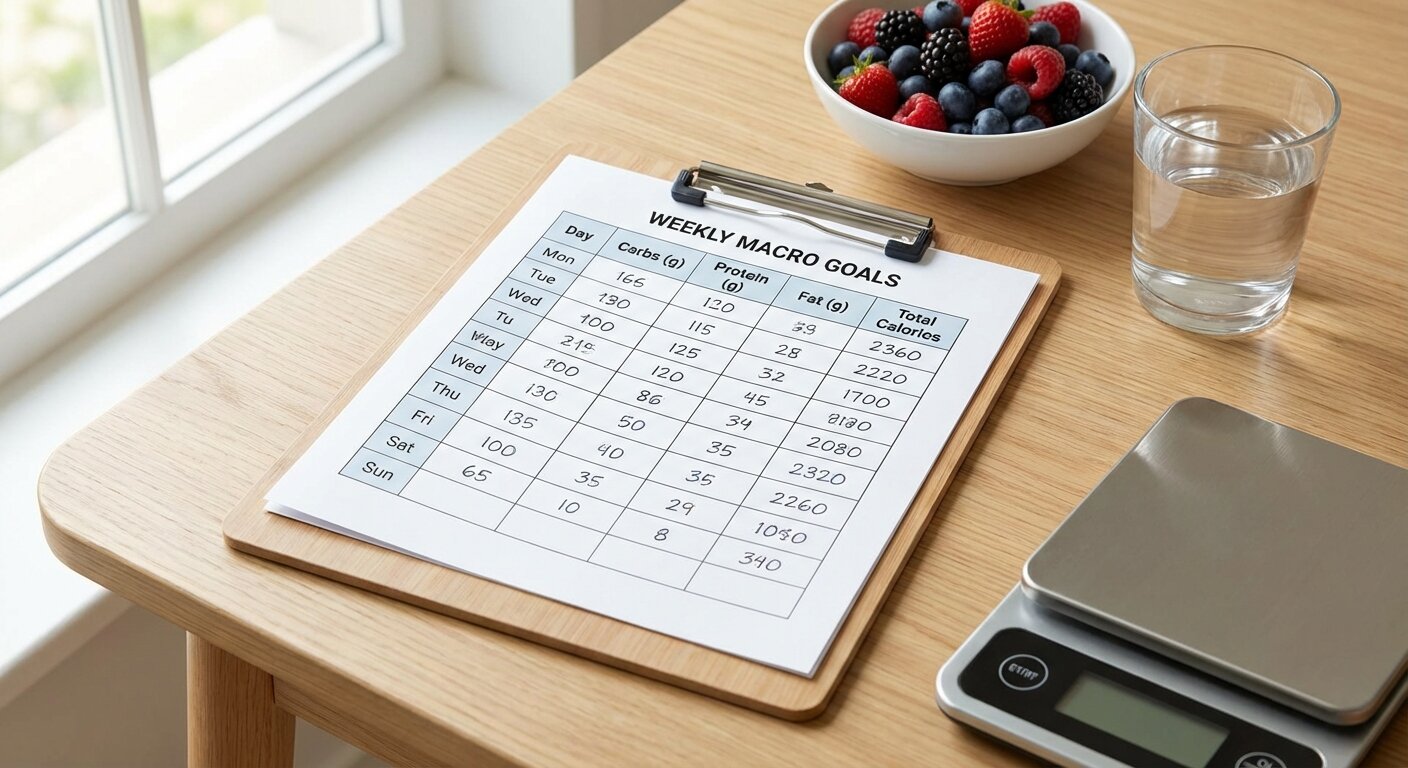
Convert Daily Macros to Weekly Totals
Your daily targets (example):
- Protein: 180g
- Carbs: 220g
- Fat: 60g
Weekly totals:
- Protein: 180g × 7 = 1,260g (2.8 lbs)
- Carbs: 220g × 7 = 1,540g (3.4 lbs)
- Fat: 60g × 7 = 420g (0.9 lbs)
This tells you how much food to buy.
Decide How Many Meals to Prep
Most people prep:
- 5-7 lunches
- 5-7 dinners
- Optional: Breakfast, snacks
Common approaches:
Full week prep (7 days):
- Cook everything Sunday
- Freeze half for later in week
- Best for: Busy professionals, consistent schedules
Split prep (3-4 days twice weekly):
- Cook Sunday for Mon-Wed
- Cook Wednesday for Thu-Sun
- Best for: People who value freshness
Partial prep (weekdays only):
- Prep 5 lunches + 5 dinners
- Weekends flexible/eating out
- Best for: Social schedules, families
Example calculation (5 lunches + 5 dinners):
- 10 meals prepped
- Each meal: 40g protein, 50g carbs, 15g fat
- Weekly from meal prep: 400g P, 500g C, 150g F
- Remaining from breakfast/snacks: 800g P, 1,040g C, 270g F
Account for Waste and Variance
Add 10% to shopping quantities:
- Trimming fat from meat
- Cooking water absorption
- Portions slightly over/under
- Testing/tasting while cooking
This buffer prevents running short mid-week.
Step 2: Choose Your Meal Prep Strategy
Different approaches work for different lifestyles.
Strategy 1: Full Meal Prep (Complete Meals)
How it works: Cook complete meals, portion into containers with protein + carb + veggies together
Pros:
- Grab-and-go convenience
- No assembly required
- Easiest for beginners
- Perfect for taking to work
Cons:
- Can get boring eating same meals
- Less flexible (meal is predetermined)
- Reheating may not suit all foods
Best for: Busy professionals, beginners, people eating away from home
Example:
- Container 1: Chicken breast, brown rice, broccoli
- Container 2: Turkey meatballs, sweet potato, green beans
- Container 3: Salmon, quinoa, asparagus
Strategy 2: Component Prep (Mix-and-Match)
How it works: Cook proteins, carbs, fats, and veggies separately; assemble meals fresh
Pros:
- Maximum variety (mix different combinations)
- More flexible (adjust portions daily)
- Can serve family different portions
- Easier to reheat (components heat differently)
Cons:
- Requires assembly (3-5 minutes per meal)
- Need more storage containers
- Slightly more complex tracking
Best for: People wanting variety, families, experienced trackers
Example:
- Proteins: Grilled chicken, ground turkey, baked salmon
- Carbs: Rice, sweet potatoes, quinoa
- Fats: Avocado, olive oil, almonds
- Veggies: Broccoli, spinach, bell peppers
Each meal you grab portions of each.
Strategy 3: Batch Cooking (Recipes/Casseroles)
How it works: Make large batches of complete recipes (chili, casseroles, stir-fries)
Pros:
- More interesting meals
- Great for freezing
- Family-friendly
- Less “boring meal prep” feeling
Cons:
- Harder to track macros precisely
- Need to calculate recipe macros
- Less portion control flexibility
Best for: Families, people who hate “bodybuilder meals,” bulk cooking enthusiasts
Example:
- Turkey chili (entire pot divided into 8 portions)
- Chicken stir-fry (makes 6 servings)
- Beef and veggie casserole (makes 10 servings)
Strategy 4: Hybrid Approach (Best of All)
How it works: Combine strategies based on meals
Example weekly setup:
- Lunches: Full meal prep (same lunch Mon-Fri)
- Dinners: Component prep (variety)
- Breakfast: Fresh daily (eggs, oats, shake)
- Snacks: Batch prep (protein balls, cut veggies)
This maximizes convenience where needed and variety where wanted.
Step 3: Build Your Macro-Friendly Menu
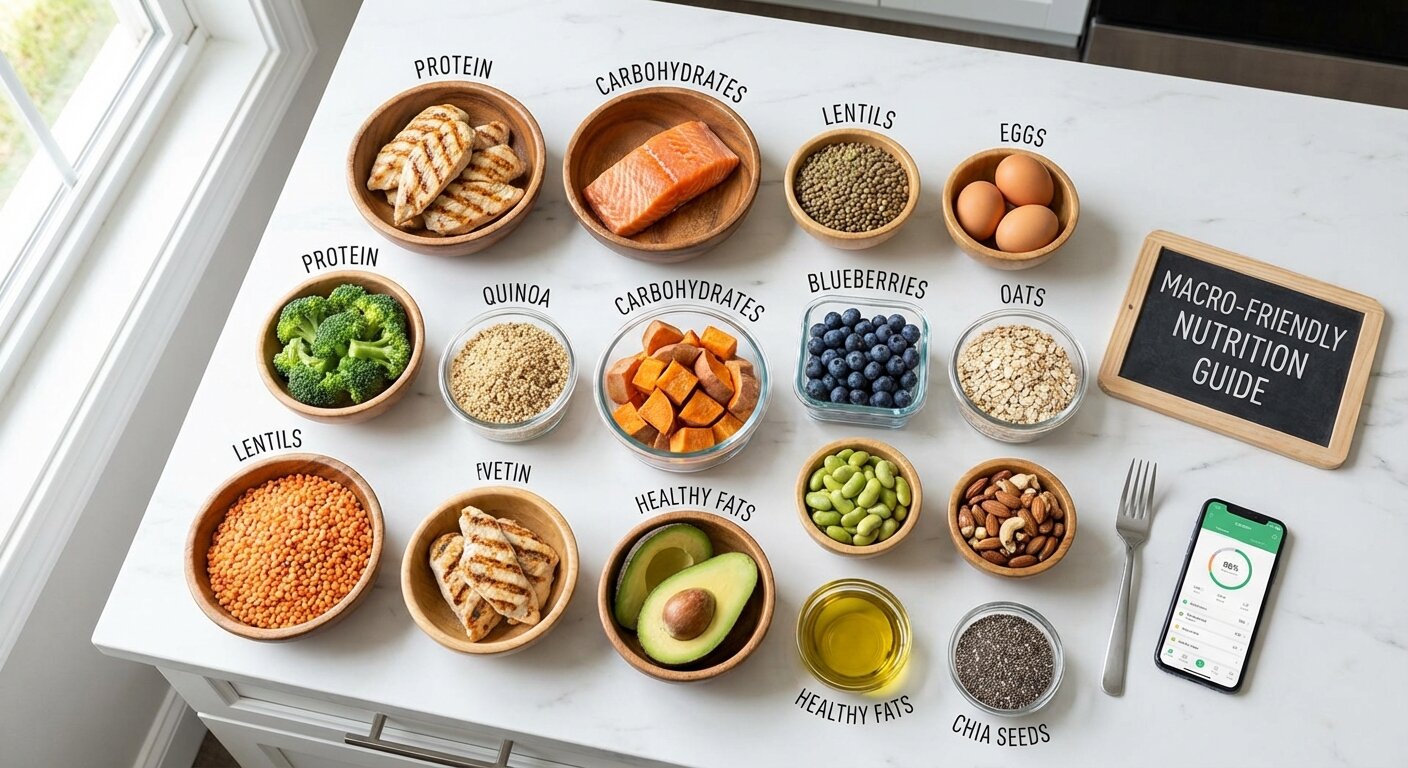
Keep it simple: 3-4 proteins, 3-4 carbs, 2-3 fats, unlimited veggies.
Protein Sources (Choose 3-4)
| Protein Source | Protein per 100g | Calories per 100g | Best For |
|---|---|---|---|
| Chicken breast | 31g | 165 cal | Lean protein, budget-friendly |
| Ground turkey (93/7) | 20g | 150 cal | Versatile, easy to season |
| Salmon | 25g | 208 cal | Healthy fats included |
| Lean ground beef (90/10) | 26g | 176 cal | Flavor, meal variety |
| Eggs | 13g | 155 cal | Breakfast, quick meals |
| Tilapia/white fish | 26g | 129 cal | Very lean, mild flavor |
| Greek yogurt (nonfat) | 10g | 59 cal | Snacks, breakfast |
| Tofu (extra firm) | 17g | 144 cal | Vegan protein |
Weekly rotation example:
- Week 1: Chicken, salmon, ground turkey, eggs
- Week 2: Ground beef, tilapia, chicken, eggs
- Week 3: Chicken, turkey, salmon, tempeh
Carbohydrate Sources (Choose 3-4)
| Carb Source | Carbs per 100g (raw) | Calories per 100g | Best For |
|---|---|---|---|
| White rice | 28g | 130 cal | Easy digestion, neutral flavor |
| Brown rice | 23g | 111 cal | More fiber, nutty flavor |
| Sweet potato | 20g | 86 cal | Nutrient-dense, naturally sweet |
| Oats | 66g | 389 cal | Breakfast, high fiber |
| Quinoa | 21g | 120 cal | Complete protein, variety |
| Pasta | 25g | 131 cal | Comfort food option |
| White potato | 17g | 77 cal | Filling, budget-friendly |
| Whole wheat bread | 41g | 247 cal | Sandwiches, convenience |
Weekly rotation example:
- Lunch: White rice
- Dinner: Sweet potatoes, quinoa
- Breakfast: Oats
Fat Sources (Choose 2-3)
| Fat Source | Fat per serving | Calories per serving | Best For |
|---|---|---|---|
| Olive oil | 14g (1 tbsp) | 119 cal | Cooking, dressings |
| Avocado | 15g (½ avocado) | 160 cal | Meals, sandwiches |
| Almonds | 14g (1 oz/23 nuts) | 164 cal | Snacks, crunch |
| Peanut butter | 16g (2 tbsp) | 188 cal | Snacks, oatmeal |
| Eggs (yolks) | 5g (1 large egg) | 70 cal | Included in protein |
| Cheese | 9g (1 oz) | 114 cal | Flavor, variety |
| Chia seeds | 9g (1 oz) | 138 cal | Oatmeal, smoothies |
Most efficient: Use olive oil for cooking, avocado for meals, nuts for snacks
Vegetables (Unlimited)
High-volume, low-calorie:
- Broccoli, cauliflower, zucchini
- Spinach, kale, mixed greens
- Bell peppers, asparagus, green beans
- Mushrooms, cucumbers, tomatoes
Prep tip: These don’t significantly impact macros—track if you want precision, but prioritize protein/carbs/fats first.
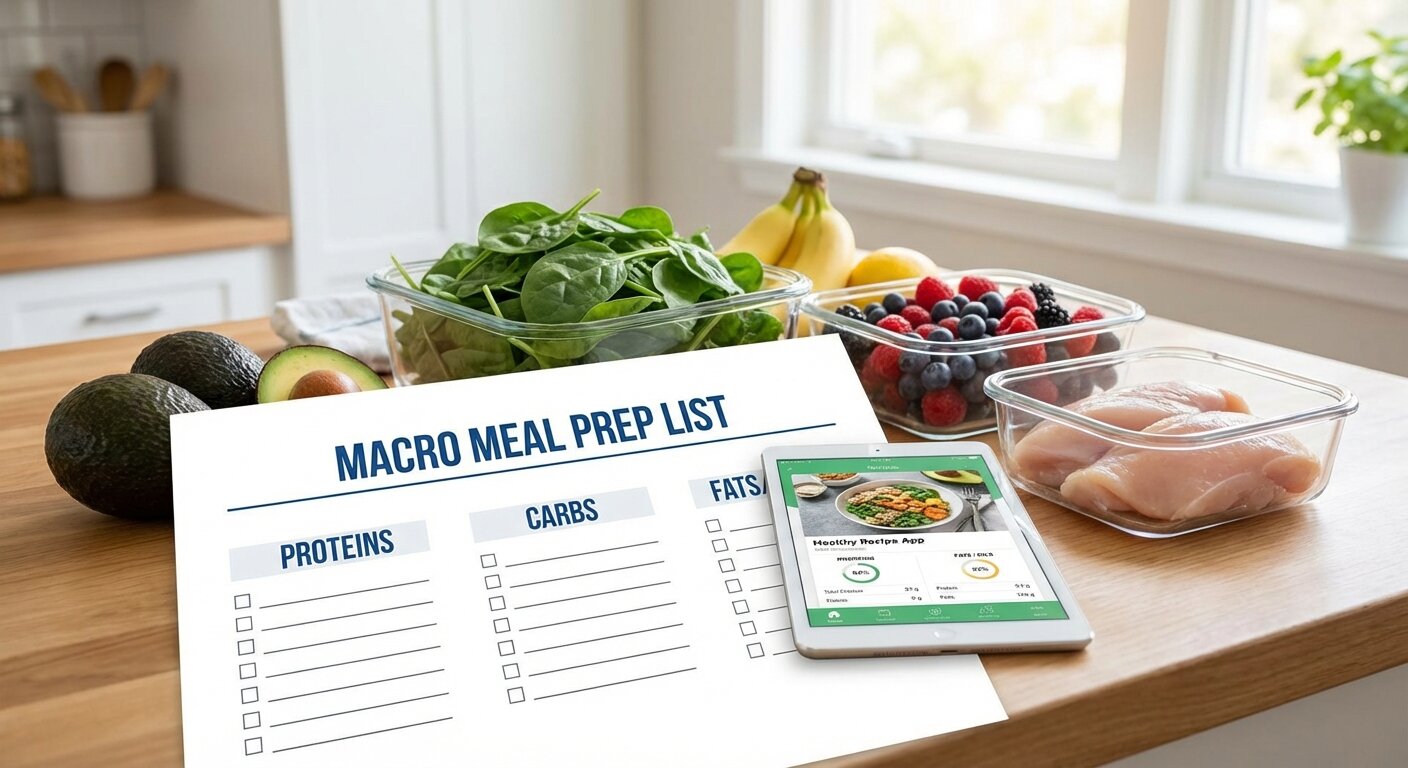
Step 4: Calculate Your Grocery List
Convert macros into exact shopping quantities.
Formula for Calculating Food Quantities
Amount needed (raw weight) = (Weekly macro total ÷ Macros per 100g) × 100
Let’s work through a complete example.
Example: Weekly Shopping for Fat Loss Macros
Daily targets: 180g P / 200g C / 55g F Weekly totals: 1,260g P / 1,400g C / 385g F Prepping: 5 lunches + 5 dinners (10 meals)
Proteins (Weekly Total: 1,260g protein)
Allocating proteins:
- Meal prep: 900g protein (10 meals × 40g = 400g from main protein source)
- Breakfast/snacks: 360g protein (from eggs, yogurt, shakes)
Chicken breast for meal prep:
- Need: 400g protein from chicken
- Chicken has 31g protein per 100g raw
- Amount: (400 ÷ 31) × 100 = 1,290g raw chicken (2.8 lbs)
- Buy: 3 lbs chicken breast
Ground turkey for variety:
- Need: 200g protein for some dinners
- Turkey has 20g protein per 100g
- Amount: (200 ÷ 20) × 100 = 1,000g raw turkey (2.2 lbs)
- Buy: 2.5 lbs ground turkey (93/7)
Salmon for variety:
- Need: 150g protein
- Salmon has 25g protein per 100g
- Amount: (150 ÷ 25) × 100 = 600g raw salmon (1.3 lbs)
- Buy: 1.5 lbs salmon fillets
Eggs for breakfast:
- Need: 150g protein
- Eggs have 13g protein per 100g (or ~6g per egg)
- Amount: 150 ÷ 6 = 25 eggs
- Buy: 2 dozen eggs
Carbohydrates (Weekly Total: 1,400g carbs)
Allocating carbs:
- Meal prep: 1,000g carbs (10 meals × 50g = 500g from complex carbs)
- Breakfast/snacks: 400g carbs (oats, fruit, etc.)
White rice:
- Need: 500g carbs
- Rice has 28g carbs per 100g raw
- Amount: (500 ÷ 28) × 100 = 1,785g raw rice (4 lbs)
- Buy: 5 lbs white rice (enough for weeks)
Sweet potatoes:
- Need: 300g carbs
- Sweet potato has 20g carbs per 100g
- Amount: (300 ÷ 20) × 100 = 1,500g sweet potatoes (3.3 lbs)
- Buy: 4 lbs sweet potatoes
Oats for breakfast:
- Need: 300g carbs for 5 breakfasts
- Oats have 66g carbs per 100g
- Amount: (300 ÷ 66) × 100 = 455g oats (1 lb)
- Buy: 1 container rolled oats (enough for 2 weeks)
Fruit:
- Remaining carbs: 200-300g from bananas, berries, apples
- Buy: 7 bananas, 2 pints berries, 5 apples
Fats (Weekly Total: 385g fat)
Allocating fats:
- Olive oil for cooking
- Avocados for meals
- Nuts for snacks
- Some from protein sources (salmon, eggs)
Olive oil:
- Use for cooking all proteins/veggies
- 2 tbsp daily = 28g fat daily = 196g weekly
- Buy: 1 bottle olive oil (lasts 2-3 weeks)
Avocados:
- 1 per day = 15g fat daily = 105g weekly
- Buy: 7 avocados
Almonds:
- 1 oz (28g) = 14g fat
- Remaining fat: 385 - 196 - 105 = 84g
- 84 ÷ 14 = 6 servings
- Buy: 1 bag almonds (6-8 oz)
Vegetables
- Broccoli: 3 lbs (steam for meals)
- Spinach: 2 containers (salads, sides)
- Bell peppers: 5 (variety, stir-fries)
- Asparagus: 2 lbs (roasted sides)
- Mixed salad greens: 2 containers
Final Shopping List Summary
Proteins:
- 3 lbs chicken breast
- 2.5 lbs ground turkey (93/7)
- 1.5 lbs salmon fillets
- 2 dozen eggs
Carbs:
- 5 lbs white rice
- 4 lbs sweet potatoes
- 1 container oats
- 7 bananas
- 2 pints berries
- 5 apples
Fats:
- 1 bottle olive oil
- 7 avocados
- 1 bag almonds (8 oz)
Vegetables:
- 3 lbs broccoli
- 2 containers spinach
- 5 bell peppers
- 2 lbs asparagus
- 2 containers salad mix
Extras:
- Seasonings, hot sauce, salsa
- Protein powder (if using)
Estimated cost: $80-120 depending on location and sales
Step 5: Batch Cook and Portion Your Meals
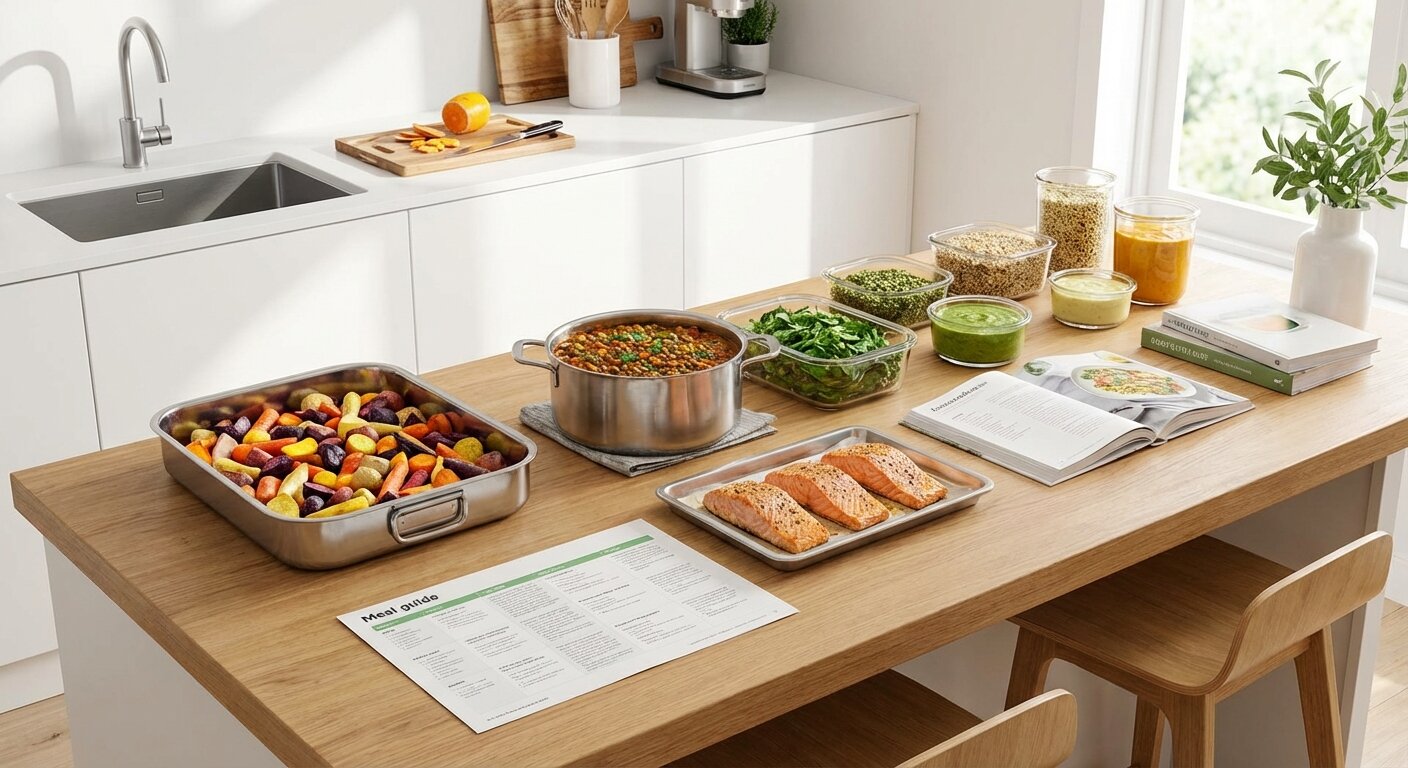
Now the actual cooking. Set aside 2-3 hours (usually Sunday afternoon).
Meal Prep Timeline (2.5 Hours)
Phase 1: Prep (30 minutes)
- Wash and chop all vegetables
- Season proteins
- Preheat oven to 400°F
- Get rice cooker or pot ready
Phase 2: Cook Simultaneously (60-90 minutes)
- Oven: Bake chicken breasts (25-30 min) and salmon (15-20 min)
- Stovetop: Cook rice in rice cooker or pot (25 min)
- Stovetop: Brown ground turkey in large pan (15 min)
- Stovetop: Steam broccoli (8-10 min) or roast in oven
- Oven: Bake sweet potatoes (40-50 min, start these first)
Phase 3: Portion and Store (30-45 minutes)
- Let everything cool slightly (10 min)
- Weigh and divide proteins into portions
- Weigh and divide carbs into portions
- Portion vegetables
- Assemble containers or store components separately
- Label if needed
- Refrigerate/freeze
Cooking Tips for Success
Proteins:
- Chicken breast: Bake at 400°F for 25-30 min (internal temp 165°F). Season with salt, pepper, garlic powder.
- Ground turkey: Brown in pan with taco seasoning, Italian seasoning, or teriyaki sauce for variety.
- Salmon: Bake at 400°F for 12-15 min (145°F internal). Season with lemon, dill, garlic.
Carbs:
- Rice: Use rice cooker (set and forget) or pot with 1:2 rice:water ratio.
- Sweet potatoes: Pierce with fork, bake at 400°F for 40-50 min until soft.
- Oats: Prep overnight oats (oats + milk + protein powder, refrigerate overnight).
Vegetables:
- Steam in microwave (5 min with wet paper towel)
- Roast in oven at 425°F (15-20 min, tossed in olive oil)
- Don’t overcook—should be slightly crisp
Weighing and Portioning
Use a digital food scale (essential):
For full meal prep:
- Weigh total cooked protein (e.g., 1,200g chicken)
- Divide by number of meals (1,200g ÷ 10 = 120g per meal)
- Weigh each portion into containers
- Repeat for carbs and veggies
For component prep:
- Store all chicken in one large container (weigh portions when assembling meals)
- Store all rice in another container
- When making a meal, weigh out 150g chicken, 200g rice, etc.
Pro tip: Weigh proteins raw when possible (more accurate), but if cooking first, use “cooked” entries in your tracking app.
Container Organization
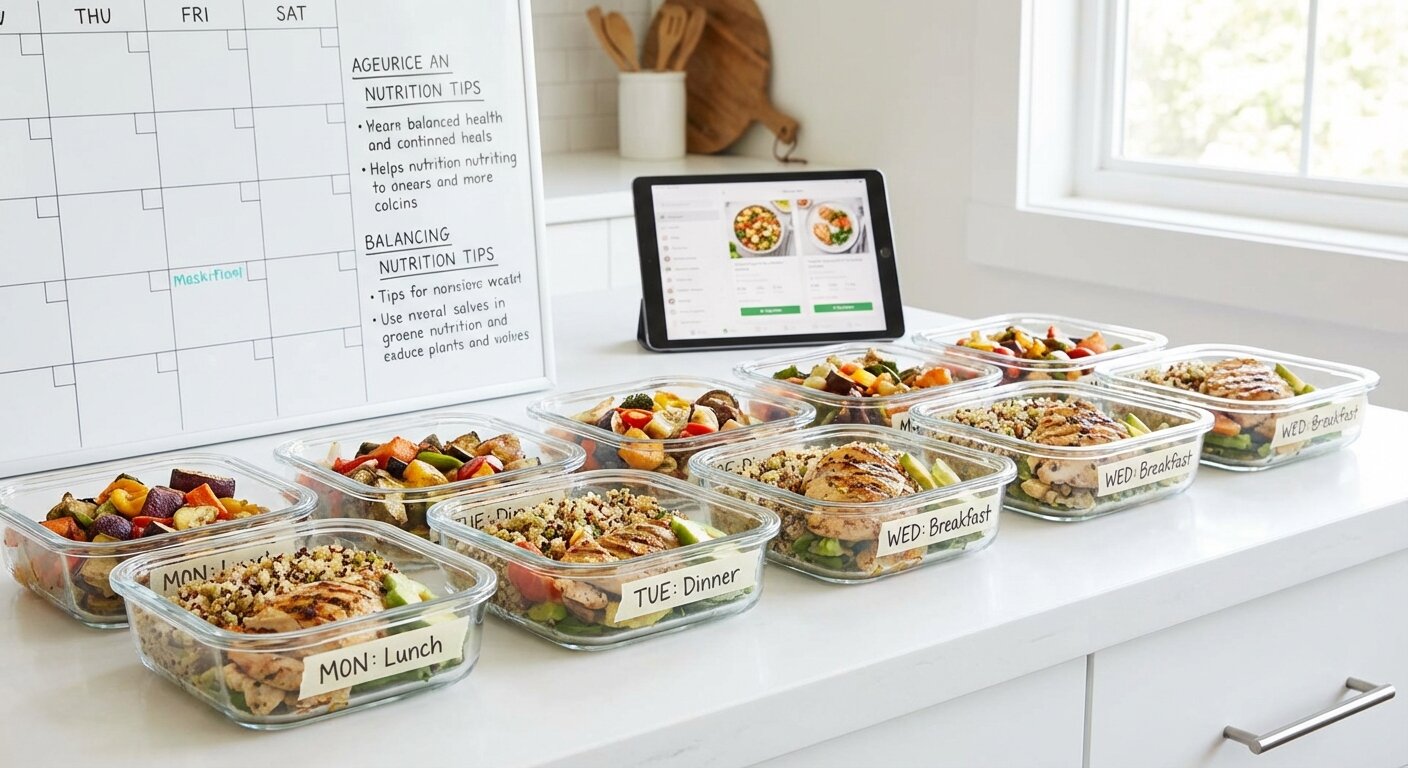
Labeling system:
- Day of week (Mon Lunch, Tue Dinner)
- Macros written on lid (40P/50C/15F)
- Date prepared (for rotating oldest first)
Storage layout:
- Meals for Mon-Wed in fridge (front)
- Meals for Thu-Sun in freezer or back of fridge
- Snacks in separate drawer
Step 6: Store and Reheat Properly
Proper storage keeps food safe and tasting good.
Storage Guidelines
Refrigerator (35-40°F):
- Cooked chicken/turkey: 3-4 days max
- Cooked fish: 2-3 days max
- Cooked rice/pasta: 4-5 days
- Cooked vegetables: 4-5 days
- Hard-boiled eggs: 7 days
Freezer (0°F):
- Cooked chicken/turkey: 2-3 months
- Cooked fish: 2 months
- Cooked rice/pasta: 1-2 months
- Most cooked meals: 2-3 months
Cooling before storage:
- Let food cool 10-15 minutes before refrigerating
- Don’t leave at room temp over 2 hours (bacteria growth)
Best Containers
Glass containers (best quality):
- Pyrex, Glasslock, Prep Naturals
- 2-cup and 3-cup sizes
- Microwave and dishwasher safe
- Last forever
BPA-free plastic (budget-friendly):
- Meal Prep Haven, Freshware
- Lighter for taking to work
- Replace yearly (can warp)
Divider containers:
- 2 or 3 compartments
- Keeps foods separate (prevents soggy textures)
Reheating Best Practices
Microwave (most convenient):
- Remove lid or vent (prevent steam buildup)
- Heat 2-3 minutes on high, stir, heat 1-2 more minutes
- Ensure food reaches 165°F internal temp
- Add splash of water to rice/pasta to prevent drying
Stovetop (best texture):
- Reheat proteins in pan with small amount of oil/butter
- Rice reheats well with splash of water (covered)
- Vegetables quickly sauté in pan
Oven (for crispy texture):
- 350°F for 10-15 minutes
- Good for reheating chicken to restore crispy exterior
Avoid: Reheating same food more than once (safety risk)
Meal Prep Strategies for Different Goals
Adjust your approach based on your macro targets.
Fat Loss Meal Prep
Characteristics:
- Lower calories (1,500-2,200)
- High protein (40-45% of calories)
- Moderate carbs and fats
- High-volume, low-calorie foods
Sample meal:
- 6 oz chicken breast (280 cal, 52g P)
- 6 oz sweet potato (150 cal, 35g C)
- 2 cups steamed broccoli (60 cal, 6g C)
- 1 tsp olive oil (40 cal, 5g F)
- Total: 530 calories, 52g P / 41g C / 5g F
Tips:
- Use lean proteins (chicken, white fish, turkey)
- Bulk up meals with vegetables
- Measure fats precisely (easy to overeat)
- Season generously for flavor without calories
Muscle Gain Meal Prep
Characteristics:
- Higher calories (2,500-3,500+)
- Moderate protein (25-30%)
- High carbs (50-60%)
- More calorie-dense foods
Sample meal:
- 6 oz chicken breast (280 cal, 52g P)
- 2 cups cooked white rice (410 cal, 90g C)
- Vegetables (60 cal, 10g C)
- 1 tbsp olive oil (120 cal, 14g F)
- Total: 870 calories, 52g P / 100g C / 14g F
Tips:
- Don’t fear carbs (fuel for growth)
- Use calorie-dense carbs (rice, pasta, potatoes)
- Include healthy fats (avocado, nuts, oils)
- May need 4-5 meals daily to hit calories
Maintenance Meal Prep
Characteristics:
- Moderate calories (2,000-2,800)
- Balanced macros (30/40/30 or similar)
- Mix of meal types
- More variety and flexibility
Sample meal:
- 5 oz salmon (300 cal, 40g P, 15g F)
- 1 cup quinoa (220 cal, 40g C, 4g F)
- Mixed roasted vegetables (80 cal, 15g C)
- Total: 600 calories, 40g P / 55g C / 19g F
Tips:
- Rotate proteins and carbs weekly
- Allow 1-2 flexible meals (eating out)
- Focus on whole foods but not obsessive
- More sustainable long-term
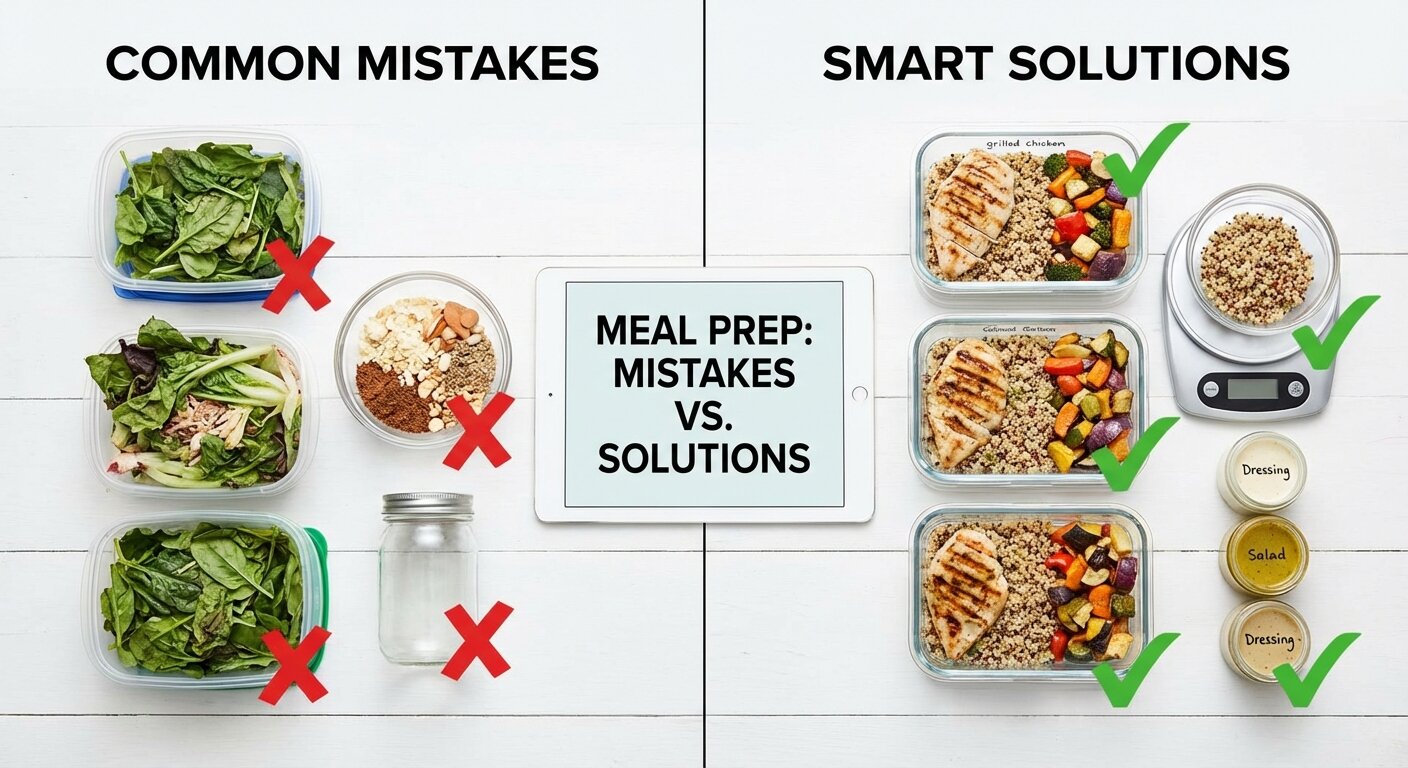
Common Meal Prep Mistakes and Solutions
Mistake 1: Prepping Too Much Variety
Problem: Cooking 7 different meals Sunday, taking 5 hours, burning out by week 2
Solution: Start simple—2-3 proteins, 2-3 carbs. Same meals are fine initially. Add variety once comfortable.
Mistake 2: Not Accounting for Waste
Problem: Recipe says “makes 10 servings” but you only get 8 portions
Solution: Always cook 10-15% extra. Trim fat, cooking absorption, and testing reduce yield.
Mistake 3: Improper Storage
Problem: Food spoils by Thursday, wasted money and meals
Solution:
- Use airtight containers
- Cook fish fresh mid-week
- Freeze meals for Thu-Sun
- Check fridge temp (should be 35-40°F)
Mistake 4: Boring Seasonings
Problem: Everything tastes bland, you get sick of meal prep
Solution:
- Rotate seasonings: Italian, Mexican, Asian, BBQ, Cajun
- Use sauces (track macros): hot sauce, salsa, mustard, low-cal dressing
- Fresh herbs make huge difference
Mistake 5: Weighing Cooked Instead of Raw
Problem: Tracking 150g “chicken breast” but used cooked weight (way off)
Solution: Always weigh raw when possible. If weighing cooked, use “cooked” database entries.
Mistake 6: All-or-Nothing Mindset
Problem: “If I can’t prep everything perfectly, why bother?”
Solution: Start small. Prep just lunches. Or just proteins. Any meal prep is better than zero meal prep.
Mistake 7: Not Eating What You Prep
Problem: Prepped healthy meals but ordering takeout because “not in the mood”
Solution:
- Prep foods you actually like
- Leave 1-2 meals flexible weekly
- Use component prep for variety
- Make food taste good (seasoning matters!)
Sample Weekly Meal Prep Plans
Here are three complete week setups.
Week 1: Beginner Fat Loss Prep (1,800 cal)
Prepping: 5 lunches + 5 dinners
Lunch (all 5 days same):
- 6 oz chicken breast
- 1 cup white rice
- Steamed broccoli
- Macros: 52g P / 50g C / 3g F (445 cal)
Dinner (all 5 days same):
- 5 oz ground turkey (93/7)
- 8 oz sweet potato
- Green beans with 1 tsp olive oil
- Macros: 35g P / 45g C / 8g F (400 cal)
Breakfast (made fresh daily):
- 3 eggs + 3 egg whites scrambled
- 1 slice whole wheat toast
- Macros: 30g P / 15g C / 12g F (284 cal)
Snacks:
- Greek yogurt (20g P)
- Apple with 1 tbsp peanut butter (4g P / 20g C / 8g F)
Daily Total: 141g P / 180g C / 31g F (1,553 cal)
Grocery list:
- 2.5 lbs chicken breast
- 2 lbs ground turkey (93/7)
- 3 lbs sweet potatoes
- 2 lbs white rice
- 2 lbs broccoli
- 1.5 lbs green beans
- 18 eggs
- 1 loaf whole wheat bread
- 7 Greek yogurts
- 7 apples
- Peanut butter
Week 2: Intermediate Muscle Gain Prep (2,800 cal)
Prepping: Component prep
Proteins (cook all):
- 3 lbs chicken breast (10 servings × 6 oz)
- 2 lbs salmon (5 servings × 6 oz)
Carbs (cook all):
- 4 lbs white rice
- 4 lbs sweet potatoes
- 2 lbs pasta
Assemble meals as:
- Lunch: 6 oz chicken, 1.5 cups rice, veggies
- Dinner: 6 oz salmon, 10 oz sweet potato, veggies
Breakfast:
- 1 cup oats, 1 scoop whey, banana, 1 tbsp peanut butter
Snacks:
- Protein shake
- Rice cakes with peanut butter
Week 3: Advanced Variety Prep
Lunch rotation:
- Mon/Thu: Chicken burrito bowl (chicken, rice, black beans, salsa, avocado)
- Tue/Fri: Turkey meatballs with pasta marinara
- Wed: Salmon with quinoa and asparagus
Dinner rotation:
- Mon/Thu: Ground beef stir-fry with vegetables and rice
- Tue/Fri: Grilled chicken with sweet potato and broccoli
- Wed: Baked tilapia with couscous and roasted peppers
Keeps variety while staying organized
Frequently Asked Questions
Can I meal prep if I don’t have a lot of time?
Yes. Start with just 3-4 meals (lunches only). Use shortcuts: pre-cut vegetables, rotisserie chicken, microwaveable rice, frozen vegetables. Even 1 hour of prep beats eating out 5 days.
How do I meal prep for a family with different macro needs?
Use component prep. Cook larger batches of proteins, carbs, and veggies. Everyone assembles their own portions based on their needs. Or prep your portioned meals separately while family eats larger servings.
What if I travel for work?
Invest in insulated lunch bag with ice packs. Meal prep travels fine for 4-6 hours. Many people prep breakfast and dinner at home, buy lunch on road (choose macro-friendly options like Chipotle bowls).
Do I need to prep snacks too?
Helpful but not required. Easy snacks: Greek yogurt, protein bars, pre-portioned nuts, fruit, string cheese, jerky. These don’t need “prep” just buying and portioning.
How do I prevent food from getting soggy?
Use containers with dividers (keeps wet sauces separate). Add sauces/dressings right before eating. Store vegetables separately if very watery. Reheat components separately.
Can I meal prep breakfast?
Yes. Options:
- Overnight oats (5-day batch in jars)
- Egg muffins (baked eggs with veggies, reheat)
- Breakfast burritos (freeze, microwave)
- Pre-portion oats, just add water/milk morning-of
Your Meal Prep Action Plan
You now have the complete system for meal prep success.
Here’s your implementation timeline:
Week 0 (Preparation):
- Calculate your daily/weekly macro targets
- Decide which meals to prep (start with lunches + dinners)
- Buy storage containers (10-15 containers for full week)
- Choose simple menu (2-3 proteins, 2-3 carbs to start)
Week 1 (First Prep):
- Saturday: Calculate grocery list from macros
- Saturday/Sunday: Shop for ingredients
- Sunday: Block 2-3 hours for meal prep
- Cook, portion, store meals
- Mon-Fri: Eat prepped meals, track in app
Week 2 (Refine):
- Assess: What worked? What didn’t?
- Adjust quantities if needed
- Try one new protein or carb source
- Repeat process
Week 3-4 (Master):
- Process becomes automatic
- Prep time reduces to 90-120 minutes
- Add more variety if desired
- Track weekly macro totals (should be hitting targets 6-7 days/week)
Remember: Start simple. Perfect execution of basic meal prep beats complex plans you quit after two weeks. Consistency wins.
Ready to calculate your macro targets? Use our free macro calculator to get personalized numbers now.
Related guides:
- Best Apps for Tracking Macros
- How to Hit Your Protein Macros Every Day
- How to Track Macros When Eating Out
- Best Macro Split for Weight Loss
Now go prep those meals and make hitting your macros automatic.
Related Resources
Related Articles
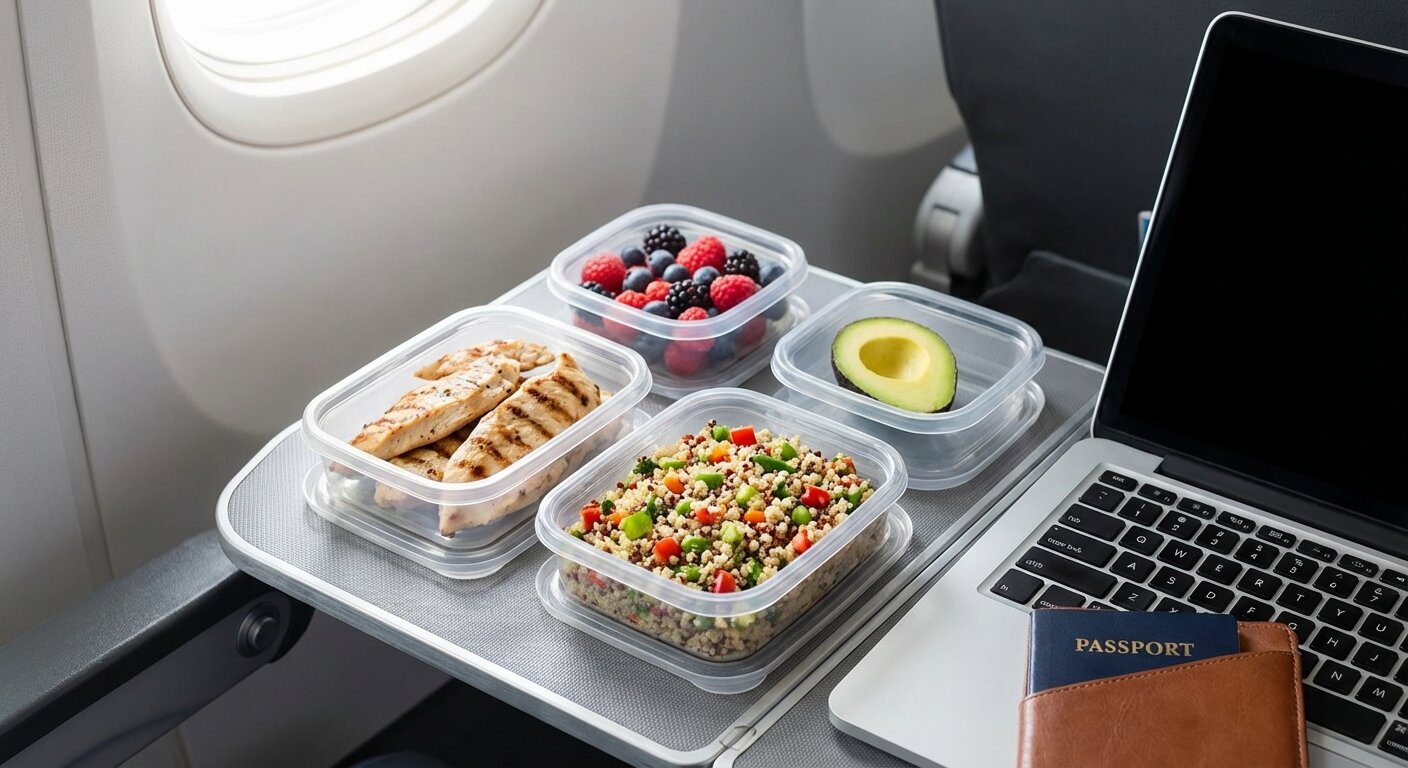
Travel Macros: How to Track Nutrition While Traveling
Complete guide to managing macros while traveling. Learn meal planning strategies,...
Read guide →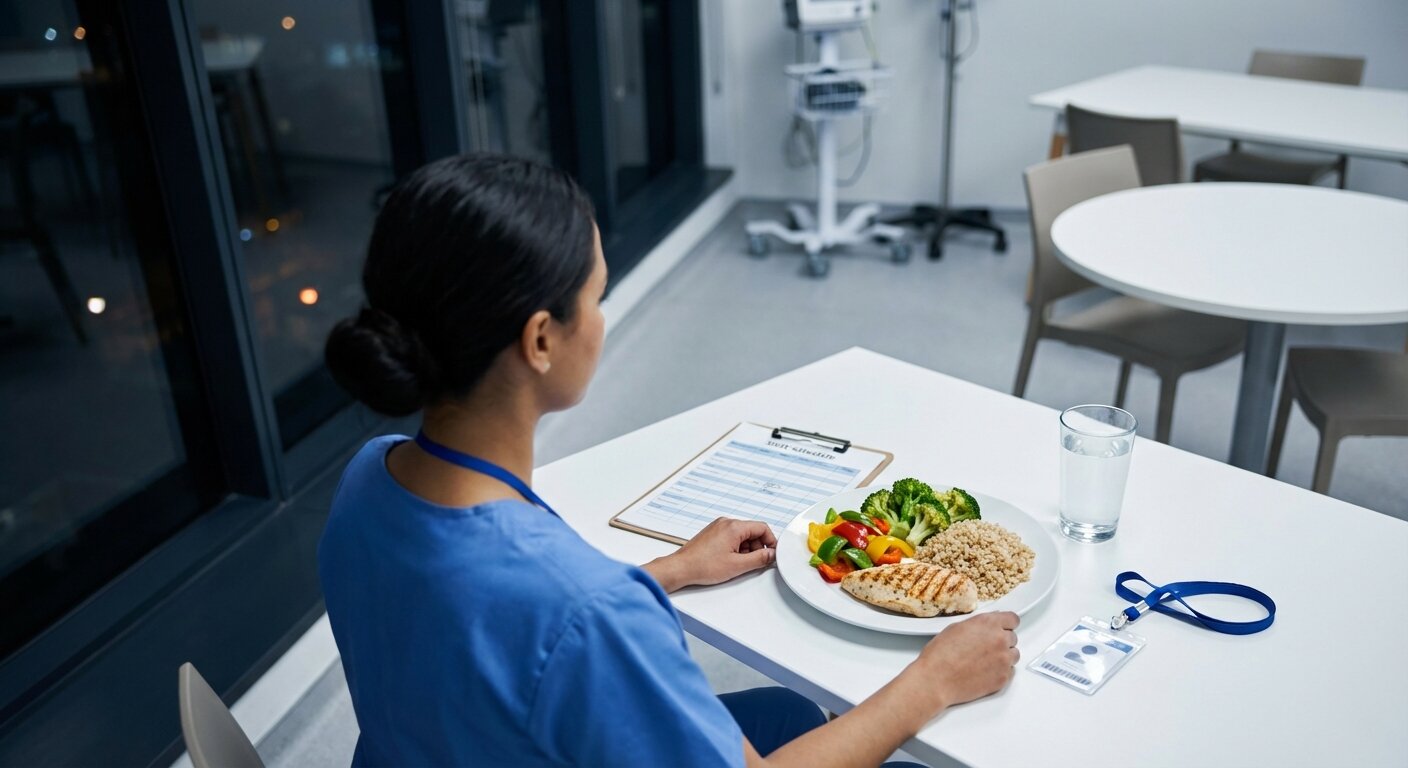
Macros for Shift Workers: Complete Guide to Nutrition on Rotating Schedules
Master macro tracking on night shifts and rotating schedules. Learn meal timing, sleep...
Read guide →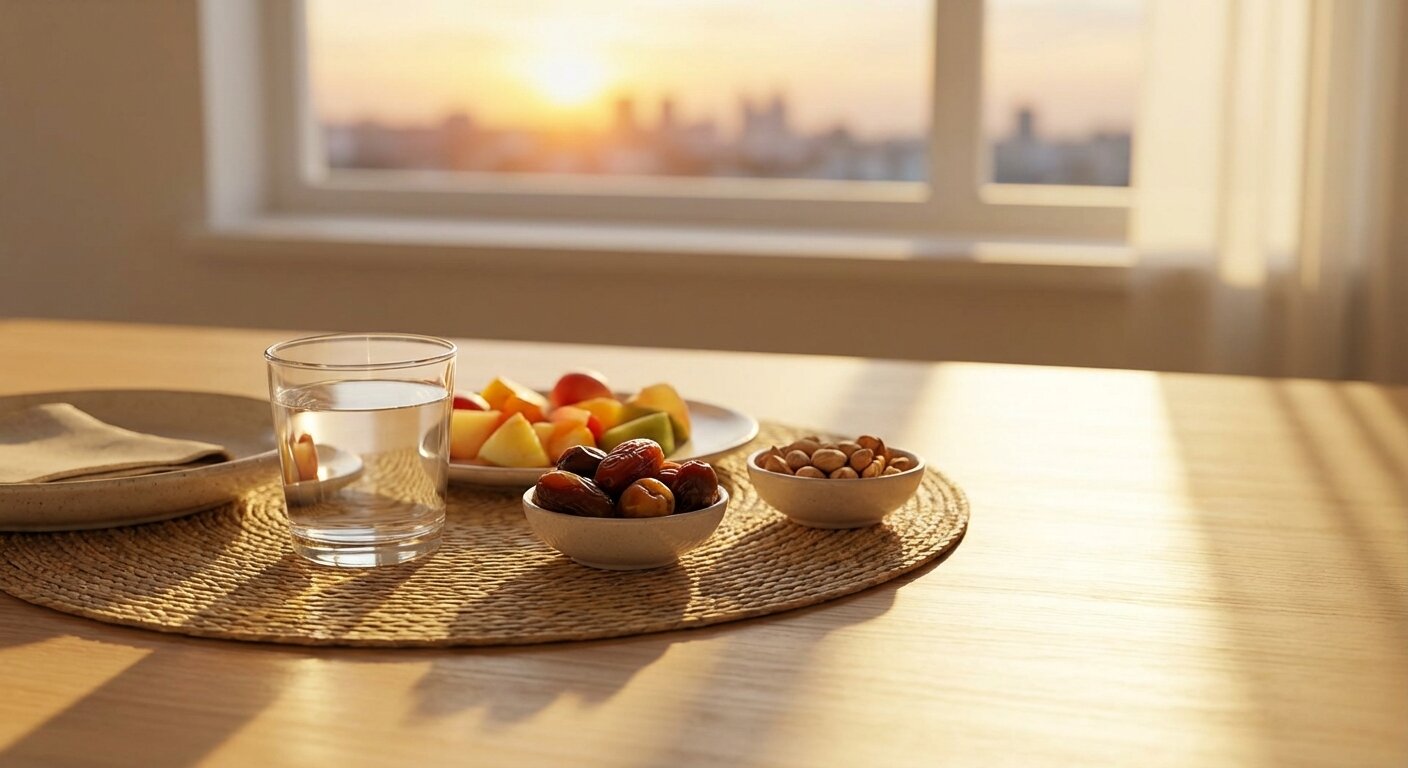
Macros During Ramadan: Complete Nutrition Guide for Fasting
Learn how to track macros during Ramadan fasting. Expert guide covering meal timing,...
Read guide →Disclaimer: This content is for informational purposes only. Consult a healthcare provider before making changes to your diet.