OMAD Macros: Complete Guide to One Meal A Day Macro Distribution
Reviewed by Jessica Williams, CPT, CSCS
OMAD (One Meal A Day) takes intermittent fasting to its logical extreme: you eat all your daily nutrition in a single meal, then fast for the remaining 23 hours. Simple in concept, challenging in execution, and surprisingly effective when done correctly.
But cramming your entire day’s macros into one sitting isn’t as straightforward as it sounds. Get the macro distribution wrong, and you’ll feel sluggish, lose muscle, or struggle with unsustainable hunger. Get it right, and OMAD becomes a powerful tool for fat loss, mental clarity, and metabolic health.
This guide breaks down everything you need to know about OMAD macros: optimal ratios, timing strategies, common mistakes, and who should (and shouldn’t) try this approach. Whether you’re a OMAD veteran looking to optimize or a curious beginner, these evidence-based strategies will help you succeed.
Ready to calculate your baseline? Start with our macro calculator to determine your total daily needs, then learn how to structure them for one powerful meal.
Related: Master flexible dieting to adapt your macros to any lifestyle or situation.
Understanding OMAD Macro Distribution
Traditional nutrition advice says to spread protein throughout the day for optimal muscle protein synthesis. OMAD challenges this assumption. While multiple daily feedings do provide more frequent anabolic signals, research shows your body adapts remarkably well to infrequent, larger protein doses.
A 2018 study in the American Journal of Clinical Nutrition found that consuming 80g of protein in one sitting resulted in similar muscle protein synthesis compared to the same amount spread across four meals. Your body isn’t as wasteful as once believed—it can effectively utilize large protein doses, especially within the 36-48 hour muscle protein synthesis window following resistance training.
The real challenge with OMAD macros isn’t absorption—it’s practical execution. Eating 150g of protein, 75g of fat, and 125g of carbs in one sitting requires strategy. You need to understand nutrient density, meal timing, and how to structure your plate for both satiety and digestive comfort.
Macro distribution on OMAD differs significantly from traditional eating patterns. You’ll prioritize foods that pack maximum nutrition into every bite, choose protein sources that digest well in larger quantities, and balance macros to prevent blood sugar crashes or energy spikes.
Optimal OMAD Macro Ratios by Goal
Your ideal OMAD macro split depends heavily on your primary objective. A bodybuilder maintaining muscle has different needs than someone pursuing aggressive fat loss or following a ketogenic approach.
For Fat Loss
Fat loss on OMAD requires sufficient protein to preserve muscle while creating a calorie deficit. The extended fasting period naturally reduces appetite, making it easier to maintain a deficit without conscious restriction.
Macro targets:
- Protein: 35-40% of calories (0.8-1g per pound of body weight)
- Fat: 25-30% of calories
- Carbs: 30-40% of calories
Example for a 150-pound person (1,800 calories):
- Protein: 160g (640 calories)
- Fat: 60g (540 calories)
- Carbs: 155g (620 calories)
This distribution prioritizes protein for muscle preservation and satiety. Moderate carbs support energy and workout performance, while fats aid hormone production and nutrient absorption. The combination keeps you satisfied through the 23-hour fast.
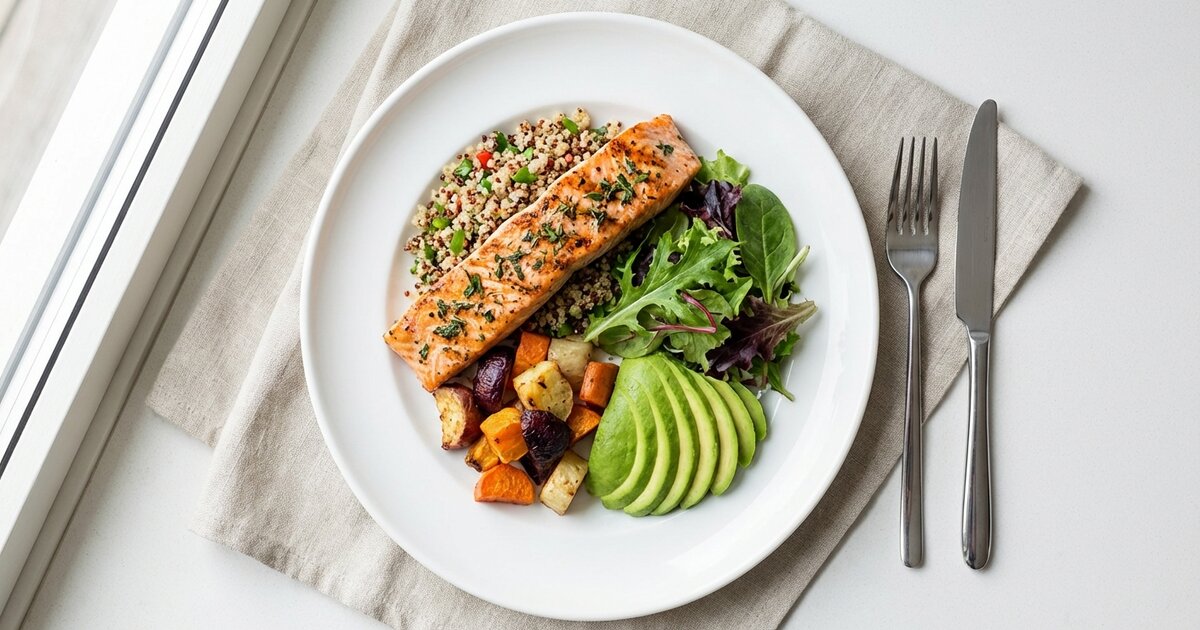
Sample meal: 8 oz grilled salmon (60g protein, 20g fat), 1.5 cups quinoa (12g protein, 55g carbs, 10g fat), 2 cups roasted vegetables (15g carbs), 1 medium avocado (15g fat, 12g carbs), mixed greens salad with olive oil dressing (10g fat, 8g carbs). Total: approximately 160g protein, 55g fat, 150g carbs.
For Muscle Building/Maintenance
Building or maintaining muscle on OMAD requires aggressive protein intake and sufficient total calories. This approach works best for experienced lifters with established muscle mass rather than beginners trying to maximize growth.
Macro targets:
- Protein: 40-45% of calories (1-1.2g per pound of body weight)
- Fat: 25-30% of calories
- Carbs: 30-35% of calories
Example for a 180-pound person (2,400 calories):
- Protein: 220g (880 calories)
- Fat: 75g (675 calories)
- Carbs: 210g (840 calories)
This split emphasizes protein for muscle protein synthesis while providing adequate carbs to replenish glycogen stores depleted during training. Fat remains moderate to allow room for higher protein and carb intake within your calorie target.
Sample meal: 12 oz lean beef (90g protein, 30g fat), 2 cups white rice (90g carbs), 3 whole eggs (18g protein, 15g fat), 2 medium sweet potatoes (60g carbs), 1 cup berries (20g carbs), 2 tbsp almond butter (20g protein, 18g fat, 12g fat), large mixed vegetable serving (15g carbs). Total: approximately 215g protein, 80g fat, 200g carbs.
For Ketogenic OMAD
Keto OMAD combines the metabolic benefits of ketosis with the simplicity of one meal. This approach maximizes fat burning and can be particularly effective for insulin resistance or metabolic dysfunction.
Macro targets:
- Protein: 25-30% of calories (0.8g per pound of body weight)
- Fat: 65-70% of calories
- Carbs: 5% of calories (20-30g maximum)
Example for a 160-pound person (2,000 calories):
- Protein: 130g (520 calories)
- Fat: 155g (1,395 calories)
- Carbs: 20g (80 calories)
This distribution keeps you in ketosis while providing sufficient protein. The high fat content provides satiety and energy throughout your extended fast. Carbs come primarily from non-starchy vegetables and small amounts from nuts or dairy.
Sample meal: 8 oz ribeye steak (60g protein, 45g fat), 4 oz salmon (30g protein, 15g fat), 3 cups leafy greens with 3 tbsp olive oil dressing (45g fat, 15g carbs), 1/2 avocado (15g fat, 5g carbs), 2 oz macadamia nuts (10g protein, 45g fat, 5g carbs), 1 cup broccoli with butter (10g fat, 5g carbs). Total: approximately 125g protein, 160g fat, 25g carbs.
Timing Your OMAD Meal
Meal timing on OMAD significantly impacts energy levels, workout performance, and adherence. While you can technically eat at any time during your feeding window, certain timing strategies optimize different goals.
Evening Feeding (4-7 PM)
Evening OMAD aligns with most people’s natural circadian rhythms and social schedules. You fast through the workday when you’re naturally busy, then break your fast with dinner when you typically relax and socialize.
Benefits:
- Natural appetite suppression during busy work hours
- Social eating intact (dinner with family/friends)
- Sleep quality often improves with earlier eating
- Digestion complete before bedtime
Drawbacks:
- Afternoon energy dips during adaptation
- Pre-workout nutrition absent if you train mornings
- Requires discipline around breakfast/lunch social situations
This timing works best for most people, especially those who train in the late afternoon or early evening. Eat your meal 1-2 hours post-workout to maximize recovery, then coast through your evening before bed with stable energy.
Midday Feeding (12-2 PM)
Midday OMAD breaks your fast earlier, potentially improving energy levels during afternoon work hours and extending your evening fast for deeper sleep benefits.
Benefits:
- No evening digestion interfering with sleep
- Afternoon energy boost post-meal
- Longer overnight fast enhances autophagy
- Works well for morning trainers
Drawbacks:
- Breakfast cravings can be intense initially
- Social dinners become challenging
- Energy crash possible 3-4 hours post-meal
- Evening hunger requires strong discipline
Consider midday feeding if you train in the morning and want nutrients available for recovery during your active afternoon. This timing also suits people who find evening eating disrupts their sleep or who want to maximize fasting duration.
Post-Workout Feeding (Anytime)
If you’re serious about performance and recovery, timing your OMAD meal within 1-2 hours after training provides the greatest anabolic advantage. Your muscles are primed to absorb nutrients, insulin sensitivity peaks, and the large protein dose supports muscle protein synthesis when it matters most.
Optimal for training days:
- Finish your workout
- Wait 30-60 minutes (allows exercise-induced growth hormone release)
- Consume your OMAD meal
- Nutrients absorbed during prime recovery window
This approach works regardless of whether you train morning, afternoon, or evening—just schedule your single meal to follow your workout. The trade-off is less flexibility in your eating schedule, but the performance and recovery benefits can be substantial.
Structuring Your OMAD Plate
Creating a balanced OMAD meal that delivers your full macro targets without causing digestive distress requires strategic plate composition. You’re essentially eating 2-3 meals’ worth of food in one sitting, so structure matters.
The OMAD Plate Framework
Phase 1: Start with protein and vegetables (first 10-15 minutes) Begin your meal with 60-70% of your protein target alongside fiber-rich vegetables. This primes digestion, triggers satiety hormones, and prevents you from overfilling on less nutrient-dense foods later.
Example opening: 6 oz grilled chicken breast, large mixed green salad with olive oil, 1 cup roasted broccoli.
Phase 2: Add complex carbs (minutes 15-30) Once you’ve consumed most of your protein, add your carbohydrate sources. Eating protein first helps moderate blood sugar response and improves satiety.
Example addition: 1 cup quinoa, 1 medium sweet potato.
Phase 3: Finish with remaining protein and fats (minutes 30-45) Complete your meal with any remaining protein sources, healthy fats, and small treats if desired. By this point, you’re approaching fullness, so the remaining portions naturally limit overeating.
Example finish: 3 oz salmon, 1/2 avocado, small serving of berries with nuts.
This phased approach takes 45-60 minutes to complete, allowing your body to register fullness signals and preventing the uncomfortable “overstuffed” feeling many OMAD beginners experience.
Protein Source Selection
Not all protein sources work equally well in large quantities. Choose proteins that digest comfortably and provide high protein density per volume.
Best OMAD protein sources:
- Salmon and fatty fish (high protein, omega-3s, easily digestible)
- Lean beef (protein-dense, rich in iron and B12)
- Chicken breast (lean, versatile, pairs well with other foods)
- Eggs (complete protein, easily digestible, nutrient-dense)
- Greek yogurt (protein-rich, supports gut health, calcium-dense)
Moderate OMAD protein sources:
- Pork loin
- Shrimp and seafood
- Cottage cheese
- Protein powder (convenient but less satiating than whole foods)
Challenging OMAD protein sources (use sparingly):
- Tough cuts of beef (harder to digest in large quantities)
- Processed deli meats (high sodium, less nutrient-dense)
- Fried proteins (heavy, can cause digestive discomfort)
Aim to include 2-3 different protein sources in your OMAD meal for amino acid variety and to prevent flavor fatigue. This also helps distribute the protein load across your eating window.
Carbohydrate Timing
Carb selection on OMAD influences energy stability during your 23-hour fast. Choose carbs that provide sustained energy without causing reactive hypoglycemia.
Best OMAD carbohydrate sources:
- Quinoa (complete protein, slow-digesting, nutrient-dense)
- Sweet potatoes (fiber-rich, vitamin-packed, satisfying)
- White rice (easily digestible, good post-workout option)
- Oats (high fiber, supports gut health, slow energy release)
- Beans and lentils (protein-rich, high fiber, very filling)
Moderate OMAD carbohydrate sources:
- Whole grain bread
- Regular potatoes
- Pasta (whole wheat preferred)
- Fruit (prioritize berries and apples for lower glycemic load)
Limit OMAD carbohydrate sources:
- Sugary desserts (cause blood sugar spikes and crashes)
- White bread (rapidly digested, less satisfying)
- Fruit juice (lacks fiber, causes insulin spike)
- Candy and processed sweets (empty calories, no satiety)
For fat loss goals, keep total carbs moderate (30-40% of calories) and prioritize complex sources. For muscle building or high-intensity training, increase carbs to 35-45% to support performance and recovery.
Fat Distribution
Dietary fat slows digestion and enhances nutrient absorption, making it particularly valuable in OMAD. However, too much fat can cause digestive discomfort when combined with large protein portions.
Optimal fat sources for OMAD:
- Avocado (fiber-rich, satisfying, nutrient-dense)
- Olive oil (heart-healthy, anti-inflammatory, cooking versatile)
- Nuts and seeds (protein-rich, crunchy texture, satisfying)
- Fatty fish (provides omega-3s alongside protein)
- Eggs (complete nutrition, easily digestible)
Use moderately:
- Cheese (calorie-dense, can be overdone easily)
- Butter (adds flavor but calories add up quickly)
- Nut butters (easy to overeat, measure carefully)
Distribute fats throughout your meal rather than loading them at one point. Add olive oil to your salad, include avocado with your vegetables, and choose fatty fish as one of your protein sources. This spreads fat intake across your eating window for better tolerance.
Common OMAD Macro Mistakes
Even experienced OMAD practitioners fall into predictable macro pitfalls. Recognizing these mistakes early saves weeks of suboptimal results.
Mistake #1: Insufficient Protein
The most common OMAD error is underestimating protein needs. You might think 100g of protein is enough for a 180-pound person, but research suggests 0.8-1.2g per pound (144-216g) for optimal muscle maintenance, especially during a calorie deficit.
Why it happens: Eating 150+ grams of protein in one sitting feels excessive. Your stomach stretches, you feel uncomfortably full, and it’s genuinely difficult to consume that much protein-dense food.
The fix: Start your meal with protein, include multiple protein sources, and extend your eating window to 1-1.5 hours if needed. Your body adapts to larger protein loads within 2-3 weeks. Consider a protein shake as part of your meal if hitting targets through whole food alone proves challenging.
Mistake #2: Overeating Simple Carbs
Breaking a 23-hour fast with pizza, pasta, or sweet treats is tempting. The problem: simple carbs cause rapid blood sugar spikes followed by crashes, leaving you hungry and irritable hours into your next fast.
Why it happens: After fasting all day, your body craves quick energy. Simple carbs taste amazing and provide immediate satisfaction. The dopamine hit is real.
The fix: Start with protein and vegetables, then add complex carbs after 15-20 minutes. This moderates blood sugar response and improves satiety. Save any simple carbs or treats for the end of your meal when you’re already approaching fullness.
Mistake #3: Eating Too Quickly
Scarfing down your entire OMAD meal in 15-20 minutes overrides satiety signals, leading to overeating and digestive discomfort. Your brain needs 20-30 minutes to register fullness.
Why it happens: Extreme hunger after fasting all day combined with the desire to “get it done” creates rushed eating. Plus, the food tastes incredible when you’re hungry.
The fix: Set a timer for 45-60 minutes and pace your eating deliberately. Put your fork down between bites. Drink water throughout. Structure your meal in phases (protein first, then carbs, then fats) to naturally extend the eating window.
Mistake #4: Neglecting Micronutrients
Focusing solely on hitting protein, fat, and carb targets while ignoring micronutrient density leads to deficiencies over time. OMAD gives you just one meal to meet 100% of your vitamin and mineral needs.
Why it happens: Macro tracking becomes all-consuming. You hit your numbers with chicken, rice, and oil but skip vegetables, fruits, and nutrient-dense whole foods.
The fix: Make vegetables non-negotiable—aim for 2-3 cups minimum per OMAD meal. Include colorful produce (the more colors, the better micronutrient coverage). Add a daily multivitamin if your meal variety is limited, though whole food sources are always preferable.
Mistake #5: Inconsistent Meal Timing
Eating at 5 PM Monday, noon Tuesday, 8 PM Wednesday confuses your circadian rhythm and makes appetite regulation nearly impossible. Your body thrives on consistency.
Why it happens: Life happens. Work schedules vary, social events arise, and flexibility seems like the whole point of OMAD.
The fix: Choose a 2-hour eating window and stick to it 90% of the time. If your standard time is 5-7 PM, aim to eat within that window daily. Your hunger hormones will synchronize within 1-2 weeks, making fasting significantly easier.
Mistake #6: Training Fasted Without Adaptation
Jumping straight into intense workouts while fasted and unadapted leads to poor performance, muscle loss, and abandoning OMAD entirely. Your body needs time to become fat-adapted and learn to fuel workouts without recent food intake.
Why it happens: Enthusiasm. You start OMAD on Monday and try to maintain your usual 5-day training split at the same intensity.
The fix: Reduce training volume by 20-30% for the first 2-3 weeks of OMAD. Prioritize workout quality over quantity. Consider lighter weights with higher reps during adaptation. Once fat-adapted (typically 3-4 weeks), gradually return to your normal training intensity.
The OMAD Adaptation Period
Starting OMAD isn’t like flipping a switch—your body needs time to adapt metabolically and hormonally. Understanding the adaptation timeline helps you push through the challenging initial weeks.
Week 1: The Hunger Games
The first week of OMAD is brutal for most people. Hunger hormones haven’t adjusted yet, your body expects its usual meal timing, and the psychological challenge of “only one meal” feels overwhelming.
What to expect:
- Intense hunger at your usual meal times
- Difficulty concentrating mid-afternoon
- Headaches (often due to dehydration or electrolyte imbalance)
- Irritability and mood swings
- Potential sleep disruption
Strategies to survive:
- Stay aggressively hydrated (3-4 liters of water daily)
- Add electrolytes (sodium, potassium, magnesium)
- Keep busy during usual meal times
- Go for walks when hunger peaks (movement suppresses appetite)
- Remind yourself this phase is temporary
Don’t judge OMAD based on week one. Your body is in shock. Push through.
Week 2-3: Metabolic Shift
During weeks 2-3, your body begins adapting at the hormonal level. Ghrelin (hunger hormone) starts synchronizing with your new eating pattern. Fat oxidation improves. The constant hunger gradually diminishes.
What to expect:
- Reduced hunger intensity at old meal times
- Improved energy in the afternoon (fat adaptation beginning)
- More stable mood throughout the day
- Better mental clarity (ketone production increasing)
- Occasional hunger waves (but manageable)
Strategies for this phase:
- Stick rigidly to your eating window timing
- Focus on protein and fat at your meal (aids satiety)
- Don’t increase training intensity yet
- Track your energy patterns (note when you feel best/worst)
- Celebrate small wins (hunger is less intense than week 1!)
By the end of week 3, OMAD should feel more natural. You’re not constantly thinking about food.
Week 4+: Adapted
Around week 4, most people reach a comfortable equilibrium. Hunger is minimal during fasting hours, energy levels stabilize, and OMAD feels sustainable rather than a daily battle.
What to expect:
- Minimal hunger during fasting hours (except approaching meal time)
- Stable energy throughout the day
- Better workout performance than weeks 1-3
- Clear mental focus
- Natural appetite regulation (eating until satisfied, not stuffed)
Optimization strategies:
- Gradually increase training volume back to normal
- Fine-tune your macro ratios based on results
- Experiment with meal timing if your current window isn’t ideal
- Consider cycling OMAD (5 days on, 2 days off) for sustainability
Full metabolic adaptation to OMAD takes 4-8 weeks for most people. Athletes and those with high activity levels may need longer. Be patient—the benefits emerge with consistency.
Who Should (and Shouldn’t) Try OMAD
OMAD isn’t universally beneficial. Some people thrive on it; others struggle or experience negative health consequences. Understanding who benefits most helps you make an informed decision.
Ideal Candidates for OMAD
People who thrive on OMAD:
- Those who prefer large, satisfying meals over frequent small meals
- Individuals with busy schedules who find meal planning burdensome
- People struggling with snacking or constant hunger on traditional diets
- Those seeking simplicity in their nutrition approach
- Individuals practicing intermittent fasting who want to extend fasting duration
- People with stubborn fat who respond poorly to traditional calorie restriction
Metabolic profiles that benefit:
- Insulin resistance (OMAD improves insulin sensitivity)
- Type 2 diabetes (under medical supervision)
- Metabolic syndrome
- Those seeking autophagy benefits for longevity
If you enjoy the mental clarity of fasting, don’t mind eating large meals, and have a predictable schedule, OMAD can be highly effective.
Who Should Avoid OMAD
OMAD is not recommended for:
- Pregnant or breastfeeding women (nutrient timing matters for fetal development)
- Individuals with a history of eating disorders (OMAD can trigger restrictive patterns)
- Teenagers and growing adolescents (frequent meals support development)
- Elite athletes or those training multiple times daily (nutrient timing impacts performance)
- Anyone with adrenal fatigue or HPA axis dysfunction (extended fasting adds stress)
- People taking medications requiring food multiple times daily
Medical conditions requiring caution:
- Diabetes requiring multiple insulin doses (meal timing affects medication needs)
- Hypoglycemia (large gaps between meals can cause dangerous blood sugar drops)
- Gastroesophageal reflux disease (GERD) (large meals worsen symptoms)
- Gallbladder issues (large fat intake in one sitting may cause discomfort)
Always consult a healthcare provider before starting OMAD, especially if you have existing health conditions or take medications.
The Middle Ground: Modified OMAD
If strict OMAD seems too extreme, consider modified approaches that capture many benefits while allowing more flexibility:
20:4 Protocol: Fast for 20 hours, eat within a 4-hour window (essentially a large meal plus a snack)
OMAD + Pre/Post-Workout Nutrition: Strict OMAD most days, but add a small protein serving before or after workouts on training days
5:2 OMAD: Practice OMAD 5 days per week, eat normally on weekends
Alternate Day OMAD: OMAD every other day, regular eating pattern on alternate days
These modifications reduce the psychological burden while maintaining most of OMAD’s metabolic benefits. They also work better for athletes, social eaters, or those who find strict OMAD unsustainable long-term.
Tracking and Adjusting Your OMAD Macros
Starting OMAD with optimal macros doesn’t guarantee those ratios remain optimal 4-8 weeks later. Your body adapts, your goals evolve, and adjustments become necessary.
Initial Tracking Phase (Weeks 1-4)
During your first month of OMAD, track everything obsessively. Use a macro tracking app like MyFitnessPal or Cronometer to log your meal down to the gram. This establishes your baseline and teaches you what proper portions look like.
Track these metrics:
- Body weight (daily, same time, calculate weekly average)
- Macros consumed (protein, fat, carbs in grams)
- Total calories
- Energy levels throughout the day (1-10 scale)
- Workout performance (reps, weight, energy level)
- Hunger intensity at different times (1-10 scale)
- Sleep quality (hours and subjective quality)
This data reveals patterns. Maybe you feel terrible on days you eat late. Maybe your workouts suffer when carbs drop below a certain threshold. Track to learn.
When to Adjust Macros
Don’t change your macros randomly or prematurely. Give each macro ratio at least 2-3 weeks before adjusting. Your body needs time to adapt.
Adjust macros if:
- Weight loss stalls for 2+ weeks despite compliance
- Energy levels consistently poor after adaptation period
- Workout performance declining (strength dropping, can’t finish workouts)
- Extreme hunger during fasting window even after 4+ weeks
- Not recovering between training sessions
Common adjustments:
Fat loss stall: Reduce total calories by 10-15% (typically from carbs and fat, maintain protein)
Low energy: Increase carbs by 15-20%, reduce fat slightly (keep calories consistent)
Poor workout performance: Add 20-30g carbs on training days, reduce fat proportionally
Excessive hunger: Increase protein by 20-30g, reduce carbs or fat to compensate
Poor recovery: Ensure protein is at least 1g per pound, consider adding 5-10% total calories
Macro Cycling on OMAD
Advanced OMAD practitioners often cycle macros based on training schedule rather than keeping them constant. This approach optimizes both performance and fat loss.
Training day macros (higher carb):
- Protein: 40%
- Carbs: 35-40%
- Fat: 20-25%
Rest day macros (lower carb):
- Protein: 40%
- Carbs: 25-30%
- Fat: 30-35%
Example for a 170-pound person (2,000 calories):
Training day: 200g protein, 175g carbs, 55g fat Rest day: 200g protein, 125g carbs, 75g fat
This approach provides carbs when they’re most beneficial (training days) while keeping them moderate on rest days to enhance fat oxidation. Protein remains consistently high for muscle maintenance.
Sample OMAD Meal Plans by Goal
Seeing complete meal examples makes OMAD macro targets tangible. These sample meals demonstrate how to structure your plate for different goals.
Fat Loss OMAD Meal (1,800 calories)
Target macros: 160g protein, 60g fat, 155g carbs
The meal:
- 8 oz grilled chicken breast (60g protein, 6g fat)
- 4 oz baked salmon (30g protein, 15g fat)
- 2 cups quinoa (16g protein, 80g carbs, 8g fat)
- 3 cups mixed vegetables (roasted broccoli, bell peppers, zucchini) (15g carbs, 5g fiber)
- Large green salad with 2 tbsp olive oil dressing (28g fat, 8g carbs)
- 1 medium apple (25g carbs, 4g fiber)
- 1/4 cup almonds (8g protein, 18g fat, 8g carbs)
- 2 oz Greek yogurt (12g protein, 3g fat, 6g carbs)
Totals: 162g protein, 62g fat, 152g carbs, 1,806 calories
Eating strategy: Start with salmon and vegetables over 15 minutes. Add chicken breast and quinoa. Finish with salad, apple, almonds, and yogurt. Total eating time: 50-60 minutes.
Muscle Building OMAD Meal (2,500 calories)
Target macros: 210g protein, 85g fat, 220g carbs
The meal:
- 10 oz lean beef (sirloin) (75g protein, 25g fat)
- 6 oz chicken thigh (40g protein, 15g fat)
- 4 whole eggs (24g protein, 20g fat)
- 2.5 cups white rice (125g carbs, 10g protein)
- 2 medium sweet potatoes (60g carbs, 4g protein)
- 3 cups steamed broccoli with 1 tbsp butter (20g carbs, 12g fat)
- 1 banana (27g carbs)
- 2 tbsp almond butter (7g protein, 18g fat, 6g carbs)
- 1 cup berries (20g carbs)
Totals: 208g protein, 88g fat, 218g carbs, 2,516 calories
Eating strategy: Begin with beef and broccoli. Add eggs and one sweet potato. Proceed to chicken, rice, and second sweet potato. Finish with banana, berries, and almond butter. Spread over 60-75 minutes for digestive comfort.
Keto OMAD Meal (1,900 calories)
Target macros: 120g protein, 150g fat, 25g carbs
The meal:
- 8 oz ribeye steak (55g protein, 40g fat)
- 4 oz salmon (30g protein, 15g fat)
- 4 whole eggs (24g protein, 20g fat)
- 1 full avocado (3g protein, 30g fat, 12g carbs)
- 4 cups mixed greens with 3 tbsp olive oil (42g fat, 8g carbs)
- 1 cup roasted asparagus (5g carbs, 3g fiber)
- 1 oz macadamia nuts (2g protein, 22g fat, 4g carbs)
- 1/2 cup cauliflower mash with butter (12g fat, 5g carbs)
- 2 oz full-fat cheese (14g protein, 18g fat, 2g carbs)
Totals: 122g protein, 149g fat, 26g carbs, 1,910 calories
Eating strategy: Start with salmon and greens. Add ribeye steak and asparagus. Follow with eggs and avocado. Finish with cheese, nuts, and cauliflower mash. Eat over 50-60 minutes with adequate water.
OMAD and Athletic Performance
Athletes considering OMAD face unique challenges. Performance demands conflict with extended fasting periods, making the approach more complex than for sedentary individuals.
Strength Training on OMAD
Lifting heavy weights while fasting requires significant adaptation. During the first 2-4 weeks, expect strength decreases of 10-15% as your body learns to fuel workouts without recent carbohydrate intake.
Optimizing strength training on OMAD:
- Schedule your meal 1-2 hours post-workout (provides recovery nutrients when needed most)
- Reduce training volume by 20-30% during adaptation (fewer total sets, maintain intensity)
- Increase carbs on training days (shift 20-30g from fat to carbs)
- Extend your eating window to 1.5-2 hours on training days (allows more gradual nutrient intake)
- Consider BCAAs during workout (controversial, but some athletes find them helpful)
After full adaptation (4-6 weeks), most strength athletes find they can maintain 90-95% of their previous performance on OMAD. The final 5-10% may require compromises unless you’re genetically gifted or coming from a long intermittent fasting background.
Endurance Training on OMAD
Endurance athletes may actually adapt better to OMAD than strength athletes. Once fat-adapted, your body becomes highly efficient at burning fat for fuel during steady-state cardio, reducing reliance on glycogen.
Optimizing endurance training on OMAD:
- Complete long runs/rides in a fasted state (capitalizes on fat adaptation)
- Break your fast with carb-rich meals on high-volume training days
- Maintain higher carb ratios overall (35-45% of calories from carbs)
- Time your meal 2-3 hours post-training for optimal recovery
- Hydrate aggressively during fasted training (electrolytes critical)
Many ultra-endurance athletes use OMAD or similar fasting protocols successfully. The extended fasting period trains your body to spare glycogen and rely on virtually unlimited fat stores—a massive advantage for events lasting 2+ hours.
CrossFit and High-Intensity Training on OMAD
High-intensity interval training (HIIT), CrossFit, and similar modalities combine strength and endurance demands, making them the most challenging athletic pursuit to combine with OMAD.
Challenges:
- Depletes glycogen rapidly (harder to replenish with one meal)
- Requires both strength and endurance adaptations
- Often involves multiple sessions daily (compounds fasting stress)
- Recovery demands are high
Recommendations:
- Consider modified OMAD (20:4 protocol with pre/post-workout nutrition)
- Schedule your meal immediately post-workout
- Increase carbs to 40-45% on training days
- Reduce training frequency during adaptation (4 days instead of 6)
- Monitor performance closely—if declining after 4-6 weeks, OMAD may not suit your training
Be honest with yourself: if athletic performance is your top priority, traditional eating patterns with 3-4 meals daily may serve you better than OMAD. OMAD works for many athletes, but it’s not optimal for all training styles.
Troubleshooting OMAD Macro Issues
Even with perfect macro planning, OMAD complications arise. These troubleshooting strategies address common problems.
Problem: Can’t Eat Enough Protein
Getting 150-200g of protein in one sitting challenges even experienced OMAD practitioners. Your stomach feels full, you’re not hungry anymore, but you’re 50g short of your target.
Solutions:
- Start your meal with pure protein sources (eat these when you’re hungriest)
- Choose protein-dense foods (chicken breast, lean beef, fish vs. low-density options)
- Drink a protein shake as part of your meal (40-50g protein, easy to consume)
- Extend your eating window to 90 minutes (gives you more time to hit targets)
- Include protein in every component (choose protein-enriched bread, quinoa over rice, Greek yogurt)
Example strategy: Eat 6 oz chicken breast first (45g protein). Add 4 oz salmon mid-meal (30g protein). Finish with a protein shake blended with Greek yogurt (45g protein). Total: 120g protein across 60 minutes, with room for other macros.
Problem: Digestive Discomfort After Meals
Eating large volumes in one sitting can cause bloating, indigestion, acid reflux, or general discomfort—especially during your first weeks of OMAD.
Solutions:
- Eat more slowly (target 60-90 minutes, not 30)
- Start with easily digestible foods (cooked vegetables, lean proteins)
- Avoid drinking large amounts of water with your meal (sip throughout, not guzzle)
- Take digestive enzymes (can help with protein and fat digestion)
- Walk for 10-15 minutes after eating (aids digestion, reduces bloating)
- Reduce fat intake slightly (fat slows digestion; too much causes discomfort)
If digestive issues persist beyond 3-4 weeks, consider modified OMAD (20:4 window with two smaller meals) or consult a gastroenterologist to rule out underlying issues.
Problem: Energy Crash 2-3 Hours After Eating
Some people experience a dramatic energy drop shortly after their OMAD meal, followed by sluggishness for hours. This typically indicates blood sugar dysregulation.
Solutions:
- Reduce simple carbs significantly (avoid white bread, sugar, processed foods)
- Eat protein and vegetables first, carbs later (moderates blood sugar response)
- Increase fat intake slightly (slows carb absorption, stabilizes blood sugar)
- Check total carb intake (if eating 60%+ carbs, reduce to 35-40%)
- Consider earlier meal timing (energy crash may naturally align with bedtime)
Root cause: Large carbohydrate loads, especially from simple carbs, cause insulin spikes followed by crashes. Restructuring your meal to emphasize protein and complex carbs usually resolves this within 1-2 weeks.
Problem: Poor Workout Performance
If your training sessions feel terrible after 4+ weeks of OMAD, your macro distribution or meal timing likely needs adjustment.
Solutions:
- Increase pre-workout carbs (shift meal to 1-2 hours pre-workout, not post)
- Add 20-30g carbs on training days (reduce fat proportionally)
- Consider intra-workout carbs (small amount of fast-digesting carbs during session)
- Reduce training volume temporarily (your body may need more adaptation time)
- Time your meal post-workout if training fasted isn’t working
If performance remains poor after these adjustments, OMAD may not suit your training intensity. Some athletes simply perform better with multiple pre and post-workout meals.
Making OMAD Sustainable Long-Term
Short-term OMAD success is common. Long-term adherence is rare. These strategies help you maintain OMAD as a lifestyle rather than a temporary diet.
The 80/20 Approach
Rigid 365-day OMAD often leads to burnout and social isolation. Instead, practice OMAD 80% of the time while allowing flexibility for special occasions, travel, and social events.
The framework:
- OMAD 5-6 days per week
- Normal eating (2-3 meals) 1-2 days per week
- Flexibility for holidays, vacations, celebrations
This approach maintains most of OMAD’s benefits while preserving your social life and mental health. The key is returning to OMAD after your flex days without guilt or compensatory restriction.
Social Strategies
OMAD conflicts with social eating norms. Navigating breakfast meetings, dinner parties, and family gatherings requires strategy and communication.
Handling social situations:
- Be honest (“I only eat dinner” works better than detailed OMAD explanations)
- Suggest dinner meetings instead of lunch (aligns with your eating window)
- Attend social events but drink water or coffee (no need to explain your entire protocol)
- Occasionally break your fast for important gatherings (relationships matter more than rigid adherence)
- Find OMAD-compatible social activities (evening dinners, late afternoon coffee dates)
Most people stop asking questions after the first 2-3 times you decline food. Your consistent pattern becomes your new normal in their minds.
Cycling OMAD with Other Protocols
Some practitioners cycle between OMAD and other intermittent fasting protocols based on their goals, training cycles, or life circumstances.
Cycling examples:
Seasonal: OMAD during fat loss phases (8-12 weeks), switch to 16:8 during maintenance or muscle building phases
Weekly: OMAD Monday-Friday, normal eating on weekends
Monthly: 3 weeks OMAD, 1 week 16:8 (provides a mental break while maintaining fasting benefits)
Cycling prevents metabolic adaptation, reduces psychological burnout, and allows you to intensify training during non-OMAD periods. It’s a middle path between strict OMAD and traditional eating.
Conclusion: Your OMAD Macro Blueprint
OMAD works when you respect its demands: sufficient protein, strategic macro distribution, proper meal timing, and patience during adaptation. Get these elements right, and OMAD becomes a powerful tool for fat loss, mental clarity, and simplified nutrition.
Your blueprint for OMAD success:
-
Calculate your macros using our macro calculator based on your goal (fat loss, muscle maintenance, or keto)
-
Choose your eating window based on your schedule and training (evening feeding works for most people)
-
Structure your meal in phases: Start with protein and vegetables, add complex carbs mid-meal, finish with fats and remaining protein
-
Commit to 4-6 weeks of adaptation before judging results (your body needs time to adjust hormonally and metabolically)
-
Track religiously during your first month (data reveals patterns and guides adjustments)
-
Adjust macros based on results, not feelings (give each ratio 2-3 weeks before changing)
-
Make it sustainable with the 80/20 approach (strict OMAD most days, flexibility when life demands it)
OMAD isn’t for everyone. It requires discipline, self-awareness, and willingness to experiment with what works for your unique physiology. But for those who find their rhythm with one meal a day, the benefits extend far beyond simple calorie restriction—you gain time, mental clarity, and freedom from constant food thoughts.
Ready to explore other macro strategies? Check out our guides on intermittent fasting macros, keto macros, or body recomposition macros to find the approach that fits your goals and lifestyle.
Related Articles
Travel Macros: How to Track Nutrition While Traveling
Complete guide to managing macros while traveling. Learn meal planning strategies,...
Read guide →
Macros for Shift Workers: Complete Guide to Nutrition on Rotating Schedules
Master macro tracking on night shifts and rotating schedules. Learn meal timing, sleep...
Read guide →
Macros During Ramadan: Complete Nutrition Guide for Fasting
Learn how to track macros during Ramadan fasting. Expert guide covering meal timing,...
Read guide →Disclaimer: This content is for informational purposes only. Consult a healthcare provider before making changes to your diet.