Pregnancy & Breastfeeding Macros: A Complete Guide
Reviewed by Sarah Chen, MS, RD

Pregnancy and breastfeeding are two of the most nutritionally demanding periods in a woman’s life. You’re building a human from scratch, then providing all their nourishment. It’s a time when nutrition isn’t just about you—it’s about the health of your baby.
But the advice out there is confusing. “Eat for two!” “Don’t gain too much weight.” “Track everything.” “Don’t you dare track anything.”
This guide provides an evidence-based, balanced approach to macros during pregnancy and breastfeeding. It’s not about restriction or achieving a certain body type. It’s about using macros as a tool to ensure you’re getting enough of the right nutrients to support a healthy pregnancy, a robust milk supply, and a strong postpartum recovery.
CRITICAL MEDICAL DISCLAIMER: This guide is for informational purposes only and is not a substitute for medical advice. Always work closely with your OB/GYN, midwife, or a registered dietitian specializing in prenatal nutrition. Individual needs vary significantly. Never make drastic dietary changes without consulting your healthcare provider.
For personalized non-pregnancy macros, use our Macro Calculator for Women.

Should You Track Macros During Pregnancy?
Let’s address the big question first. Is tracking macros a good idea during pregnancy?
It depends.
The Case for Tracking (Mindfully)
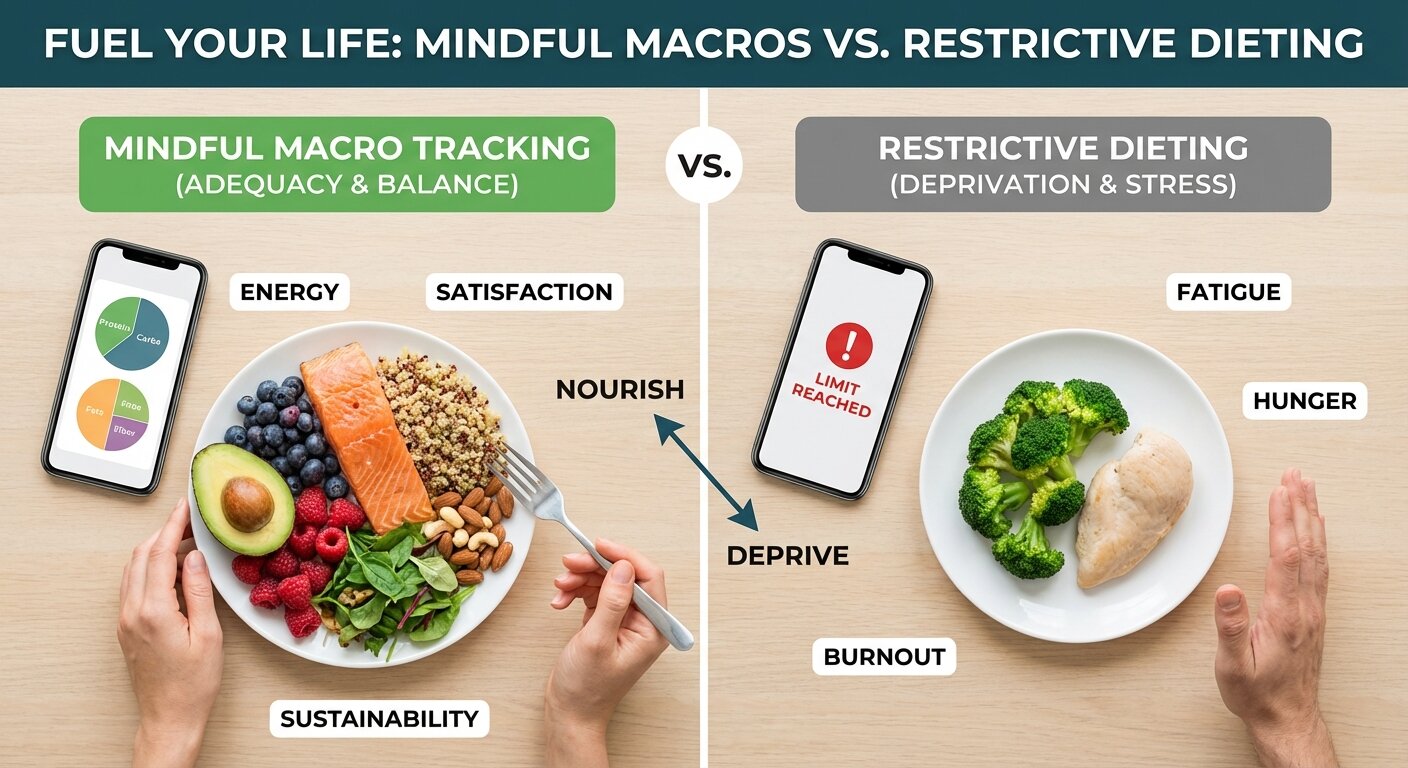
Tracking macros during pregnancy is NOT about dieting or restricting calories. It’s about ensuring adequacy.
Tracking can be helpful if:
- You want to ensure you’re eating enough protein for fetal development.
- You have gestational diabetes and need to monitor carbohydrate intake.
- You’re an athlete who wants to maintain muscle and performance safely.
- You’re worried about under-eating and want to ensure you’re meeting calorie targets.
- You’re at risk for excessive weight gain and want a structured approach.
The Case Against Tracking
For some women, tracking can be a source of stress and anxiety during a time when you should be focused on your well-being.
Skip tracking if:
- You have a history of disordered eating.
- It causes you stress or anxiety.
- You feel overwhelmed by the numbers.
- You prefer to eat intuitively.
A Balanced Approach
- Focus on protein first: Make sure you’re getting enough protein daily.
- Listen to your body: Honor your hunger cues.
- Prioritize nutrient quality: Focus on whole, nutrient-dense foods.
- Use tracking as a tool, not a rule: Check in for a few days to see if you’re on track, then go back to intuitive eating.
Bottom line: Pregnancy is not a time for aggressive fat loss or “staying lean.” It’s a time for nourishment and growth.
Macros During Pregnancy
Your nutritional needs change significantly by trimester.
First Trimester (Weeks 1-13)
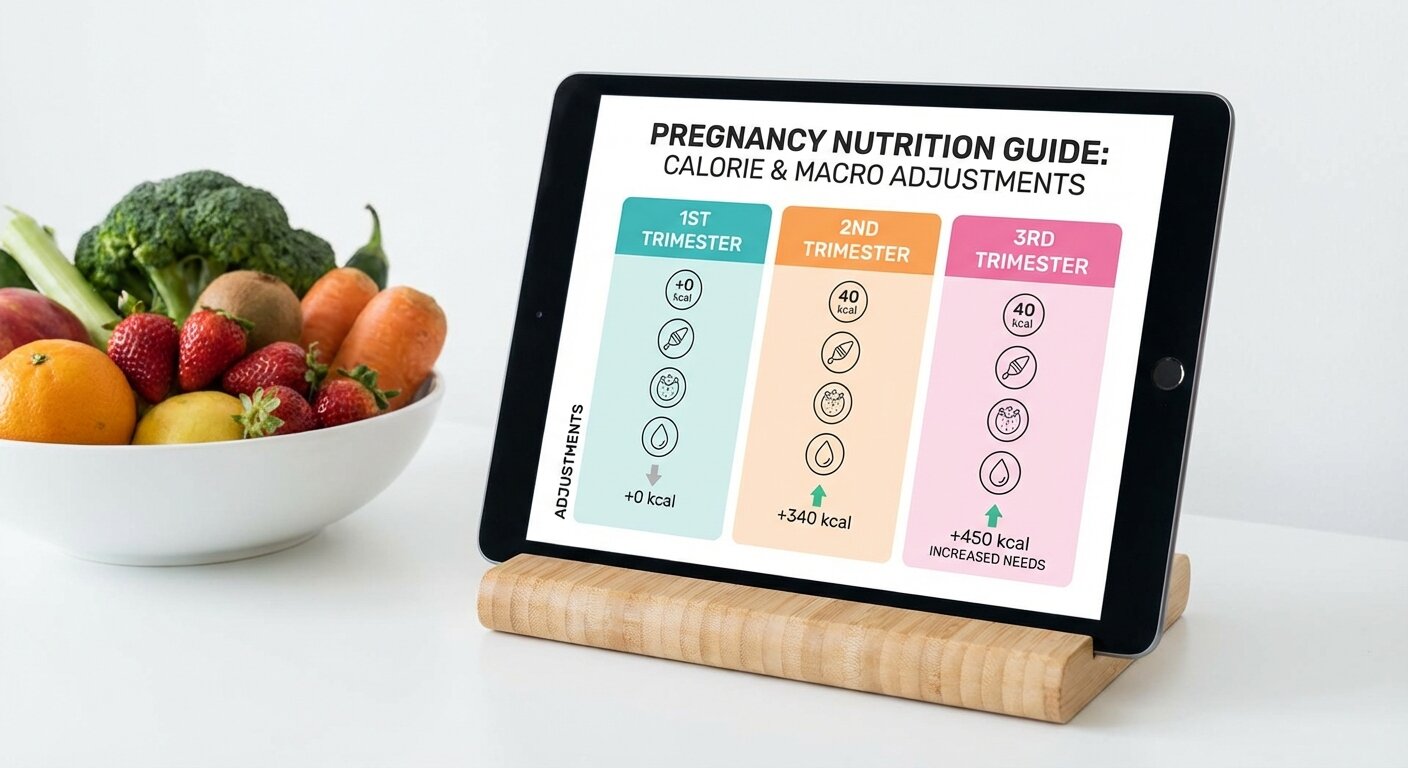
Calorie needs: No increase needed. Eat at your pre-pregnancy maintenance TDEE.
Why? The fetus is tiny. The focus is on nutrient quality, not quantity.
Macro breakdown: 20-30% protein / 45-55% carbs / 25-30% fat
The reality of the first trimester:
- Nausea and food aversions are common.
- Survival mode is okay.
- If all you can stomach are plain crackers, that’s fine.
- Do your best to eat what you can, when you can.
- Folate is the most critical nutrient during this period (prenatal vitamin is key).
Focus: Nutrient quality over macro precision. Take your prenatal vitamin.
Second Trimester (Weeks 14-27)
Calorie needs: Increase by 300-350 calories per day above maintenance.
Why? The baby is growing rapidly.
Macro breakdown: 20-30% protein / 45-55% carbs / 25-30% fat
Protein needs increase:
- Target: 1.1g per kg of bodyweight (0.5g per lb)
- Why: Supports fetal growth, placenta development, and maternal tissue.
- Example (150 lb woman): 150 × 0.5 = 75g protein minimum
Carbohydrate needs increase:
- Why: Primary energy source for you and the baby.
- Focus: Complex, high-fiber carbs (sweet potatoes, oats, quinoa, fruit).
Fat needs are critical:
- Why: Essential for fetal brain and eye development.
- Focus: Omega-3s (DHA) from fatty fish, walnuts, and flaxseeds.
- Limit: Trans fats and excessive saturated fats.
Third Trimester (Weeks 28-40)
Calorie needs: Increase by 450-500 calories per day above maintenance.
Why? The baby’s growth is at its peak.
Macro breakdown: 20-30% protein / 45-55% carbs / 25-30% fat
Protein needs remain high:
- Target: 1.1g per kg (0.5g per lb) or more.
- Example (160 lb woman): 160 × 0.5 = 80g protein minimum
Carbs and fats continue to support growth.
Practical challenges:
- You’ll feel full quickly (baby is crowding your stomach).
- Eat smaller, more frequent meals to meet calorie and macro needs.
- Prioritize protein at each meal.
Important Micronutrients During Pregnancy
- Folate: Neural tube development (leafy greens, legumes, prenatal)
- Iron: Blood volume expansion (red meat, spinach, prenatal)
- Calcium: Baby’s bone development (dairy, leafy greens)
- Vitamin D: Calcium absorption (sunlight, fortified milk, supplement)
- Choline: Brain development (eggs are a great source)
- Omega-3 (DHA): Brain and eye development (fatty fish - low mercury)
A high-quality prenatal vitamin is non-negotiable.
Macros for Breastfeeding
Breastfeeding is as nutritionally demanding as the third trimester, if not more so.
Calorie Needs While Nursing
Breastfeeding burns 300-500 calories per day.
Recommended intake: Your maintenance TDEE + 300-500 calories.
Do NOT cut calories aggressively.
- Under-eating is the #1 cause of low milk supply.
- Your body prioritizes the baby—if there’s not enough energy, it will pull from your stores, but eventually, supply will drop.
Macro Breakdown for Breastfeeding
Your macro needs shift to support milk production.
Protein needs are even higher:
- Target: 1.3g per kg of bodyweight (0.6g per lb)
- Why: Milk production requires significant protein.
- Example (150 lb woman): 150 × 0.6 = 90g protein minimum
- Many women feel best aiming for 100-120g daily.
- Signs of low protein: low supply, fatigue, slow recovery.
Carbohydrate needs are crucial:
- Target: At least 150-200g daily.
- Why: Carbs support milk production and provide energy.
- Extreme low-carb diets can reduce milk supply.
- Focus: Complex carbs (oats, sweet potatoes, fruit). Oats are anecdotally linked to increased milk supply.
Fat needs affect milk quality:
- Target: 25-30% of total calories.
- Why: The fat composition of your milk is directly affected by your diet.
- Focus: Omega-3s (DHA) pass to the baby through breastmilk, supporting brain development.
Hydration is Critical
This isn’t a macro, but it’s the most important factor for milk supply.
Target: Drink to thirst, but aim for 100-128 oz (3-4 liters) per day.
- Keep a water bottle with you at all times.
- Drink a glass of water every time you nurse.
Postpartum Weight Loss and Macros
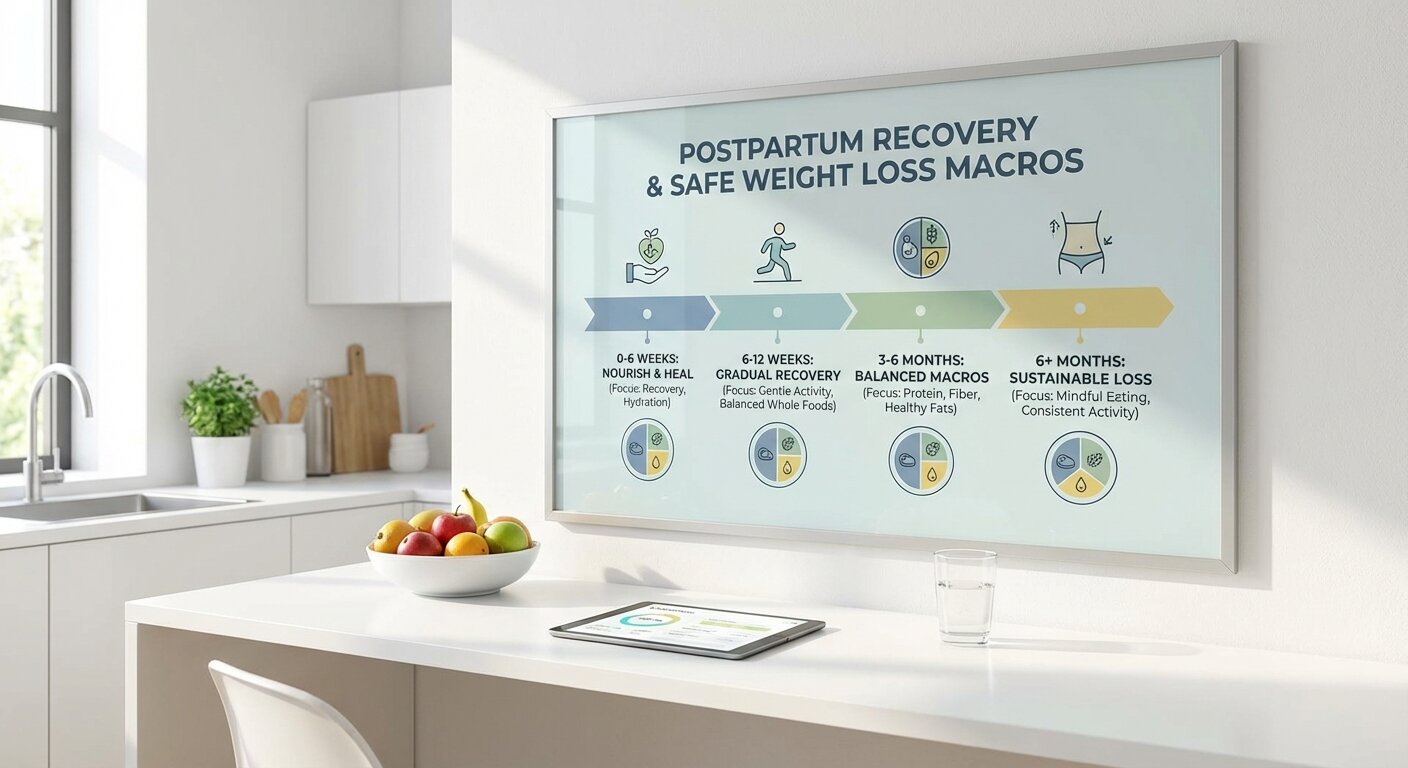
Your body took 9+ months to grow and change. Give it at least that long to recover.
When to Start Thinking About Weight Loss
Wait at least 6-8 weeks postpartum.
- Your body needs this time to heal.
- Your milk supply needs time to establish.
- Focusing on a deficit too early can compromise both.
A Safe Approach to Postpartum Fat Loss
1. Establish your breastfeeding calorie needs first.
- Eat at maintenance + 300-500 calories for 2-4 weeks.
- If your milk supply is stable and you feel good, you can create a small deficit.
2. Create a modest deficit.
- Subtract 300-500 calories from your breastfeeding intake.
- This should still keep you at or above your non-nursing maintenance TDEE.
- Example:
- Maintenance TDEE: 2,000 calories
- Breastfeeding intake: 2,400 calories
- Weight loss intake: 2,000 calories (TDEE - 400)
3. Prioritize protein.
- Keep protein high (1.0-1.2g per lb) to preserve muscle and support milk supply.
4. Monitor your milk supply.
- If your supply dips, increase calories slightly.
- If your baby seems fussy or isn’t gaining weight, see a lactation consultant.
5. Be patient.
- Aim for 0.5-1 pound of weight loss per week.
- Faster loss risks muscle and milk supply.
6. Focus on body composition, not just the scale.
- Take measurements and photos.
- Gentle strength training (after being cleared by your doctor) will help rebuild muscle.
For more details on fat loss, see our weight loss macros guide for women.
Special Considerations
Gestational Diabetes
If you’re diagnosed with gestational diabetes (GD), macros become a critical tool for managing blood sugar.
Typical GD macro approach:
- Lower carbs: 35-45% of calories
- Carb timing: Spread carbs evenly throughout the day (3 meals, 2-3 snacks)
- Pair carbs with protein: Slows glucose absorption
- Avoid: Sugary foods, refined carbs, fruit juice
Work closely with a registered dietitian and your medical team to manage GD.
Hyperemesis Gravidarum (HG)
If you have severe nausea and vomiting (HG), all macro rules go out the window.
The goal is survival:
- Eat whatever you can keep down, whenever you can.
- Focus on hydration.
- Work with your doctor on medical management.
Nutrition can be optimized later. Don’t add guilt about macros to the struggle of HG.
Carrying Multiples (Twins, Triplets)
Your calorie and nutrient needs are significantly higher.
- Calories: +600 per day for twins (consult your doctor)
- Protein: Needs are much higher (1.7-2.2g per kg)
- Work with a specialist: Managing nutrition for multiples requires expert guidance.
Vegan or Vegetarian Pregnancy
It’s absolutely possible to have a healthy vegan/vegetarian pregnancy, but you need to be diligent.
Key focuses:
- Complete proteins: Combine sources (e.g., rice and beans) to get all essential amino acids.
- Iron: Plant-based iron is less bioavailable (pair with vitamin C).
- Vitamin B12: Supplementation is essential (no reliable plant sources).
- Omega-3s: Use an algae-based DHA supplement.
- Choline: Tofu, soy, and cruciferous veggies are good sources.
Red Flags: When to Stop Tracking
Tracking should be a supportive tool, not a source of suffering. Stop tracking if you experience:
- Obsessive thoughts about food or numbers
- Guilt or anxiety around eating
- Restricting entire food groups unnecessarily
- Ignoring powerful hunger cues
- A drop in milk supply
- Extreme fatigue or low energy
- It triggers a history of disordered eating
Listen to your body first. Always.
Sample Meal Plans
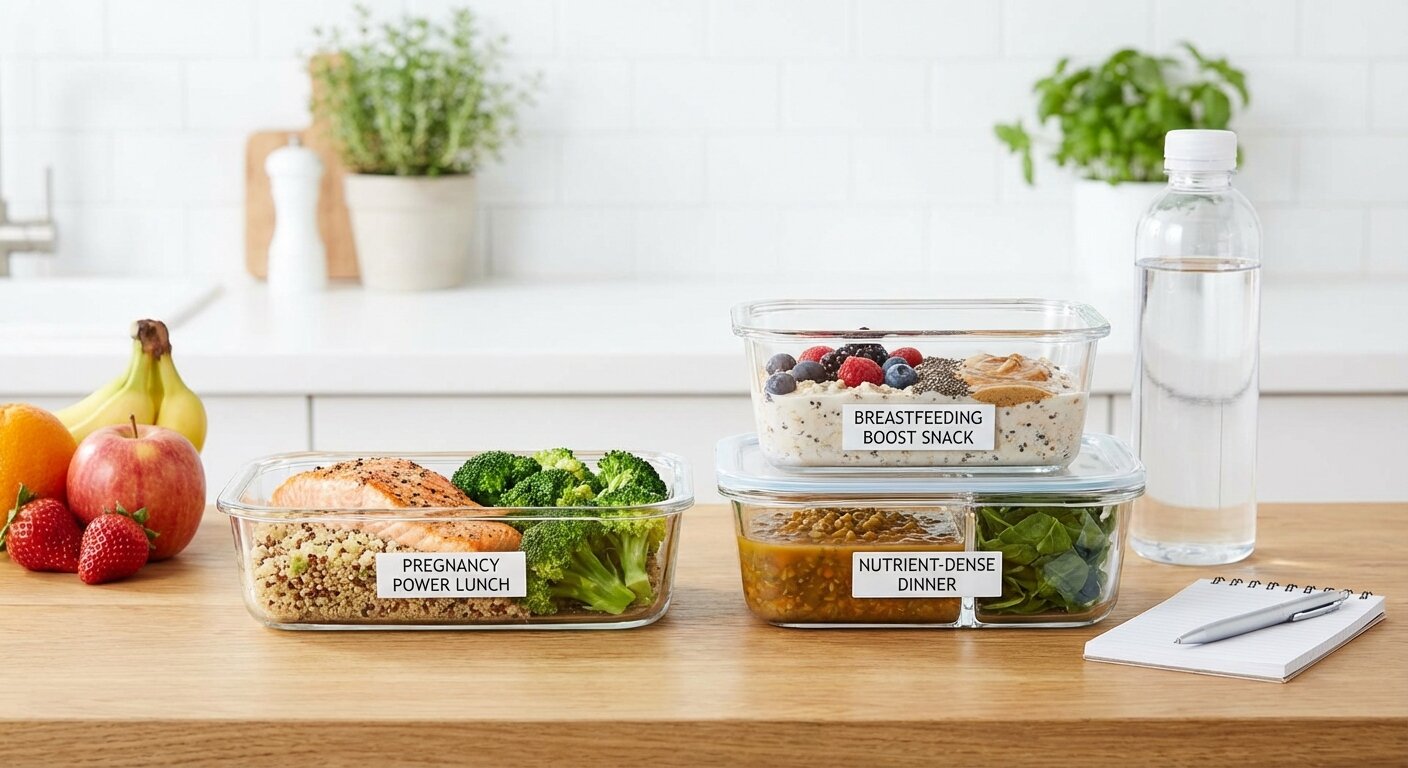
Pregnancy Meal Plan (3rd Trimester - ~2,400 calories)
Breakfast:
- 3-egg omelet with spinach and cheese
- 1 slice whole-wheat toast with 1/2 avocado
- 1 cup Greek yogurt with berries
Lunch:
- Large salad with 6 oz grilled chicken, mixed greens, veggies, quinoa, and olive oil dressing
Snack:
- Apple with 2 tbsp peanut butter
- Handful of walnuts
Dinner:
- 6 oz salmon (low mercury)
- 1 cup roasted sweet potato
- Steamed broccoli
Breastfeeding Meal Plan (~2,500 calories)
Breakfast:
- 1 cup oatmeal made with whole milk, topped with 1/4 cup nuts, 1 tbsp chia seeds, and fruit
Snack 1:
- Hard-boiled egg and a piece of fruit
Lunch:
- Burrito bowl with 6 oz ground turkey, 1 cup brown rice, black beans, salsa, and 1/2 avocado
Snack 2:
- 1 cup full-fat Greek yogurt with granola
Dinner:
- 6 oz steak
- Large baked potato with butter and sour cream
- Roasted asparagus
Bedtime Snack:
- Glass of whole milk and a handful of almonds
These are just examples. Adjust portions and foods to meet your individual needs and preferences.
FAQ: Pregnancy, Breastfeeding & Macros
Should I track macros while pregnant?
Tracking macros during pregnancy is not about restriction but ensuring you’re getting enough nutrients, especially protein. It can be beneficial for athletes, those at risk for gestational diabetes, or anyone wanting to ensure adequate intake. However, it can be stressful for some. Listen to your body and your doctor’s advice.
How many calories do I need during pregnancy?
Calorie needs increase by trimester: +0 calories in the 1st trimester, +300-350 in the 2nd, and +450-500 in the 3rd. These are estimates; your individual needs depend on your starting weight, activity level, and whether you’re carrying multiples. Always consult your healthcare provider.
How many calories do I need while breastfeeding?
Breastfeeding burns 300-500 calories per day. You should eat at your maintenance TDEE plus an additional 300-500 calories to support milk production. Never aggressively cut calories while nursing, as it can negatively impact your milk supply.
How much protein do I need during pregnancy and breastfeeding?
Protein needs increase significantly. During pregnancy, aim for 1.1g per kg (0.5g/lb) of bodyweight. During breastfeeding, needs are even higher: 1.3g per kg (0.6g/lb) to support milk production. For a 150lb woman, this is about 75g during pregnancy and 90g while nursing.
Can I lose weight while breastfeeding?
Yes, but it should be a slow, gradual process. A modest deficit of 300-500 calories is generally safe after the first 6-8 weeks postpartum. Prioritize high protein intake, stay hydrated, and monitor your milk supply. Aggressive dieting is not recommended.
Will a low-carb diet affect my milk supply?
Extreme low-carb diets (like keto) are generally not recommended while breastfeeding as they can potentially reduce milk supply in some women. Aim for at least 150-200g of quality, complex carbohydrates daily to support milk production and energy levels.
When can I start dieting postpartum?
Give your body at least 6-8 weeks to recover and establish a milk supply before intentionally creating a calorie deficit. Focus on nutrient-dense foods and gentle movement in the early postpartum period. A ‘diet’ can wait—your body needs fuel to heal and care for a newborn.
What are the most important nutrients during pregnancy?
Besides balanced macros, focus on folate (neural tube development), iron (blood volume), calcium (bone development), vitamin D, and choline. Omega-3s (DHA) are also critical for fetal brain development. A quality prenatal vitamin is essential.
Related Resources
Related Articles
Travel Macros: How to Track Nutrition While Traveling
Complete guide to managing macros while traveling. Learn meal planning strategies,...
Read guide →
Macros for Shift Workers: Complete Guide to Nutrition on Rotating Schedules
Master macro tracking on night shifts and rotating schedules. Learn meal timing, sleep...
Read guide →
Macros During Ramadan: Complete Nutrition Guide for Fasting
Learn how to track macros during Ramadan fasting. Expert guide covering meal timing,...
Read guide →Disclaimer: This content is for informational purposes only. Consult a healthcare provider before making changes to your diet.