What Should My Macros Be? Find Your Perfect Macro Numbers
Reviewed by Dr. Michael Torres, PhD
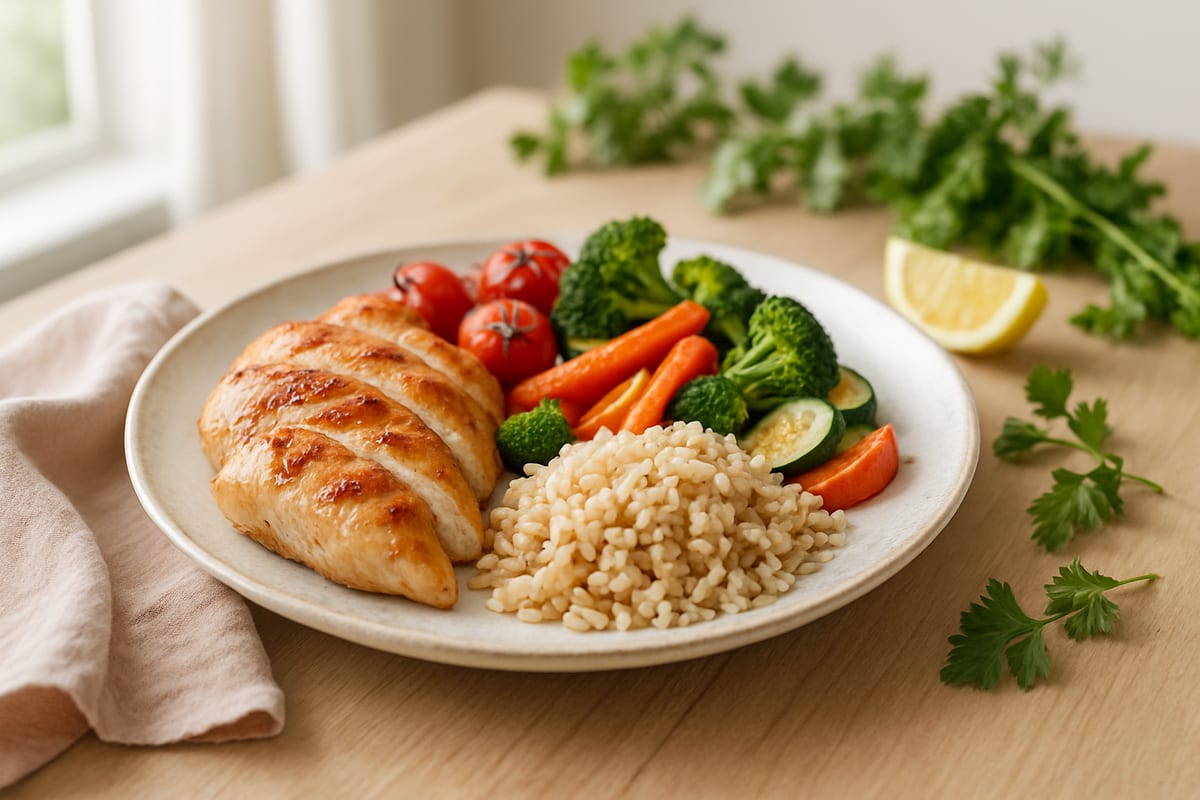
Quick Answer (as of 2026): Your ideal macros depend on three things: your weight, your goal (fat loss, muscle gain, or maintenance), and your activity level. A general starting framework: 1g protein per pound of body weight, 0.3-0.4g fat per pound, and the rest as carbs. For a 150 lb person aiming for fat loss: roughly 150g protein, 50g fat, and 130g carbs at 1,600 calories.
Quick answer: Your ideal macros depend on your weight, goal, and activity level. A simple starting framework: 1g protein per pound bodyweight, 0.3-0.4g fat per pound, fill the rest with carbs, in a 300-500 calorie deficit for fat loss or 200-300 surplus for muscle gain. The fastest way to get personalized numbers is our free Macro Calculator — results in 60 seconds, no signup.
“What should my macros be?” is one of the most-asked questions in nutrition, and it’s the question every diet program dodges with vague generalities. The honest answer: your macros depend on your body, your goal, and your activity level — there’s no single “right” answer that applies to everyone.
But there ARE evidence-based formulas that work for almost everyone, and following them will get you 90% of the way to your ideal numbers. This guide walks you through exactly how to calculate your macros from scratch — including the four variables that matter, the formulas top sports scientists use, and the common mistakes that derail most people’s first attempt.
By the end, you’ll have specific numbers you can plug into any tracking app and start using today.
The Four Inputs That Determine Your Macros
Before you can know your macros, you need to know four things about yourself:
1. Your Body Weight
This is the foundation of every macro calculation. Use your current weight, not goal weight. Many people make the mistake of calculating macros for their “goal” body — this almost always creates an unsustainably aggressive deficit. Calculate for the body you have now; recalculate every 10-15 pounds as you change.
2. Your Activity Level
Be honest. Most people overestimate their activity level by one tier. Use this scale:
- Sedentary (1.2): Desk job, little to no exercise
- Lightly active (1.375): Light exercise 1-3 days/week
- Moderately active (1.55): Moderate exercise 3-5 days/week
- Very active (1.725): Hard exercise 6-7 days/week
- Extremely active (1.9): Athlete or physical job + daily training
If you work a desk job and lift 3 times a week, you’re “Moderately active” — not “Very active.” Overestimating here will make your calorie target too high, and you won’t lose weight even on a deficit.
3. Your Goal
Three options, each with a different calorie adjustment:
- Fat loss: TDEE minus 300-500 calories (0.5-1 lb/week loss)
- Muscle gain: TDEE plus 200-300 calories (slow, lean bulk)
- Maintenance: TDEE exactly (no adjustment)
A 500-calorie deficit is the standard “1 pound per week” target. Going more aggressive than 1,000-calorie deficits causes muscle loss, hormonal disruption, and unsustainable hunger.
4. Your Training Experience
Affects how much protein you need to maximize muscle gain or retention:
- Beginner (0-1 year of consistent training): 0.8g protein per lb
- Intermediate (1-3 years): 1.0g protein per lb
- Advanced (3+ years): 1.0-1.2g protein per lb
Advanced lifters need slightly more protein because they’re closer to their genetic muscle ceiling and need every gram to drive new gains.
Step-by-Step: Calculate Your Macros
Here’s the actual math, step by step. Use this for any goal:
Step 1: Calculate Your BMR
Your Basal Metabolic Rate is the calories your body burns at complete rest — just maintaining bodily functions. The most accurate formula is Mifflin-St Jeor:
- Men: (10 × weight in kg) + (6.25 × height in cm) − (5 × age) + 5
- Women: (10 × weight in kg) + (6.25 × height in cm) − (5 × age) − 161
To convert: weight ÷ 2.205 = kg. Height in inches × 2.54 = cm.
Example (160 lb, 5’8”, 32yo woman):
- 160 lb ÷ 2.205 = 72.5 kg
- 5’8” = 68 in × 2.54 = 172.7 cm
- BMR = (10 × 72.5) + (6.25 × 172.7) − (5 × 32) − 161 = 725 + 1,079 − 160 − 161 = 1,483 calories
Step 2: Multiply BMR by Activity Multiplier to Get TDEE
TDEE = BMR × activity multiplier
Continuing the example, if she’s moderately active:
- TDEE = 1,483 × 1.55 = 2,299 calories
This is the calories she burns in a typical day, all-in.
Step 3: Adjust Calories for Your Goal
- Fat loss: TDEE − 500 = 1,799 calories
- Muscle gain: TDEE + 250 = 2,549 calories
- Maintenance: TDEE = 2,299 calories
Step 4: Set Protein
Multiply weight by protein target (depends on training experience):
- Beginner cutting: 160 × 0.8 = 128g protein
- Intermediate cutting: 160 × 1.0 = 160g protein
- Advanced cutting: 160 × 1.2 = 192g protein
Each gram of protein = 4 calories. So 160g protein = 640 calories.
Step 5: Set Fat
Use 0.3-0.4g per pound bodyweight, or 25-30% of total calories:
- 160 × 0.35 = 56g fat
- 56g × 9 cal/g = 504 calories
Step 6: Fill Remaining Calories with Carbs
For the 1,799-calorie fat loss target:
- Protein: 640 cal (160g)
- Fat: 504 cal (56g)
- Carbs: 1,799 − 640 − 504 = 655 cal ÷ 4 = 164g carbs
Final macros: 160g protein / 164g carbs / 56g fat at 1,799 calories.
That’s the framework. Plug your own numbers in and you’re done.
Don’t Want To Do The Math? Use The Calculator
You can do all of this manually, or you can use the Macro Calculator we built for exactly this purpose. It runs Mifflin-St Jeor automatically, applies the activity multiplier, adjusts for your goal, and outputs your macros in 60 seconds. No signup, no email — just instant personalized numbers.
The calculator also supports:
- Katch-McArdle formula (more accurate if you know your body fat percentage)
- Multiple diet styles (balanced, low-carb, keto, high-protein, plant-based)
- Health condition adjustments (PCOS, insulin resistance, menopause, etc.)
- Activity-based protein adjustments (athletes get higher protein targets)
For most people, the calculator output IS the answer — no need to do the manual math. The walkthrough above is for understanding what’s happening behind the scenes.
What Macro Numbers Look Like for Different Goals
To give you a sense of what “good” macros look like, here are examples across common scenarios:
Fat Loss — Sedentary Woman (Office Job, 150 lb)
- Calories: 1,400 (deficit)
- Protein: 120g (32%)
- Carbs: 130g (37%)
- Fat: 47g (30%)
Fat Loss — Active Man (Lifts 4x/wk, 180 lb)
- Calories: 2,100 (deficit)
- Protein: 180g (34%)
- Carbs: 220g (42%)
- Fat: 56g (24%)
Muscle Gain — Beginner Lifter (Male, 160 lb)
- Calories: 2,650 (surplus)
- Protein: 160g (24%)
- Carbs: 360g (54%)
- Fat: 65g (22%)
Maintenance — Women Over 40 (Moderately Active, 145 lb)
- Calories: 1,950 (TDEE)
- Protein: 175g (36%) — higher to fight age-related muscle loss
- Carbs: 195g (40%)
- Fat: 54g (25%)
Body Recomposition — Intermediate Woman (155 lb)
- Calories: 1,900 (slight deficit, near-maintenance)
- Protein: 170g (36%) — high to build muscle while losing fat
- Carbs: 175g (37%)
- Fat: 56g (27%)
Common Macro Mistakes (Don’t Make These)
Mistake 1: Protein Too Low
The #1 mistake is undershooting protein. The standard RDA (0.36g/lb) prevents deficiency but doesn’t optimize body composition. If you’re tracking macros, you should be hitting at least 0.8g per pound bodyweight — and if you’re trying to lose fat or build muscle, 1.0-1.2g per pound.
Symptoms of too-low protein:
- Constant hunger between meals
- Losing weight on the scale but looking “skinny fat”
- Plateaus in strength training
- Slow recovery from workouts
Mistake 2: Cutting Fat Below 20% of Calories
Some people try to maximize the carb-to-fat ratio by dropping fat to 10-15% of calories. This crashes testosterone, estrogen, and overall hormone health — especially for women.
Minimum fat targets:
- Men: 0.25g per lb bodyweight
- Women: 0.3g per lb bodyweight (higher for over 40)
- Pregnant/breastfeeding: 0.4g+ per lb
Below these levels, hormone production drops, energy crashes, and mood suffers.
Mistake 3: Calorie Deficit Too Aggressive
A 1,500-calorie/day deficit will lose weight fast — but it also:
- Drops your metabolism within 3-4 weeks (adaptive thermogenesis)
- Burns muscle, not just fat
- Crashes leptin (hunger hormone), making you ravenous
- Causes the binge-restrict cycle most diets fail with
Sustainable deficit: 300-500 calories below TDEE. You’ll lose 0.5-1 lb per week, keep muscle, and your metabolism won’t tank.
Mistake 4: Not Adjusting As You Lose Weight
Your macros from when you weighed 180 lbs won’t work when you weigh 165. Smaller body = fewer calories needed. Recalculate every 10-15 pounds (or every 4-6 weeks if progress stalls).
Mistake 5: Inconsistent Tracking
Hitting your macros 4 days a week and “winging it” for 3 days won’t produce results. Macros work when you hit them consistently — 6 out of 7 days minimum. The math is simple: 4/7 = 57% adherence, which means you’re getting ~57% of the result you’d get with full adherence.
Macros for Specific Populations
Macros for Women Over 40
After 40, declining estrogen accelerates muscle loss and decreases insulin sensitivity. The standard macro formulas need adjustment:
- Higher protein: 1.2g+ per pound (vs. 0.8-1.0g for younger women)
- Moderate carbs: 100-150g/day (vs. 150-200g+ for younger women) due to insulin sensitivity changes
- Don’t cut fat low: 30%+ of calories from fat to support hormone production
See the dedicated guide: Macros for Women Over 40 →
Macros for Muscle Gain
If your primary goal is building muscle, you need:
- A modest calorie surplus (200-300 above TDEE)
- High protein (1.0g+ per pound)
- Adequate carbs (40-50% of calories) to fuel training
- Don’t fear fat — keep it at 20-25% minimum
See the pillar: Macros for Muscle Gain →
Macros for Weight Loss
The most popular goal:
- 300-500 calorie deficit (sustainable rate)
- Protein at 0.8-1.0g per pound (preserves muscle in the deficit)
- Fat at 25-30% (hormone support)
- Carbs fill remaining
See the pillar: Macros for Weight Loss →
Frequently Asked Questions
What should my macros be for my body?
Your ideal macros depend on three things: your weight, your goal (fat loss, muscle gain, or maintenance), and your activity level. A general starting framework: 1g protein per pound of body weight, 0.3-0.4g fat per pound, and the rest as carbs. For a 150 lb person aiming for fat loss: roughly 150g protein, 50g fat, and 130g carbs at 1,600 calories. Use our Macro Calculator to get exact numbers in 60 seconds.
How do I figure out my exact macros?
Calculate your TDEE (Total Daily Energy Expenditure) first using the TDEE Calculator, then adjust calories for your goal: subtract 300-500 for fat loss, add 200-300 for muscle gain, stay at TDEE for maintenance. Set protein at 0.8-1.2g per pound bodyweight, fat at 0.3-0.4g per pound, and fill remaining calories with carbs. Our free Macro Calculator does this entire calculation in 60 seconds — no math required.
What macro ratio is best for weight loss?
For most people, a balanced split of 40% carbs, 30% protein, and 30% fat works for weight loss. But the macro split matters less than two things: hitting a calorie deficit and getting enough protein (0.8-1.2g per pound bodyweight). High protein preserves muscle during fat loss, increases satiety, and burns more calories during digestion (highest thermic effect of any macro).
How much protein should I eat per day?
Most active adults need 0.7-1.0g of protein per pound of body weight, with active lifters and people losing fat aiming for the higher end (1.0-1.2g). For a 160 lb person, that’s 112-192g of protein daily. The RDA of 0.36g per pound is the minimum to prevent deficiency — not the optimal amount for body composition, satiety, or muscle preservation. See our Protein Calculator for personalized numbers.
Are my macros different for cutting vs bulking?
Protein stays high in both phases (1.0-1.2g per pound). What changes is total calories and carb intake. For cutting (fat loss): 300-500 calorie deficit, carbs reduced to create the deficit. For bulking (muscle gain): 200-300 calorie surplus, extra calories mostly from carbs to fuel training. Fat stays at 0.3-0.4g per pound in both phases to support hormones.
What macros do women need vs men?
The formulas are the same, but women typically have lower TDEE due to less muscle mass and smaller body size. Women over 40 specifically benefit from higher protein (1.2g+ per pound) to fight age-related muscle loss, and shouldn’t drop fat below 25% of calories due to hormonal needs. The Macro Method by WarriorBabe is designed specifically for women’s metabolism after 40 and addresses these hormonal differences directly.
How often should I recalculate my macros?
Recalculate every 10-15 pounds of weight change, or every 4-6 weeks if progress stalls for 2+ weeks. As you lose weight, your TDEE decreases (smaller body = fewer calories burned), so your calorie target needs to drop to maintain the deficit. Don’t recalculate based on a few days of data — weight fluctuates daily; look at weekly trends over 2-3 weeks before adjusting.
Can I just count calories instead of macros?
You can lose weight just counting calories, but tracking macros gives you better body composition (more muscle, less fat) and better satiety. The key macro for body composition is protein — eating 800 calories of cookies vs 800 calories of chicken and broccoli produces very different physique outcomes despite identical calorie counts. Macros tell you WHAT you lose; calories tell you HOW MUCH.
Your Action Plan
- Calculate your numbers using our free Macro Calculator (60 seconds)
- Pick a tracking app — MyFitnessPal, Cronometer, or MacroFactor
- Track for 2-3 weeks without adjusting — your body needs time to respond
- Look at weekly averages of weight, not daily fluctuations
- Adjust if no progress after 3 weeks — drop 100-200 calories OR increase activity
That’s it. The math isn’t complicated — the hard part is consistency. Hit your targets 6+ days per week, give it 4-6 weeks, and you’ll see results.
If you're a woman 40+, this site's free tools were built for you.
Your body after 40 has a different hormonal profile, metabolic rate, and relationship with food. Standard macro advice treats your 47-year-old body like a 27-year-old's — that's why diets stop working. The Macro Method™ fixes the actual problem: your hormones.
- Personalized macros for your hormonal reality (not a 25-year-old's)
- Just 10 minutes a day — no obsessive tracking
- Results most women see in 14 days
- 60-day money-back guarantee (keep the program either way)
Reg. $247 $27 Limited time
Get the Macro Method →21,000+ women · By Maggie Topham, WarriorBabe™
Related Guides
- Macro Calculator — Get your personalized numbers in 60 seconds
- TDEE Calculator — Calculate your daily energy expenditure
- Protein Calculator — Find your specific protein target
- How to Count Macros — The complete tracking guide
- Macros for Weight Loss — Optimize for fat loss
- Macros for Muscle Gain — Optimize for muscle building
- Macros for Women Over 40 — Age-specific guidance
- Best Macro Ratio for Fat Loss — Optimal splits for cutting
- Counting Macros for Beginners — Step-by-step tracking
Related Articles
Macros for 100 lb Man (Muscle Gain)
If you're 100 lb and aiming for muscle gain, your daily macros are 2414 calories, 110g...
Read guide →
Macros for 100 lb Man (Maintenance)
If you're 100 lb and aiming for maintenance, your daily macros are 2164 calories, 90g...
Read guide →
Macros for 100 lb Man (Weight Loss)
If you're 100 lb and aiming for weight loss, your daily macros are 1714 calories, 100g...
Read guide →Disclaimer: This content is for informational purposes only. Consult a healthcare provider before making changes to your diet.